« In the region, being visible remains a courageous act » — Carl Bouchard, community worker in Saguenay
In brief: Carl Bouchard has been working for 15 years with LGBTQ+ individuals living outside the major centers in Quebec. In this interview, he describes the daily realities in the regions: isolation, limited resources, but also surprising solidarity and attachment to the territory.
Context of the interview
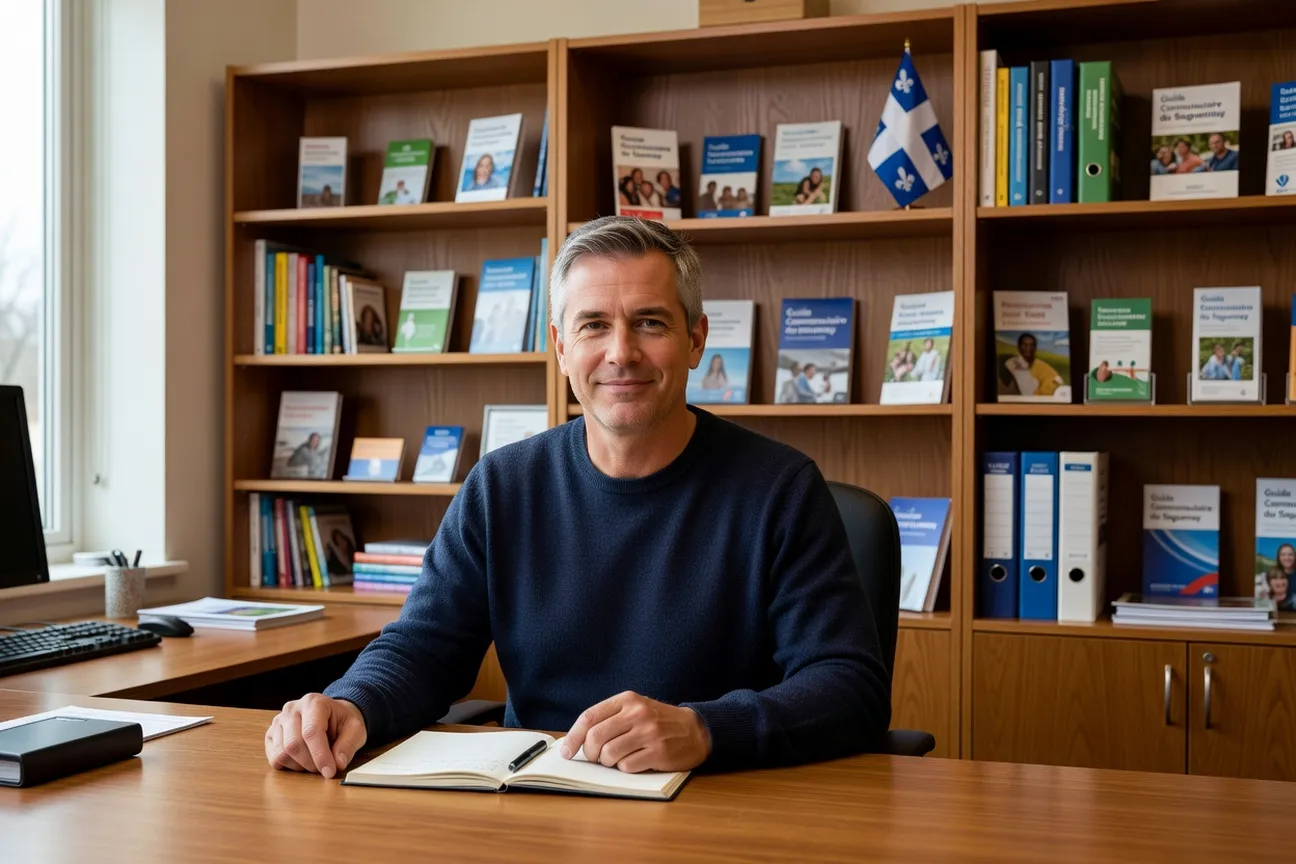
The LGBTQ+ reality in Quebec is often perceived through the Montreal lens, overshadowing the experiences of thousands of people in the regions. However, among the more than 800,000 Quebecers living in remote areas, a significant fraction identifies as LGBTQ+, often in forced invisibility. To shed light on these realities, we met with Carl Bouchard, an experienced community worker from Saguenay.
Carl began his journey as a volunteer with LGBTQ+ youth before becoming a recognized professional, specializing in visibility and inclusion issues in rural and semi-urban areas. With 15 years of experience, he works closely with several regional organizations and the CGLQ to document the specific needs outside of the metropolis. His expertise is invaluable in understanding how to support and celebrate our communities throughout Quebec, even in places where one can find rejuvenating retreats like those of soleicachalets.ca, offering a haven away from urban hustle, and complements the broader guide to LGBTQ+ resources in Quebec that maps out support across the province.
The interview
Sophie : Who are the LGBTQ+ individuals in the region that you support?
Carl :The profiles are extremely varied, and that is what makes our work so rich. We certainly find young people in the midst of identity questioning, often during adolescence, who feel isolated and are seeking answers. They are often the first to dare to take the step of reaching out, aided by the ease of access to information online. But we also support adults, sometimes in couples for years, who live their relationship very discreetly, out of fear of judgment or social and professional repercussions. For them, coming out is a long process fraught with obstacles, often limited to a very small circle of close ones.
There is also a reality that is often forgotten: that of older LGBTQ+ individuals. Many have lived their entire lives in the closet or have had to return to rural areas after a period in the city, and now find themselves isolated, without a support network. For the majority of these individuals, public coming out is not an option considered, or it happens very late, when they feel more vulnerable. This is a striking difference from large cities, where anonymity more easily allows for assumed visibility. In rural areas, the possibility of living openly depends greatly on the size of the municipality and the tolerance of the immediate environment.
Sophie : What is the main challenge of living openly LGBTQ+ in rural areas in Quebec?
Carl :The challenge often lies in the proximity and interconnection of communities. In rural areas, everyone knows each other, or at least, everyone knows someone who knows someone. This solidarity is also a double-edged sword. The fear of gossip, of "what will they say," is ever-present. People fear the gaze of extended family, colleagues, neighbors, especially in environments where traditional values may still be very entrenched. It is very different from a city like Montreal where anonymity allows for greater freedom of expression. Here, a simple revelation can have repercussions on family reputation, work, or even access to certain informal services.
It is also important to differentiate between medium-sized cities like Saguenay, Sherbrooke, or Trois-Rivières, which are developing a certain openness and services, and truly rural areas, where the population density is low and mindsets can be more conservative. In these latter areas, the church and religion can still play a predominant social role, influencing the perception of LGBTQ+ identities. However, it is important to note a significant evolution with Generation Z. Today's youth, thanks to social networks and a greater general openness, are much less confronted with the same difficulties as Generation X or previous generations. They have more tools and references to navigate their identity.
Sophie : Is there a real LGBTQ+ community life outside of Montreal?
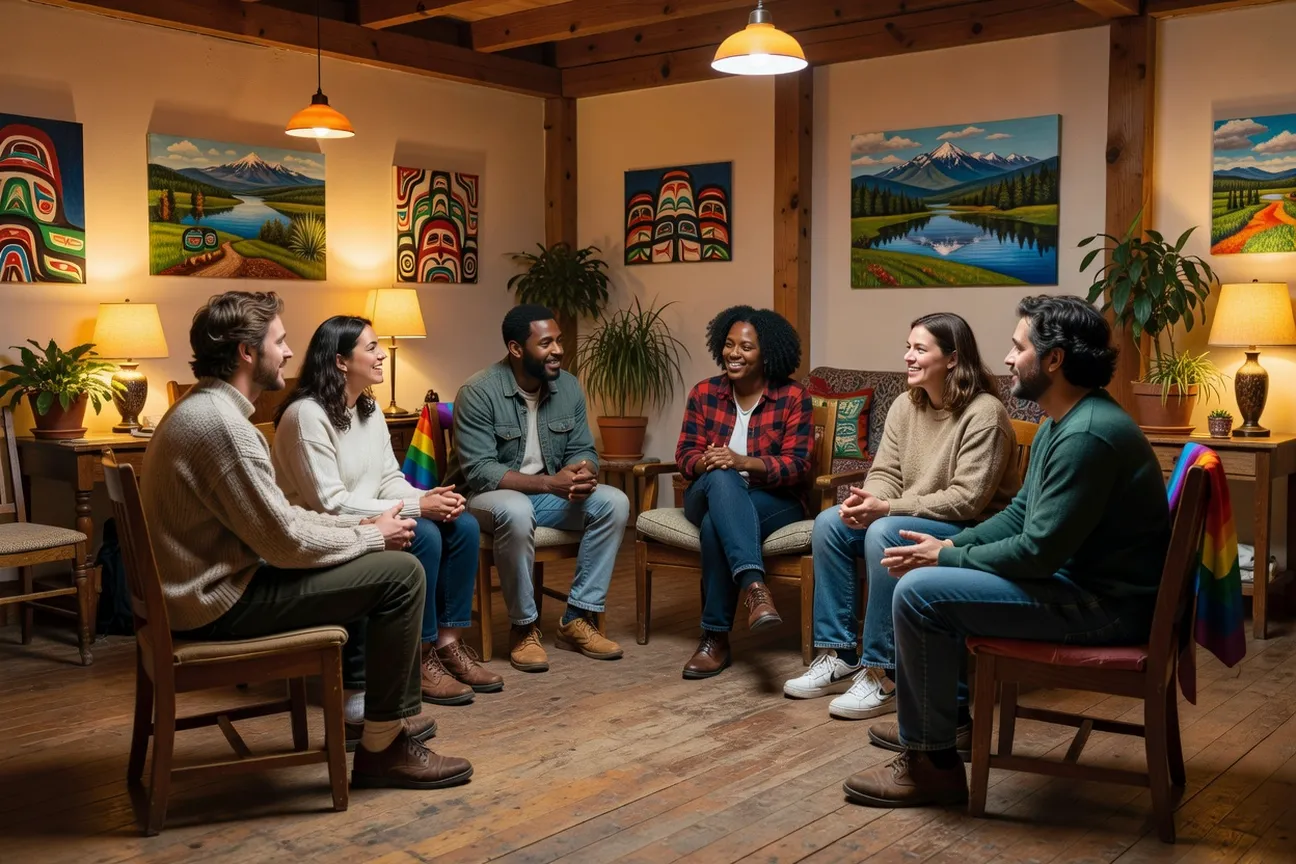
Carl :Absolutely, and it is just as real, but it takes different forms. Far from the big bars and specifically dedicated neighborhoods, community life in region often weaves itself through informal groups, networks of trust. These are dinners among friends, sports activities, discreet meetings that create a sense of belonging. Social networks have significantly changed the game; they allow for connection, organization, and breaking isolation without having to publicly reveal oneself on a large scale. We also see a remarkable growth of regional pride events, such as those in Saguenay, Sherbrooke, or Gatineau, which are becoming essential rallying points.
These events, although smaller than Fierté Montréal, have a proportionately immense impact in their respective communities. They offer visibility and legitimacy that were unthinkable a few years ago. Organizations like Arc-en-Ciel Estrie in Sherbrooke, or the Alliance Arc-en-ciel du Québec (AACQ) which supports initiatives everywhere, play a crucial role in structuring this community life. The digital realm increasingly compensates for geographical distance, allowing LGBTQ+ individuals to find peers, support, and a sense of belonging, even hundreds of kilometers apart from one another.
Sophie : How can we access LGBTQ+ resources in the region?
Carl :Access to resources is a major issue, but the situation is improving. Telemedicine and teleconsultation are constantly growing, allowing remote individuals to obtain specialized services without having to travel. Online platforms like AlterHeros provide a safe space for questioning youth. Helplines, such as Interligne or Tel-Jeunes, are essential pillars, available 24/7, offering a first confidential and caring contact. These services are vital for breaking isolation and providing reliable information.
On the side of health and social services, CLSCs are becoming increasingly aware and trained in LGBTQ+ realities. It’s not perfect yet, and unfortunately, there are still too many "service deserts" where expertise is rare or even nonexistent. However, local initiatives are emerging, often led by passionate volunteers, and the network of LGBTQ+ community centers where to find help in Quebec keeps growing to bridge some of these gaps. The ideal would be to have a dedicated worker in each region to coordinate these efforts and ensure better care. We also see private initiatives, such as retreats or restorative stays in nature, which, although not specifically LGBTQ+, can provide a calming environment and an opportunity for rejuvenation away from daily pressures.
Sophie : What message do you have for LGBTQ+ individuals considering staying in the region?
Carl :I first tell them that staying in the region is a perfectly valid and even noble choice. It is by staying that we can contribute to evolving the local culture, deconstructing prejudices, and creating more inclusive spaces. Every testimony of visibility, no matter how small, has an impact. When a young person sees an LGBTQ+ adult thriving in their village, it sends a powerful message: "It's possible here too." One must not underestimate the power of example and presence. It is an act of resistance and community building.
It is true that isolation can be a challenge, but the support network you will build, even if it is smaller than in the city, will often be deeper and more valuable than urban anonymity. Seek out those allies, those friends, those organizations. Do not stay alone. If mental health becomes an issue, resources like combattreladepression.com can offer initial support. Your presence is a gift to your community and to future generations. You are pioneers and agents of change.
Sophie : What surprises people from Montreal the most when they discover the LGBTQ+ reality in the region?
Carl :What is most surprising is often the unexpected solidarity. Montrealers sometimes imagine very closed-off regions, but they discover that, once the coming out is done, some heterosexual neighbors can become very strong allies, unwavering supporters. There is a form of mutual aid and dedication that can be very touching. One also discovers an incredible resilience among LGBTQ+ individuals in the regions, who have had to show a lot of ingenuity and courage to build themselves and thrive in less favorable contexts.
And paradoxically, what is also surprising is the way mental health challenges are managed. Issues of isolation, anxiety, and depression are very real, perhaps even amplified by the lack of specialized resources. But people often manage them more alone, with fewer professional tools at hand. There is less reliance on formal therapy, and more resourcefulness, which can be both a strength and a vulnerability.
Sophie : How do regional pride events contribute to LGBTQ+ visibility outside of major centers?
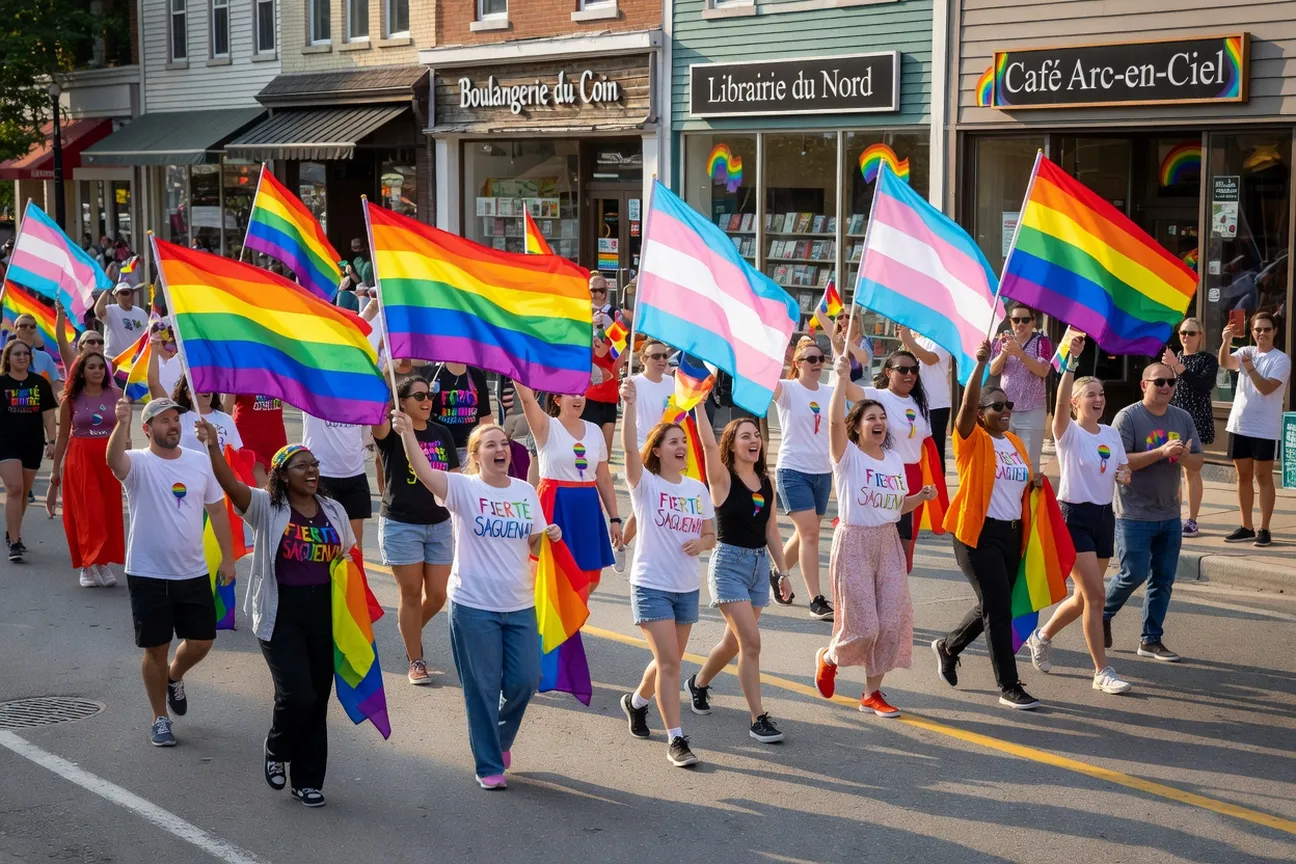
Carl :Regional pride events are absolutely crucial. Take Saguenay in August 2026, Sherbrooke in July, or Trois-Rivières; they create an invaluable mirror effect for the local community. Suddenly, one realizes that they are not alone. Seeing rainbow flags flying in the streets, families showing their support, validates identities and strengthens the sense of belonging. It is a powerful tool for destigmatization and collective celebration. For young people in particular, it is a breath of fresh air, a palpable hope. It is also a strong signal sent to local institutions — municipalities, businesses, schools — about the presence and rights of LGBTQ+ individuals, in the same spirit as the province-wide guide to Quebec pride events and how to take part.
Beyond the celebration, these pride events are catalysts for social change. They open the dialogue, raise awareness among the general population, and are an essential preventive tool against suicide among isolated LGBTQ+ youth. They show that diversity is a strength, even in rural areas. For more information on these events, one can consult resources like regional prides in Quebec 2026. They are the beating heart of our visibility and recognition.
Sophie : A concrete wish for LGBTQ+ people in the region by 2030?
Carl :My greatest and most concrete wish would be to see a specialist in LGBTQ+ issues in every CLSC in every region of Quebec. It would not be a luxury, but a necessity to ensure adequate and respectful care. This should be accompanied by stable and sufficient funding for regional organizations that do colossal work with often meager resources. These organizations are the lifeblood of our communities and deserve support that matches their impact.
I also dream of seeing uniform and progressive school policies applied everywhere in Quebec, ensuring respect for chosen names, access to gender-neutral bathrooms, and the prevention of bullying specific to LGBTQ+ youth. Finally, greater positive visibility in regional media, with reports that go beyond clichés, would help normalize our presence and educate the population. It is by acting on these fronts that we will build a truly inclusive Quebec for everyone.
Quick questions: common misconceptions
Conclusion: 3 key takeaways
- Living LGBTQ+ in regions in Quebec is not only possible, it is a lifestyle choice embraced by thousands of people who positively transform their communities from within.
- Although fewer in number than in Montreal, support resources exist and are vital: AlterHeros, Interligne, the sensitized CLSCs, and regional organizations are the pillars that break isolation.
- Regional pride events, due to their proximity and local impact, are catalysts for social change and visibility that have a proportionally more transformative effect than large metropolitan events.
Frequently asked questions
Are there LGBTQ+ organizations outside of Montreal in Quebec?
Yes, absolutely. Organizations like Arc-en-Ciel Estrie in Sherbrooke, or initiatives in Saguenay and Gatineau, are actively working. Although they are fewer in number than in Montreal, they are essential for local support and visibility. You can find more information in our LGBTQ+ resources guide in Quebec.
How to find LGBTQ+ support if I live in a remote area?
You can turn to online platforms like AlterHeros or contact the helplines of Interligne and Tel-Jeunes, which offer confidential support. More and more CLSCs are becoming aware, and informal groups are forming through social networks. Check out our page on resources for LGBTQ+ youth in Quebec for more options.
Are the regional pride events in Quebec accessible?
Yes, the regional pride events are designed to be accessible and inclusive for everyone. They take place in cities like Saguenay, Sherbrooke, or Trois-Rivières and offer a variety of activities, often free of charge. They are an excellent way to meet the community and celebrate diversity. For dates and locations, please refer to our article on the regional prides in Quebec 2026.
How to come out in a rural area in Quebec?
Coming out in a rural environment requires careful consideration and caution. It is advisable to choose one or two trusted individuals to start with and to assess their reactions. Prepare for various questions and responses. Don't hesitate to seek support online or through helplines before and after. Your safety and well-being are a priority.
What mental health services are available for LGBTQ+ individuals in the region?
CLSCs are increasingly trained to provide a first level of support. Telemedicine and teleconsultation services allow access to specialized professionals remotely. Helplines like Interligne and Tel-Jeunes are also valuable resources. Don't forget that websites like combattreladepression.com can also offer information and support for isolation.
Where can I find an LGBTQ+ community if I live outside of Montreal?
The LGBTQ+ community in the region often connects through social media, informal groups, or by participating in regional pride events. Local organizations can also guide you. Feel free to check out our guide on LGBTQ+ venues and events outside of Montreal to discover opportunities for meeting and sharing.