Trans Identity in Quebec: Rights, Procedures and Resources in 2026
In brief: Quebec is one of the world's most advanced jurisdictions in recognizing the rights of trans and non-binary people. Since Bill 103 (2013), it has been possible to change the sex designation on civil status documents without surgery. The “X” designation has been available since 2021. However, challenges remain regarding access to healthcare, workplace discrimination and inclusion in schools. This guide details the legal framework, practical procedures and resources available in 2026.

The Legal Framework for Trans Identity in Quebec
Trans and non-binary people in Quebec benefit from one of the world's most protective legal frameworks. Several laws and charters work together to protect their fundamental rights and recognize their gender identity.
The Quebec Charter of Human Rights and Freedoms (section 10) prohibits discrimination based on gender identity or expression. This quasi-constitutional protection applies in every area of life: employment, housing, public services, education and access to public places. Anyone who believes they have experienced discrimination may file a complaint with the Commission des droits de la personne et des droits de la jeunesse (CDPDJ).
At the federal level, the Canadian Human Rights Act has also protected gender identity and expression since 2017, following the passage of Bill C-16. The Canadian Criminal Code now includes gender identity and expression among the grounds for hate crimes, increasing penalties for offences motivated by transphobia.
Bill 103, passed by Quebec's National Assembly in 2013, represents a major milestone. It amended the Civil Code of Québec to allow the sex designation in the civil register to be changed without requiring sex reassignment surgery. This law eliminated what human rights organizations described as “forced sterilization.”
In 2016, Quebec strengthened its legal framework by banning conversion therapy for minors, a ban extended throughout Canada by federal legislation in 2020. These discredited practices, which seek to change a person's gender identity, are now criminalized.
Changing the Sex Designation in the Civil Register
Changing the sex designation on civil status documents is a fundamental process for trans people. In Quebec, this procedure is administered by the Directeur de l'état civil and has been considerably simplified since the passage of Bill 103.
Requirements for adults. An adult Canadian citizen who has been domiciled in Quebec for at least one year may apply to change the sex designation on their birth certificate. The application must include a sworn statement confirming that the designation shown does not correspond to the person's lived gender identity. No medical certificate or surgery is required.
Requirements for minors. Minors aged 14 and over may submit an application with the consent of the person holding parental authority. For minors under 14, the application is submitted by the person holding parental authority and must be accompanied by a letter from a healthcare professional confirming that the change is in the child's best interests.
Practical procedure. The application is submitted using the form prescribed by the Directeur de l'état civil, together with the required documents and payment of the applicable fees. Processing generally takes from a few weeks to a few months. Once the application is approved, a new birth certificate is issued with the amended sex designation. The person may then update their other identity documents (driver's licence, health insurance card, passport).
Change of given name. A change of given name may be requested at the same time or separately. Since recent reforms, the procedure has been simplified for trans people, recognizing that changing one's given name is an essential component of affirming one's gender identity.
CGLQ provides information and referral services to assist people with these administrative procedures, in collaboration with specialized organizations such as Aide aux Trans du Québec (ATQ). For trans and non-binary youth in particular, specialized support from a social worker can facilitate these administrative procedures and provide the emotional support that accompanies them.
The “X” Designation: Non-Binary Recognition
Since 2021, Quebec has allowed the “X” designation to appear on certain official documents, thereby recognizing that gender identity is not limited to the male/female binary. This progress places Quebec among the world's most progressive jurisdictions in recognizing non-binary identities.
The “X” designation is available on the health insurance card (RAMQ) and on certain documents issued by the provincial government. Its implementation across all government systems and administrative forms is continuing gradually in 2026.
At the federal level, the Canadian passport has also offered the “X” designation since 2019, allowing non-binary people to have a travel document that reflects their identity. This alignment between the provincial and federal levels simplifies procedures for the people concerned.
However, technical and administrative challenges remain. Some government databases and computer systems have not yet been adapted to include a third gender option. The online forms of some public and private organizations still offer only “M” and “F” options, creating practical barriers for non-binary people.
CGLQ actively advocates for the complete and consistent implementation of the “X” designation across all levels of government and works to raise awareness in the private sector about the importance of this recognition.
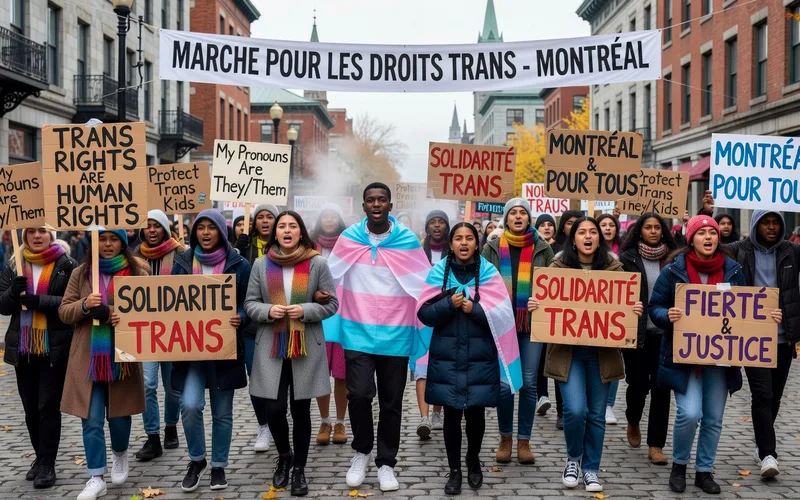
Access to Healthcare
Access to specialized healthcare is a central issue for trans people in Quebec. Quebec's healthcare system covers a significant portion of gender transition-related care, but substantial barriers remain in 2026.
Hormone therapy. Hormone replacement therapy (testosterone or estrogen) is covered by the Régie de l'assurance maladie du Québec (RAMQ) when prescribed by a physician. However, access to a physician who is trained and willing to prescribe these treatments remains unequal across regions. Wait times for an initial specialist consultation can reach several months, or even more than a year in some regions.
Gender reassignment surgeries. Gender transition-related surgeries are covered by RAMQ, but wait times are among the longest in the healthcare system. Few Quebec surgeons perform these procedures, and some operations still require travel outside the province. The bill introduced in February 2026 aims to improve this situation by standardizing protocols and increasing surgical capacity.
Mental healthcare. Psychological support is an essential part of the journey for many trans people. Quebec offers psychological support services through CLSCs and community organizations, but wait times in the public system are significant. Specialized organizations such as ATQ and Interligne offer complementary services.
Puberty blockers. For trans adolescents, puberty blockers may be prescribed by pediatric endocrinologists. These reversible treatments pause pubertal development while the young person explores their gender identity with professional support. Access to these treatments is governed by strict protocols and requires the involvement of a multidisciplinary team.
Training for professionals. A major challenge remains the insufficient training of many healthcare professionals regarding trans realities. Incidents of misgendering, unfamiliarity with protocols and lack of sensitivity are still reported. CGLQ advocates for the mandatory inclusion of gender diversity modules in the initial and continuing education of healthcare professionals.
Summary table: coverage of transition-related care
| Type of care | Covered by the RAMQ | Access time |
|---|---|---|
| Hormone therapy | Yes, with a medical prescription | Varies by region, sometimes several months |
| Gender-affirming surgeries | Yes | Among the longest wait times in the public healthcare system |
| Psychological support | Partially (CLSC) | Significant wait times in the public healthcare system |
| Puberty blockers (minors) | Yes, supervised by a multidisciplinary team | Depends on availability in pediatric endocrinology |
Trans identity in schools
Schools are a crucial environment for trans and non-binary youth. Their experiences at school have a decisive impact on their well-being, self-esteem, and academic success. Significant progress has been made in Quebec, but gaps remain.
Regulatory framework. Quebec's Education Act requires schools to provide a safe and respectful environment for all students, including trans students. The policy to prevent and stop bullying and violence in schools explicitly covers acts based on gender identity. Schools must implement prevention and intervention measures.
Use of chosen name. Trans students have the right to be addressed by their chosen name and corresponding pronouns at school, even before their official civil status change. This practice, recommended by the Ministry of Education, is essential to the well-being of the students concerned.
Access to facilities. Trans students must be able to access washrooms and changing rooms that correspond to their gender identity. The Ministry of Education encourages schools to provide gender-neutral facilities in addition to existing facilities. However, implementation of these recommendations varies from one institution to another.
GRIS workshops. The Groupe de recherche et d'intervention sociale (GRIS) conducts awareness workshops in Quebec schools addressing the realities of sexual diversity and gender diversity. These workshops, led by trained volunteers, help reduce prejudice and create a more inclusive school environment.
Despite this progress, studies show that trans youth remain disproportionately affected by bullying, school dropout, and mental health issues. The CGLQ recommends strengthening school staff training and adopting explicit inclusion policies in every institution.
Rights of trans people in the workplace
The workplace is an area where trans people still face considerable challenges in Quebec, despite a protective legal framework. Hiring discrimination, harassment, and a lack of inclusion are realities documented by surveys and research.
Legal protection. The Quebec Charter and the Act respecting labour standards protect trans people against discrimination and harassment based on gender identity or expression. An employer who refuses to hire, dismisses, or treats a person differently because of their trans identity is breaking the law. To learn more, consult our guide on combating homophobia in the workplace, several provisions of which also apply to transphobia.
Respect for pronouns and chosen name. Recent Quebec case law (Superior Court decision of June 2025) confirmed that an employer's systematic refusal to respect a trans person's chosen pronouns and name constitutes an infringement of dignity. Employers are required to update internal documents (badge, email, organizational chart) as soon as a person requests it.
Transitioning in the workplace. A trans person who begins a social or medical transition while employed is entitled to respectful support from their employer. This includes updating documents, communicating with colleagues (with the person's consent), access to facilities corresponding to their gender identity and, if necessary, schedule accommodations for medical appointments.
Labour market realities. Despite these protections, trans people face significantly higher rates of unemployment and economic insecurity than the general population. Hiring discrimination, which is often subtle and difficult to prove, remains a major obstacle, and it is helpful to know the remedies available in cases of workplace discrimination before experiencing such a situation. Some trans people choose not to disclose their trans identity in the workplace for fear of retaliation.
The CGLQ recommends that employers adopt explicit inclusion policies, train their staff, and designate resource people to support trans employees. The organization offers workplace training and workshops to raise team awareness. Discover the LGBTQ+ workshops and conferences offered by the CGLQ.

Discrimination and legal remedies
In cases of discrimination based on gender identity or expression, trans people in Quebec have several legal and administrative remedies available to them.
Commission des droits de la personne et des droits de la jeunesse (CDPDJ). The CDPDJ is the primary organization responsible for receiving and processing discrimination complaints in Quebec. Any trans person who believes they have experienced discrimination in employment, housing, services, or access to public places can file a complaint free of charge. The CDPDJ investigates the complaint and may refer the matter to the Tribunal des droits de la personne.
Tribunal des droits de la personne. This specialized tribunal can award damages, order corrective measures, and issue injunctions. Recent Tribunal decisions have strengthened protections for trans people, particularly regarding systematic misgendering and denial of service.
Commission des normes, de l'équité, de la santé et de la sécurité du travail (CNESST). For cases of harassment or discrimination in the workplace, the CNESST also provides a complaint and mediation process. Employers have a legal obligation to prevent and stop transphobic harassment.
Criminal remedies. Acts of violence or threats motivated by transphobia are criminal offences. Victims can file a complaint with the police. The Canadian Criminal Code provides for aggravating circumstances for hate crimes based on gender identity.
The CGLQ offers a legal referral service to direct people who have experienced discrimination to the appropriate resources and remedies. The organization can also assist with the complaint process and speak publicly about systemic cases.
Support organizations in Quebec
Quebec has a network of organizations dedicated to supporting trans and non-binary people. These resources provide guidance, information, and specialized services throughout the province.
- Aide aux Trans du Québec (ATQ) – An organization providing dedicated support to trans people and their loved ones. Listening services, support groups, and assistance with procedures
- Interligne – Listening and referral line (1-888-505-1010) for people affected by sexual and gender diversity. Service available 24h/24
- Centre de lutte contre l'oppression des genres (COG) – Community resources, support groups, and assistance programs for trans people in Montreal
- GRIS (Groupe de recherche et d'intervention sociale) – Awareness workshops in schools and workplaces (gris.ca)
- AlterHéros – Online information and support for sexually and gender-diverse youth (alterheros.com)
- Trans Outaouais – Support for trans people in the Outaouais region
- CGLQ – Coalition gaie et lesbienne du Québec. Rights advocacy, political advocacy, and legal referrals. Become a member
For a complete directory of organizations, consult our page dedicated to LGBT+ organizations and associations in Quebec.
Issues and outlook in 2026
Despite an advanced legal framework, trans people in Quebec continue to face persistent challenges in 2026. Several issues require sustained attention from policymakers, community organizations, and society as a whole.
Violence and mental health. Trans people remain disproportionately exposed to physical and verbal violence. Rates of depression, anxiety, and suicide attempts are significantly higher than in the general population. Strengthening psychological support services and suicide prevention are urgent priorities.
Intersectionality. Racialized and Indigenous trans people, as well as those with disabilities or living in remote regions, face multiple and intersecting forms of discrimination. An intersectional approach is essential to adequately address the diversity of experiences within the trans community.
Misinformation. The rise of online misinformation about trans identity is a growing threat. Alarmist rhetoric and scientifically unfounded theories circulate on social media, fueling prejudice and transphobia. The CGLQ and its partners are working to counter this misinformation by disseminating factual and verified information.
Health care bill. The bill introduced in February 2026 to strengthen protections for trans people in the health care system represents a potentially major step forward. The CGLQ is closely monitoring the legislative process and advocating to ensure that the final text addresses the actual needs of those concerned.
International recognition. Quebec can inspire other jurisdictions when it comes to trans rights. Through its UN ECOSOC accreditation, the CGLQ shares Quebec expertise internationally and contributes to defending the rights of trans people in countries where they are still persecuted. International cultural exchanges between France and other countries also play a key role in raising awareness of diversity issues.
The role of the CGLQ
The Coalition gaie et lesbienne du Québec (CGLQ) fully incorporates the defence of trans and non-binary people's rights into its mandate. The organization works on several fronts: political advocacy, public education, legal referrals, and international representation.
The CGLQ actively contributed to the adoption of Bill 103, reforms concerning the “X” designation, and the bill on gender-affirming health care. In 2026, the organization continues to submit briefs to parliamentary committees, organize awareness activities, and train professionals on the realities of trans identity.
To support the CGLQ's work on behalf of trans people's rights, you can become a member or contact the organization to report discrimination or request assistance in a workplace or school setting.
Key takeaways:
- Since Bill 103 (2013), changing one's sex designation has not required any surgical procedure.
- The “X” designation has been available since 2021 on certain official Quebec and federal documents.
- Transition care (hormone therapy, surgeries) is covered by the RAMQ, but waiting times remain a major obstacle.
- Discrimination based on gender identity is prohibited by the Quebec Charter, with recourse available through the CDPDJ and the CNESST.
Further reading on the CGLQ website
New measures for trans people's rights in Quebec in 2026
The legal framework for trans people in Quebec continues to evolve positively in 2026. Here are the most important provisions to know:
- Changing the sex designation without surgery: the 2015 reform (Bill 35) allows the change based on a simple declaration. In 2026, processing times have been reduced to 60-90 days.
- Third gender designation (X): available on provincial birth certificates and federal passports since 2022.
- Ban on conversion therapy: Bill C-4 (2022) prohibits these destructive practices at the federal level.
- RAMQ coverage for transition care: hormone therapy, genital reassignment surgery, and mastectomy are covered for people who meet the clinical criteria.
- Protection against discrimination: the Quebec Charter of Rights (section 10) has explicitly prohibited discrimination based on gender identity or expression since 2016.
For assistance with your applications or in cases of discrimination, contact the Association des transgenres du Québec (ATQ) or consult our complete guide to trans identity and non-binarity in Quebec.
Frequently asked questions about trans identity in Quebec
How can I change the sex designation on my documents in Quebec?
In Quebec, an adult can apply to the Directeur de l'état civil to change the sex designation on their birth certificate. Since Bill 103 (2013), no surgical procedure has been required. Applicants need only provide a sworn statement certifying that the designation does not correspond to their lived gender identity. Minors aged 14 and over may also apply with parental consent.
Is transition care covered by the RAMQ?
Yes, hormone therapy and reassignment surgeries are covered by the RAMQ when medically prescribed. However, waiting times can be long, and access to specialists varies by region. The 2026 bill aims to improve access to this care by standardizing protocols across the health care network.
Is my employer required to respect my pronouns?
Yes. Quebec case law (Superior Court decision of June 2025) confirmed that an employer's systematic refusal to respect a trans person's chosen pronouns and name constitutes an infringement of the dignity protected by the Quebec Charter. Employers must also update internal documents (badge, email, organizational chart).
Which organizations support trans people in Quebec?
Several organizations offer support: Aide aux Trans du Québec (ATQ), Interligne (helpline 1-888-505-1010), GRIS, AlterHéros, the Centre de lutte contre l'oppression des genres (COG), and the CGLQ. These organizations offer a listening ear, support groups, assistance with various processes, and referral services.
Do trans students have specific rights in school settings?
Yes. Trans students have the right to be addressed by their chosen name and pronouns, to access facilities that correspond to their gender identity, and to have a school environment free from discrimination and bullying. The Education Act and the Quebec Charter protect these rights.
For trans and non-binary youth: LGBTQ+ resources and helplines in Quebec:
› Support for LGBTQ+ youth in Quebec: resources and helplines 2026