Transidentity and non-binarity in Quebec in 2026: rights, resources, and support
In brief: In 2026, Quebec offers one of the most progressive legal and community frameworks in the world for transgender and non-binary individuals. This comprehensive guide covers legal rights, the process for changing official documents, the medical transition journey, specialized resources in Montreal and the surrounding areas, the specific situation of racialized and Indigenous transgender individuals, as well as recourse in cases of discrimination.
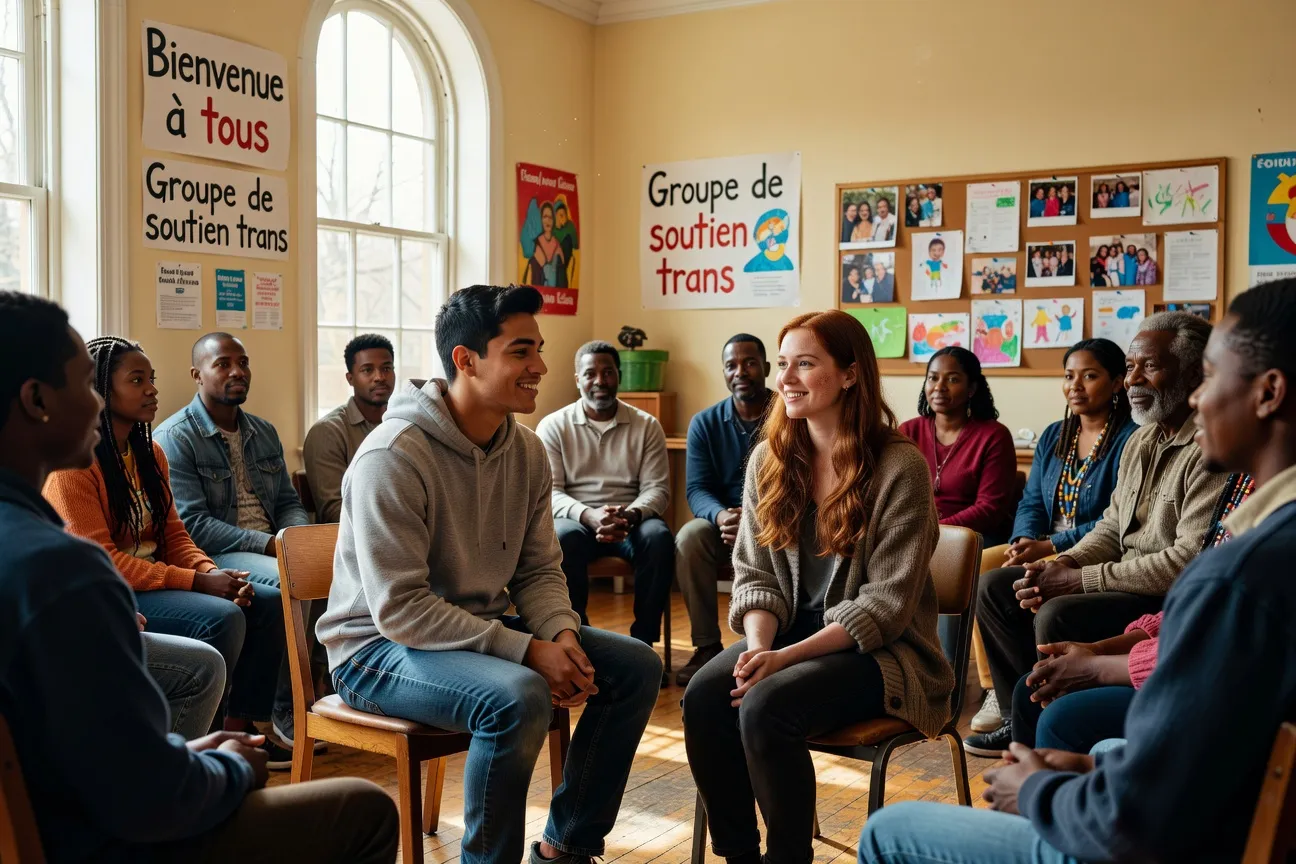
Understanding Trans Identity and Non-Binary Identity in Quebec in 2026
Trans identity refers to the situation of a person whose gender identity does not correspond to the sex assigned to them at birth. A transgender person may identify as a trans woman, a trans man, or express a gender identity that falls outside the traditional binary framework. Non-binary encompasses all gender identities that do not exclusively fit into the categories of "man" or "woman": agender, gender fluid, bigender, genderqueer, and many others.
In 2026, Statistics Canada estimates that 0.5% of the Canadian population aged 20 to 24 identifies as transgender or non-binary, a figure that has been steadily increasing over the past decade. In Quebec, the Centre de recherche en santé des populations (CRSP) estimates that approximately 60,000 to 80,000 people openly live a trans or non-binary identity, although the actual population is likely larger due to the fact that many individuals have not yet self-disclosed.
It is important to distinguish between the often-confused concepts: gender identity (the internal feeling of being a man, woman, non-binary, etc.), gender expression (the way one presents oneself to the world), sexual orientation (who one feels attraction towards), and gender dysphoria (the psychological distress related to the mismatch between gender identity and body). These elements are independent: a trans woman can be heterosexual, lesbian, or bisexual, and all of these realities are equally valid.
In Quebec, discourse has significantly opened up since 2015. The Conseil du statut de la femme, the Protecteur du citoyen, and several professional orders have adopted inclusive policies towards transgender and non-binary individuals. Educational, university, and medical environments are evolving — sometimes slowly, but resolutely — towards a better recognition of these realities.

Legal Rights of Trans People in Quebec: Status Report 2026
Quebec has a strong legal framework to protect the rights of trans individuals. The Charter of Human Rights and Freedoms of Quebec explicitly prohibits discrimination based on gender identity or expression since 2016 (Bill 103). At the federal level, Bill C-16 (2017) amended the Canadian Human Rights Act and the Criminal Code to include gender identity and gender expression as grounds for protection against discrimination and hate crimes.
In practice, these protections apply in the areas of employment, housing, access to public services, and education. Any business, institution, or individual that discriminates against a trans person may be subject to a complaint with the Commission des droits de la personne et des droits de la jeunesse (CDPDJ), reachable at 1-800-361-6477, and workers facing workplace discrimination have specific legal remedies available to them.
Under the Civil Code of Quebec, the sex designation can be changed on the Quebec birth certificate since 2015 without requiring surgical intervention or psychiatric diagnosis. This reform, driven by the Act to amend various legislative provisions regarding the identity of trans individuals (Bill 35), has been hailed as a model internationally. For minors, the procedure requires parental consent and court approval.
Quebec has also recognized since 2022 the third gender designation (X) on Quebec birth certificates and driver's licenses, a major advancement for non-binary individuals. Canadian passports also offer the X option since 2022.
Change of sex designation on official documents in Quebec
The process for changing gender designation in Quebec is now administrative and accessible. Here are the main steps for adults residing in Quebec for at least one year:
1. Quebec birth certificate: Submit a request to the Quebec civil registry (Directeur de l'état civil - DEC) with a declaration form for changing name and gender designation. No surgery, no minimum medical follow-up required. The fee is $31 (2026). The processing time is approximately 60 to 90 days.
2. Health insurance card (RAMQ): Once the birth certificate is modified, contact the RAMQ to update the information. A letter from a doctor can expedite the process.
3. Driver's license: The SAAQ accepts modifications following the update of the birth certificate. Options M, F, and X have been available since 2022.
4. Canadian passport: Federal process (Immigration, Refugees and Citizenship Canada). Since 2022, options M, F, and X are available without requiring medical documentation. A simplified form allows for the update.
5. Social Insurance Number (SIN) and other federal documents: Service Canada updates the SIN and employment insurance file upon presentation of the updated provincial documents.
Organizations such as the Association des transgenres du Québec (ATQ) and Interligne offer free support to navigate these administrative processes. The Clinique Droits Devant in Montreal also provides community legal assistance for individuals facing obstacles.
Medical and Surgical Support: Transition Pathway in Quebec
The medical transition pathway in Quebec has seen significant improvements since 2020, although access remains uneven across regions. The public health system partially covers transition care through the Régie de l'assurance maladie du Québec (RAMQ).
Hormone therapy: Access to hormone therapy is possible through a family doctor, an endocrinologist, or at certain specialized clinics. The CIUSSS du Centre-Sud-de-l'Île-de-Montréal has a specialized Trans and gender clinic. Hormone therapy medications are covered by the RAMQ and private insurance in most cases. Outside of Montreal, wait times can be long.
Gender-affirming surgeries: The RAMQ covers gender reassignment surgeries and mastectomy (male chest) for individuals who meet clinical criteria. Waitlists remain long (12 to 36 months depending on the surgery). Facial feminization surgery (FFS) and breast augmentation are not covered by the RAMQ in 2026.
Specialized clinics: The Gender clinic at the Montreal General Hospital and the Trans clinic at CIUSSS Centre-Sud offer multidisciplinary follow-up (doctor, endocrinologist, social worker, psychologist). For youth under 18, CHU Sainte-Justine and CHUM have specialized pediatric programs.
Mental health: Access to a psychologist or psychotherapist specialized in gender identity is crucial but often difficult to obtain quickly in the public system. Community clinics like LGBTQ+ Counselling Montreal and Interligne offer low-cost or free services.

Trans and non-binary specialized resources in Montreal
Montreal is the nerve center of trans and non-binary resources in Quebec. The metropolis has a dense network of community, medical, and legal organizations.
Association des transgenres du Québec (ATQ): Provincial organization founded in 1998, the ATQ offers support groups, information workshops, a referral service, and a helpline. Website: atq1980.org
Interligne: Formerly Gai Écoute, Interligne has a team trained in trans support. The helpline (1-888-505-1010) and referral services are available at all times.
Projet 10: Specializing in support for LGBTQ+ youth aged 14 to 25, Projet 10 offers peer groups for trans youth, online services, and free psychosocial support.
RÉZO: Sexual health organization for men who have sex with men (HARSAH), including services dedicated to trans men.
AGIR-Montréal: Offers awareness workshops in the workplace and resources for trans individuals in employment.
Égale Canada: National organization with its Quebec office in Montreal. Provides legal support and resources for LGBTQ+ individuals facing discrimination.
For trans youth in school, several Montreal school boards have adopted support policies for trans students (use of the correct name and pronouns, access to facilities according to gender identity), a dynamic also documented in our interview with a secondary school teacher on building an inclusive LGBTQ+ school environment in Quebec.
Trans support in region: resources outside major cities
If Montreal concentrates the majority of specialized resources, trans people living in Quebec's regions are not without support. Several provincial organizations and digital resources partially fill this geographical gap.
In Quebec City, the Centre de diversité de la capitale-nationale (CDCN) offers support services for LGBTQ+ individuals, including meetings for trans people. The CIUSSS de la Capitale-Nationale also has a support program for trans health.
In Sherbrooke, Arc-en-Ciel Estrie holds support groups and provides referrals to local medical resources. The CIUSSS de l'Estrie collaborates with doctors trained in trans-affirming care.
In remote regions (Gaspésie, Abitibi-Témiscamingue, Côte-Nord, Saguenay), access to specialized resources remains a major challenge. However:
- ATQ offers teleconference services and online support groups accessible from anywhere in Quebec
- AlterHéros (alterheros.com) provides a specialized LGBTQ+ chat service with no geographical limits
- Telemedicine has expanded access to doctors trained in trans care for remote regions
- The Trans à distance program from certain pilot CLSCs allows for hormonal follow-up via teleconsultation
Resources on mobility and moving in Canada may be useful for trans individuals in the region considering relocating to a city that offers more community and medical support.
Racialized and Indigenous Trans People: Double Vulnerability
Trans individuals belonging to racialized or Indigenous communities face an intersection of discriminations that amplifies their vulnerability. This reality, documented by researchers such as those from the Research Chair in Trans Identity at UQAM, requires particular attention.
Double marginalization: A Black or Indigenous trans person may be rejected by their community of origin for their gender identity, and by dominant LGBTQ+ spaces for their race or cultural background. This double exclusion increases the risks of isolation, poverty, and mental health issues.
Indigenous communities: In some Indigenous cultures, non-conforming gender identities have historically been recognized and valued (the concept of Two-Spirit). However, the impact of colonialism and residential schools has often eroded these cultural recognitions. Organizations like 2-Spirited People of the 1st Nations work towards reconciling these identities. In Quebec, specific support spaces for Two-Spirit individuals exist in Montreal through certain urban Indigenous centers, complementing the broader network of LGBTQ+ youth support resources and helplines available across Quebec.
Black and Latinx communities: Organizations like ASTT(e)Q (Action Santé Travesti(e)s et Transsexuel(le)s du Québec) and CACTUS Montréal have developed programs specifically tailored to racialized trans individuals in precarious situations. These services include access to healthcare, housing support, and legal assistance.
Tailored resources: The Cavendish Health and Social Services Centre (CSSS) and certain community clinics in Montreal have trained their staff on the specific issues faced by racialized trans individuals, offering culturally sensitive care.
Discrimination against transgender individuals: recourse and protection
Despite existing legal protections, discrimination against transgender individuals remains a documented reality in Quebec. Understanding your recourse is essential to defend your rights.
Common types of discrimination:
- Refusal to use the correct name or pronouns (systemic misgendering) at work or in services
- Refusal to access restrooms corresponding to gender identity
- Harassment or humiliation related to gender expression
- Denial of care or poor medical treatment
- Discriminatory dismissal or non-hiring
Recommended steps:
1. Document: Write down each incident (date, time, location, witnesses, exact words used). Keep emails, messages, and other evidence.
2. Report internally: In a workplace, first report to the union (if applicable) or human resources. Request a written response.
3. File a complaint with the CDPDJ: The Commission des droits de la personne et des droits de la jeunesse accepts complaints for free. Deadline: two years after the last incident. 1-800-361-6477.
4. Community legal aid: La Clinique droits-devant, the Centre de Justice de Proximité, and the ATQ offer free or low-cost legal aid for transgender individuals.
5. Media and awareness: Organizations like Égale Canada or the CGLQ can publicly intervene in cases of systemic discrimination.
Families and Support: How to Support a Trans Person
Family acceptance is one of the most determining factors for the mental health and well-being of a trans person. Quebec studies show that trans individuals whose families are supportive have significantly lower rates of suicide attempts and depression than those who live in a context of rejection.
Using the correct name and pronouns is the first concrete gesture of support. If you make a mistake, simply correct yourself and move on — do not dwell on apologies that place the person in the position of having to reassure you.
Listening without judgment: Coming out as trans is not a phase or an impulsive decision. Welcome what the person confides in you with kindness, even if it disrupts your worldview.
Educating yourself: Read testimonials from trans individuals, consult the resources of the ATQ or Interligne. The CGLQ also offers awareness workshops for families.
Resources for families:
- PFLAG Canada: Support network for families and allies of LGBTQ+ individuals. pflagcanada.ca
- Interligne (1-888-505-1010): listening and referrals for loved ones
- ATQ: workshops for parents and families available in person and online
- CHUM Family Psychiatry Centre: consultations for families in the adaptation process
If you are a professional (teacher, doctor, social worker), the Order of Psychologists and several professional orders have published guides for inclusive practice towards trans clients that you can consult for free online.
Perspectives 2026: advances and persistent challenges
In 2026, Quebec is among the most progressive societies in the world for trans rights, but major challenges persist. Assessment and perspectives.
Recent advances (2020-2026):
- Recognition of the third gender designation (X) on provincial and federal identity documents
- Prohibition of conversion therapies under Bill C-4 (2022) at the federal level
- Improved access to transition care in several regions via telemedicine
- Increased training for health professionals on trans issues in several professional orders
- Adoption of inclusive policies in several universities and schools (use of correct name, gender-neutral bathrooms)
Ongoing challenges:
- Very long waiting lists for gender-affirming surgeries (12-36 months)
- Inequalities in access depending on the regions: trans people outside of Montreal have limited access to specialized services
- Rise of anti-trans discourse in certain political and media spaces
- Still high rates of psychological distress, homelessness, and poverty among trans people
- Lack of precise Quebec statistical data to guide public policies
Organizations like CGLQ, ATQ, and Egale Canada continue to advocate for further reforms: coverage of all transition surgeries by RAMQ, mandatory training for health professionals, and increased funding for community resources. The issue of LGBT rights in Quebec remains an evolving collective struggle.
Frequently asked questions
What is transgender identity?
Trans identity refers to the situation of a person whose gender identity does not correspond to the sex assigned at birth. A trans person may identify as a woman, man, or with a non-binary identity. In 2026, trans people enjoy legal protections in Quebec, including the Charter of Rights and Freedoms, which prohibits discrimination based on gender identity.
How to Change the Gender Designation on Official Documents in Quebec?
In Quebec, you simply need to submit a declaration to the civil registry (Director of Civil Status - DEC) without requiring surgery or a psychiatric diagnosis. The fee is approximately $31 and the processing time is 60 to 90 days. For minors, parental consent and court approval are required.
Does the RAMQ cover transition care?
The RAMQ covers hormone therapy (medications included according to the insurance plan), gender reassignment surgery, and mastectomy for individuals who meet the clinical criteria. Facial feminization surgery and breast augmentation are not covered in 2026.
What resources are available for trans people in Montreal?
The Association des transgenres du Québec (ATQ), Interligne (1-888-505-1010), Projet 10 (for youth), RÉZO, and ASTT(e)Q are the main organizations in Montreal. The CIUSSS Centre-Sud has a specialized Trans and gender clinic.
What to do in case of discrimination against a trans person in Quebec?
Document the incidents (date, location, witnesses). Report to your employer or school. File a complaint with the Commission des droits de la personne et des droits de la jeunesse (CDPDJ, 1-800-361-6477) within two years. The ATQ and the Clinique droits-devant offer free legal assistance.