History of the LGBT Movement in Quebec: Interview with Researcher Marie-Claude Bouchard
In brief: How has the LGBTQ+ movement in Quebec been structured since 1971? What breaks, what legacies, and what current struggles? Researcher Marie-Claude Bouchard, who has studied feminist and LGBTQ+ movements in Quebec for fifteen years, outlines five decades of collective mobilization and sheds light on contemporary issues.
Why this interview
The LGBT movement in Quebec celebrated its fifty years of organized existence in 2022, since the creation of the Front de libération homosexuel in 1971. Five decades of mobilization, legislative victories, and successive issues have profoundly transformed Quebec society. However, the history of this mobilization remains unknown, even within the community.
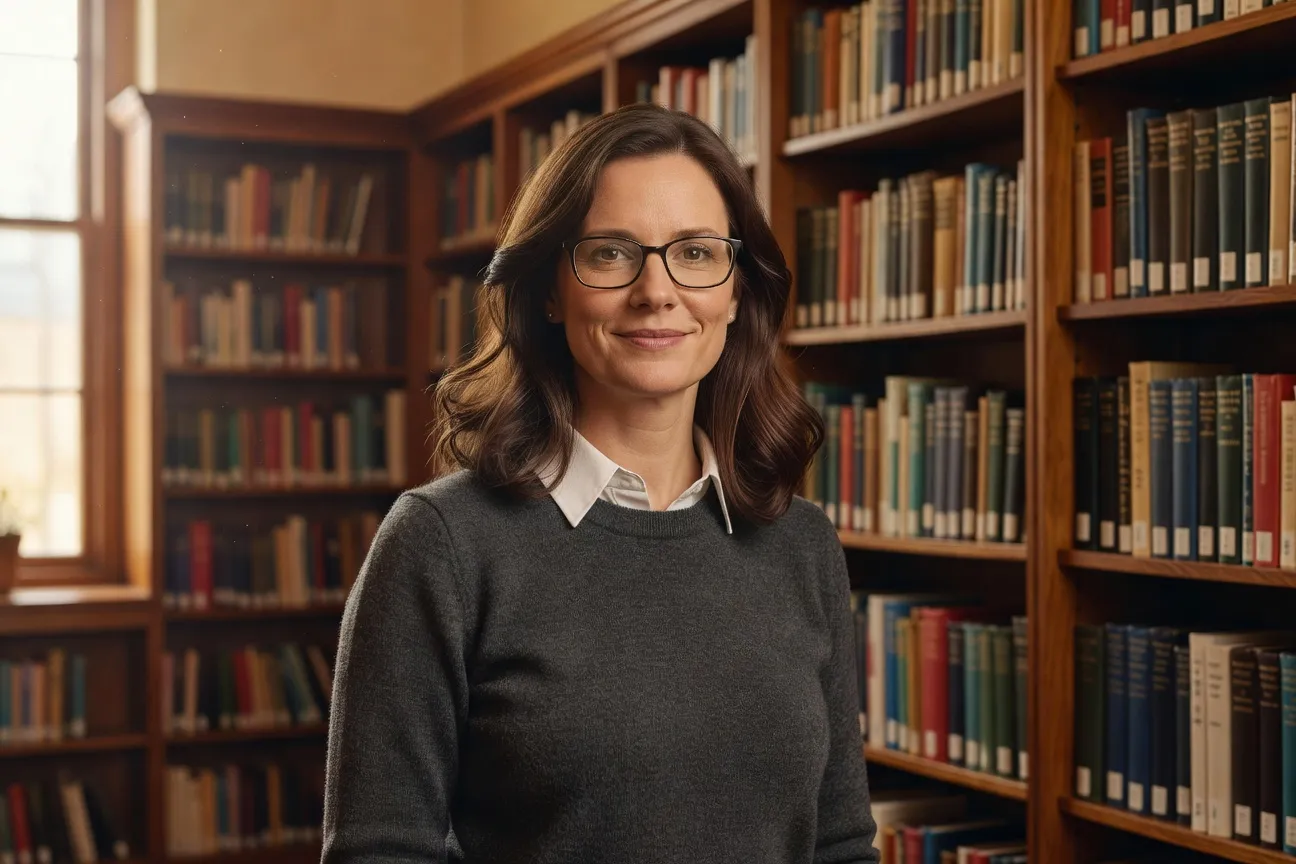
To take stock of these fifty years and shed light on contemporary issues, we met with Marie-Claude Bouchard, an independent researcher specializing in feminist and LGBT movements in Quebec. The following interview synthesizes the documentary and analytical positions presented by current academic work in gender studies, echoing the first-hand recollections gathered in our interview with a historic figure of fifty years of LGBTQ+ activism in Quebec. It is an editorial portrait: Marie-Claude Bouchard is a character created for this article based on the state of research.
The interview
Sophie : How would you situate the founding act of the LGBT movement in Quebec?
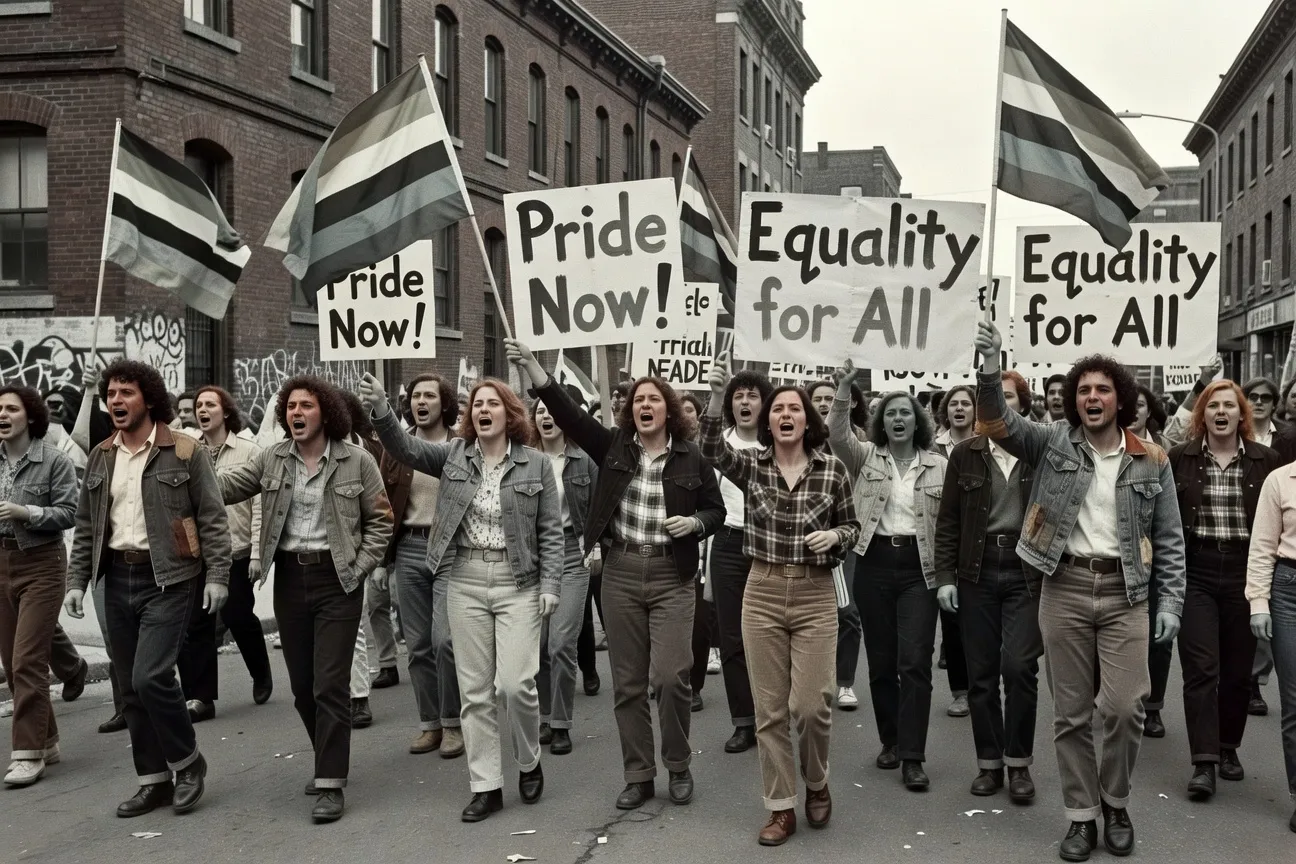
Marie-Claude :There are two dates that are traditionally cited, and each poses a different question. The first is October 1971, when the Front de libération homosexuel was established in Montreal. It is the first explicitly homosexual group in Quebec, organized on the model of the counterculture of the 1970s, with publications, open meetings, and a visible political will.
The second date is October 1977: the police raid at the Truxx bar, which resulted in the arrest of 145 people. This is commonly referred to as the Quebec Stonewall. What distinguishes the two dates is that with 1971 we are talking about conscious political organization, and with 1977 we are talking about mass mobilization in reaction to state violence.
à my view, the two dates are complementary. 1971 founded the organization. 1977 established popular legitimacy. And precisely, two months after the Truxx raid, in December 1977, Quebec included sexual orientation in its Charter of Rights.
Sophie : Precisely, how could this amendment to the 1977 Charter have been obtained so quickly after the Truxx raid?
Marie-Claude :It is important to understand that the political work upstream had begun long before. As early as 1975, the Commission des droits de la personne, under the impetus of jurists like Marie-Andrée Bertrand, recommended the addition of sexual orientation. The Minister of Justice at the time, Marc-André Bédard, under the government of René Lévesque, was personally convinced of the relevance of this amendment.
The Truxx raid played a catalytic role. It made visible a fact that public opinion could until then ignore: the Quebec gay community was exposed to systematic police violence. The political climate following the 1976 election, with a sovereignist government that wanted to embody the social modernity of Quebec, did the rest. On December 15, 1977, the amendment was adopted unanimously.
It is important to highlight the international impact of this decision. Quebec became the first North American jurisdiction, and one of the very first in the world, to protect sexual orientation in a quasi-constitutional law. This advance influenced debates in Canada, the United States, and even in Europe for the following twenty years.
Sophie : How did the 1980s and the AIDS crisis transform the movement?
Marie-Claude :The AIDS crisis was a collective trauma. In Quebec, as elsewhere, an entire generation of gay men was decimated. We are talking about several thousand deaths between 1981 and 1996, that is to say before the arrival of antiretroviral therapies. This tragedy imposed an unprecedented mobilization: it was necessary to create networks for care, support for the dying, and prevention.
But the crisis also paradoxically strengthened the movement. Organizations like ACT MTL, COCQ-SIDA, and Séro Zéro were born out of this urgency. The necessity to engage in dialogue with health and political authorities forced professionalization and structuring. It is in this context that the Coalition gaie et lesbienne du Quebec was founded in 1992: the idea was to create a permanent structure capable of politically advocating for demands, beyond health emergencies.
A often overlooked consequence: the AIDS crisis also highlighted lesbian activism. Lesbian women became heavily involved in care and support, which strengthened their political visibility within the movement. The symbolic merging of gay and lesbian in the name of the CGLQ in 1992 reflects this evolution.
Sophie : How do you explain that Quebec was a pioneer in civil union in 2002 and then in marriage in 2005?
Marie-Claude :Quebec benefited from the alignment of several factors. First, the legal legacy of the Charter of 1977: for twenty-five years, Quebec courts had built a cumulative jurisprudence that made civil union almost inevitable. Next, the political context: the Parti Québécois government of Bernard Landry, which adopted the Act instituting civil union in 2002, saw this measure as a way to embody a progressive Quebec identity, distinct from the more conservative English Canada at the time.
The federal marriage of 2005 followed a different logic: it was the Supreme Court of Canada that imposed action on the government. Quebec did not have to specifically advocate, because civil union was already sufficient for it. But the application in Quebec was immediate.
One point that I find underestimated: in 2002, Quebec was also the first province to fully recognize homoparentality, meaning the possibility for same-sex couples to adopt or have children through assisted reproduction with recognition of both legal parents from birth. This is a major advancement because it paved the way for the normalization of homoparental families, a legacy explored in more depth in our interview marking 20 years of gay marriage in Canada with a family law lawyer.
Sophie :How would you characterize the 2010s and the emergence of trans issues?
Marie-Claude :The 2010s were the years when trans issues came to the forefront of public debate. Bill 35 in 2013, which allowed for the change of sex designation without surgical operation, followed by Bill 103 in 2016, which extended this possibility to minors with parental support, were major advancements.
This emergence has not been without tensions, including within the LGBT movement itself. Some more traditional feminist currents have expressed reservations. The movement has had to do considerable internal work to articulate gay, lesbian, bisexual, and trans solidarity within a common platform.
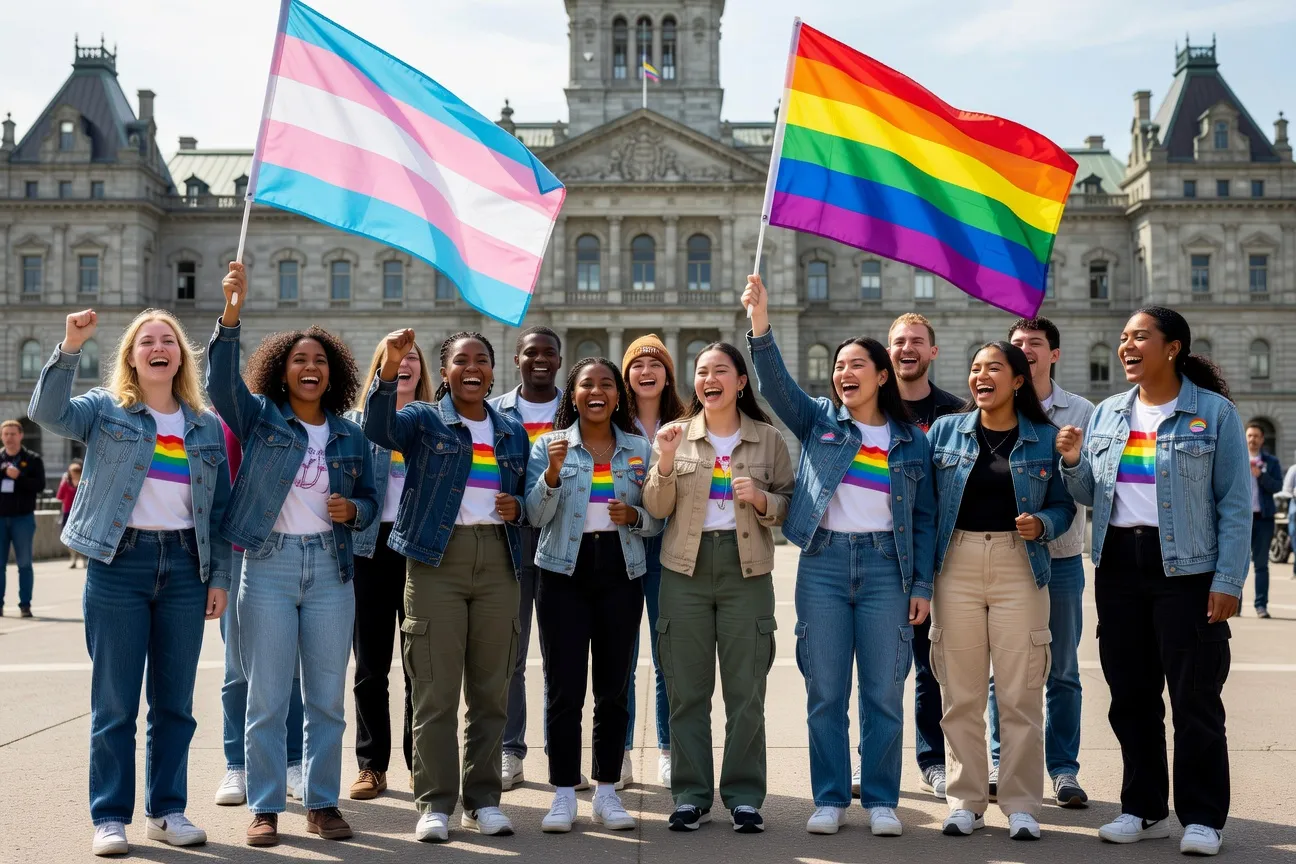
More broadly, the 2010s were the years of intersectionality. The issues faced by racialized LGBT individuals, Indigenous and Two-Spirit LGBT individuals, and LGBT individuals in rural areas have emerged as specific struggles. The movement has become more complex, which is positive but requires more demanding coordination.
Sophie : What assessment do you make of the Quebec LGBT movement in 2026?
Marie-Claude :The legislative record is exceptional: few societies in the world offer a legal framework as protective as Quebec and Canada. Marriage, adoption, protection against discrimination, recognition of trans identities: almost everything that could be achieved on a formal level has been.
But the social assessment is more nuanced. Discrimination in the workplace persists: one in three LGBT people has experienced it according to recent surveys. The suicide risk among LGBT youth, and particularly among trans youth, remains alarming. Homophobic and transphobic assaults have slightly increased since 2022, reflecting a more tense international climate.
And then there is a generational challenge. Young activists do not always recognize the legacy of past struggles. Part of the work today involves passing on this memory so that the gains are not taken for granted.
Sophie : You speak of a more tense international climate. Is the rise of anti-trans rhetoric a concern in Quebec?
Marie-Claude :Yes, deeply. Since 2022, we have observed the importation to Quebec of an anti-trans rhetoric built in the United States and the United Kingdom. This rhetoric sometimes presents itself in feminist clothing, which complicates the work of analysis and response.
The creation by the government of Quebec, in 2023, of the Committee of Elders on gender identity was perceived by community organizations as a concerning signal. Not because the content of the report was necessarily negative, but because the very approach legitimized the idea that there would be a debate to be had on acquired rights.
Organizations have reacted in a coordinated manner, reminding that trans rights are non-negotiable. This is a struggle that will shape the years to come.
Sophie : What issues do you think will dominate in the next five years?
Marie-Claude :Three issues seem to me to be a priority. First, the mental health of LGBT youth, particularly transgender youth. The numbers are unbearable, and they reveal that legality is not enough: concrete action is needed in school, medical, and family environments.
Secondly, inclusion in the regions. Forty percent of LGBT people in Quebec live outside of Montreal. Isolation, lack of specialized services, difficulty accessing gender-affirming care: these issues require renewed public investment.
Thirdly, the fight against violence. Homophobic and transphobic assaults, as well as domestic violence in LGBT couples, which is still largely underestimated by public services. SAVIE-LGBTQ and several organizations are working on this, but resources are clearly insufficient.
Sophie : What do you think is the greatest achievement of the Quebec LGBT movement over the past fifty years?
Marie-Claude :Its ability to constantly reinvent itself. The movement is not the same in 1971, in 1992, in 2016, and in 2026. With each generation, new activists have brought new issues: health security in the 1980s, family recognition in the 1990s-2000s, trans issues in the 2010s, intersectionality today.
This capacity for renewal demonstrates an exceptional community vitality. Many social movements become exhausted or stagnate in their victories. The Quebec LGBT movement, on the other hand, has continued to transform.
It is also the testimony of a series of activists who have agreed to share, listen, and make room for the next generation. It is rare and precious.
Sophie : A message for young LGBT who are discovering this story?
Marie-Claude :First, they should know that the rights they take for granted were won through fifty years of struggle. Marriage, adoption, protection against discrimination, the ability to change gender designation: none of this was obvious two generations ago. Gratitude towards the activists who secured these rights is not an obligation, but a useful understanding.
Then, they should understand that these rights are not irreversible. History shows that gains can be challenged. The fight continues, simply on different fronts.
Finally, let them dare. The Quebec LGBT movement needs their creativity, their radicalism at times, their ability to ask questions that previous generations could not imagine. This is how the movement progresses.
Quick questions: common misconceptions
Conclusion: 3 key takeaways
- The Quebec LGBT movement will be 55 years old in 2026: its legislative achievements are among the most advanced in the world, but they result from continuous and reversible collective mobilization.
- Three issues shape contemporary mobilization: the mental health of LGBTQ+ youth, inclusion in rural areas, and the fight against violence (homophobic, transphobic, domestic).
- The movement's ability to renew itself generation after generation is its primary strength: it depends on the active transmission of heritage and openness to the new issues raised by young activists.
Frequently asked questions
When was the LGBT movement born in Quebec?
The Homosexual Liberation Front was created in October 1971 in Montreal, the first explicitly homosexual organization in Quebec. The police raid at the Truxx bar in October 1977 marked the shift to mass mobilization, sometimes referred to as the Quebec Stonewall.
What has been the role of the CGLQ in the history of the movement?
The Coalition gaie et lesbienne du Québec was founded in 1992 to politically advocate for the community's demands. In 2007, it obtained consultative status with the ECOSOC-UN, becoming one of the first LGBT NGOs in the world to receive this accreditation.
When did Quebec legalize same-sex marriage?
Quebec adopted the Act instituting civil union in 2002, becoming the first Canadian province to recognize same-sex couples. Federal legalization of marriage occurred in 2005, driven by the Supreme Court of Canada.
What are the current LGBT issues in Quebec?
The mental health of LGBTQ+ youth, access to services in rural areas, and the fight against homophobic and transphobic violence are the three structural priorities. The rise of anti-trans rhetoric since 2022 particularly mobilizes organizations.
Why do we talk about intersectionality in the LGBT movement?
Because the realities of racialized, Indigenous, disabled, or rural LGBT individuals are distinct from the majority reality. Specific organizations (Helem, Arc-en-ciel d'Afrique, Réseau 2-Spirit, Centre de solidarité lesbienne) work towards this plural inclusion.
Who was Marc-André Bédard?
Marc-André Bédard was the Minister of Justice of Quebec under the government of René Lévesque. In December 1977, he introduced the amendment to the Charter of Rights that made Quebec the first jurisdiction in North America to protect sexual orientation.
Is the Quebec LGBT movement specific compared to the rest of Canada?
Yes, on three points: its institutional history (Charter 1977), its distinct Francophone structure from the Canadian Anglophone movement, and the early nature of its legislative victories (civil union 2002, full and complete homoparentality as of 2002).