LGBTQ+ Activism in Quebec: Interview with Marc-André Lévesque, 40 Years of Struggles
In brief: What is it like to experience forty years of LGBTQ+ activism from the inside? From the shock of the Truxx raid to the hospital nights during the AIDS crisis, from legal battles for marriage to contemporary trans fights, Marc-André Lévesque reflects on five decades of mobilization. A ground testimony that complements the academic perspective and sheds light on the transmission between generations.
Why this interview
The history of the LGBTQ+ movement in Quebec is also written from within, over the course of a militant life. After publishing an interview with a university researcher about fifty years of collective mobilization, the editorial team wanted to give a voice to a grassroots figure: an activist who held phone support lines during the height of the AIDS crisis, who marched at the first Pride events amidst insults, who witnessed the birth of the Coalition gaie et lesbienne du Quebec and accompanied the legal battles up to the marriage in 2002.
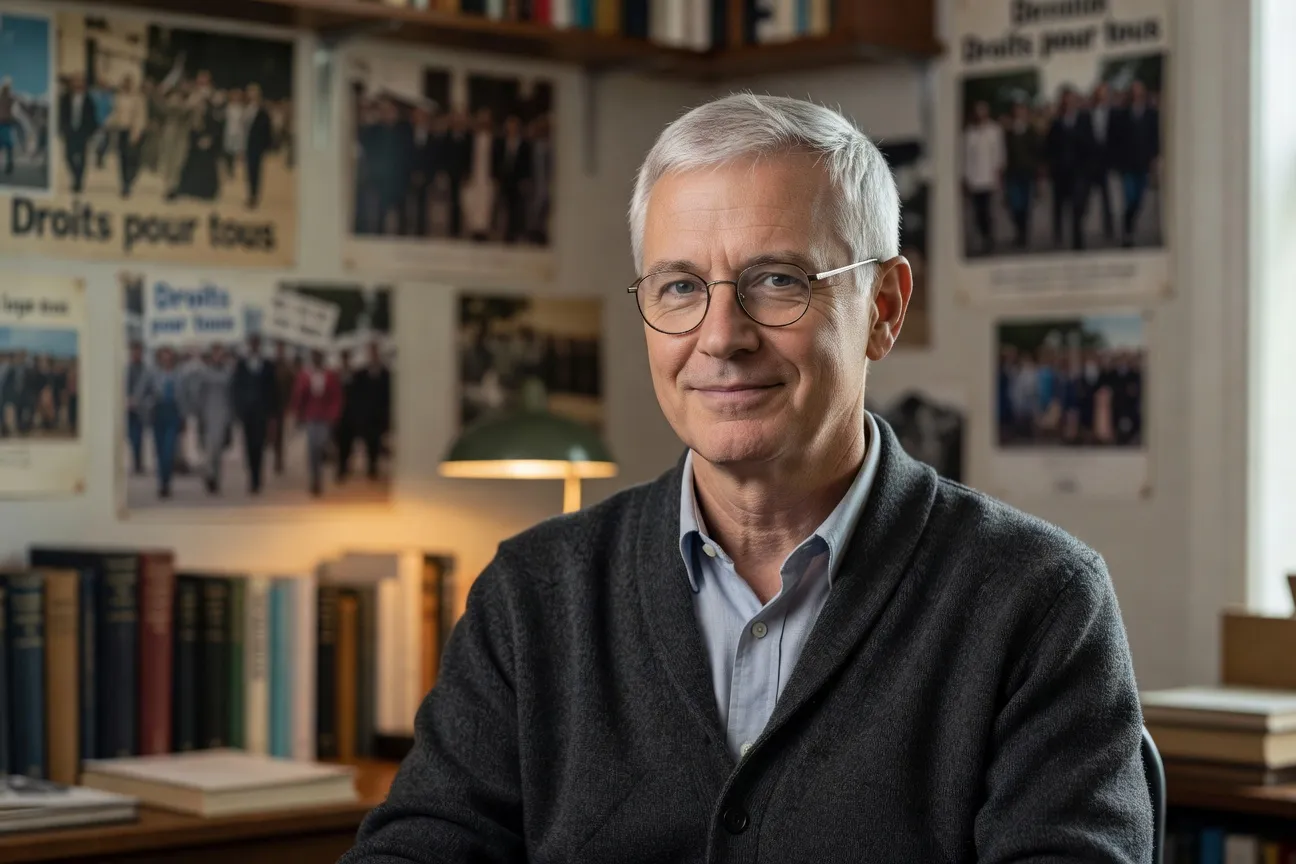
Marc-André Lévesque, 64 years old, agreed to reflect on forty years of commitment. The following interview constitutes an editorial portrait: Marc-André Lévesque is a composite character, constructed from militant testimonies, documents, and publications. He does not embody any real person, but rather a collective memory. His perspective complements the academic viewpoint: no longer the analysis of structures, but the lived experience of mobilization, its doubts, its anger, and its fragilities.
The interview
Sophie : How did you get involved in LGBTQ+ activism in Quebec?
Marc-André :By accident, like many activists of my generation. In 1985, I was 23 years old, I had just arrived in Montreal from Saguenay. The Truxx raid had happened eight years earlier, I had read about it in the newspapers without fully understanding. But in 1985, AIDS was starting to take my friends away. One evening, in an apartment in the Plateau, we talked about setting up a support network. The next day, I was an activist.
What strikes me in hindsight is that we never decided to become activists. The circumstances demanded it. Either we reached out to those who were dying, or we looked the other way. There was no middle ground. This generation was forged in urgency, and it created a very specific type of commitment — visceral, not theoretical. We learned on the job.
To understand this context, I recommend that young generations read the interview you published with a gender studies researcher: the history of the LGBT movement in Quebec is outlined in a more systematic way. My testimony complements it from the inside, but does not replace it.
Sophie : How would you situate the birth of the Quebec LGBT movement — the 1970s-80s?
Marc-André :The Homosexual Liberation Front in 1971 is the official founding act. But when you talk to activists from that time, they often tell a different story: informal support networks, bars that served as spaces for political socialization before the fact, apartments transformed into discussion places. Politicization came from everyday life, not from a theoretical vanguard.
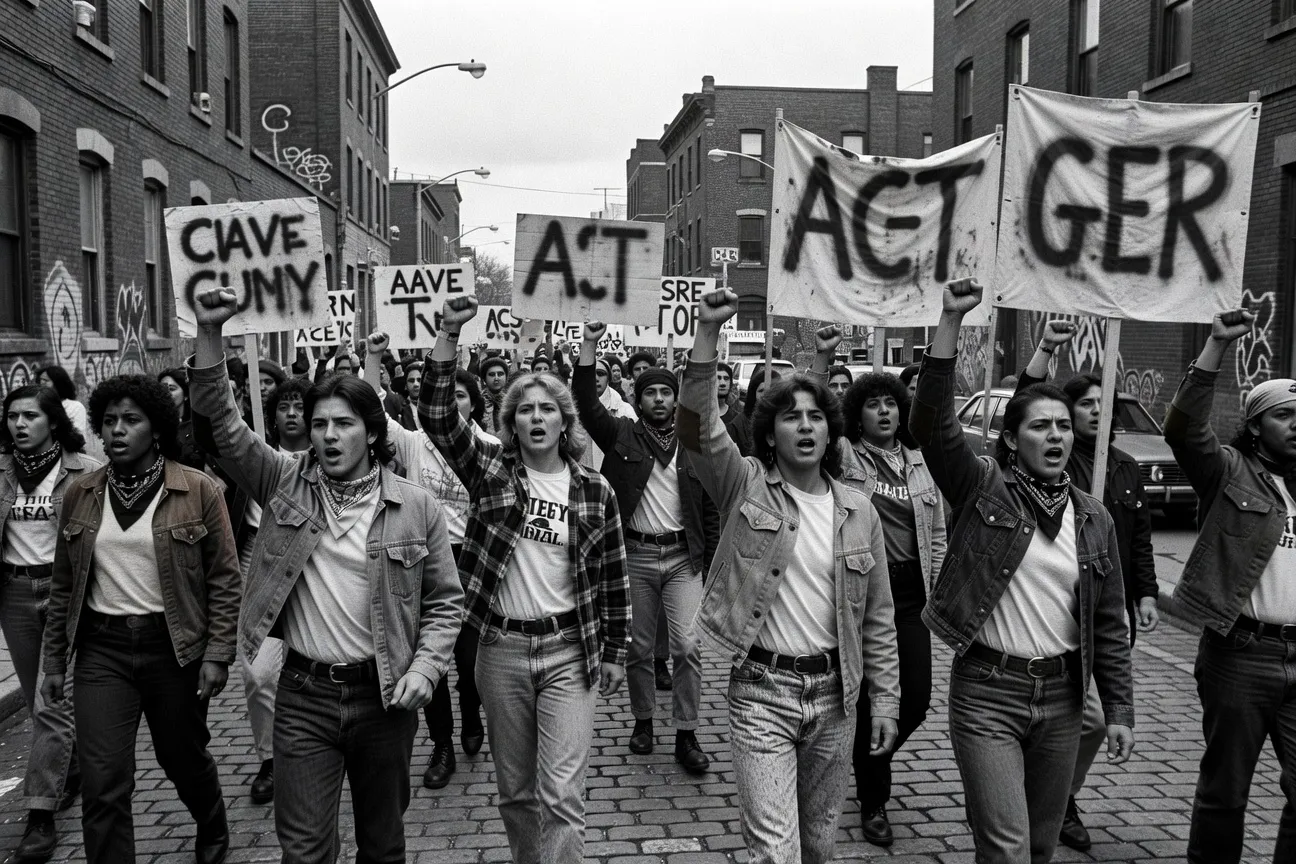
The 1970s were the years of the first publications, the first demonstrations. Le Berdache, Sortie, Le Treize, these magazines circulated underground, sometimes printed in a few hundred copies. The Truxx raid in October 1977 was the moment when everything changed. 145 people were arrested in a single sweep. The next day, 2,000 demonstrators on Sainte-Catherine Street. It's the Quebec equivalent of Stonewall, yes.
But beware of the heroic rewriting. Many activists of that time lived in hiding, lost their jobs, their homes, their families. The activist legend of the 70s often forgets the fragilities — the broken friendships, the psychological alienations, the internal divisions of the movement.
Sophie : You lived through the AIDS crisis. How did it transform activism?
Marc-André :She forced us to become competent. Before AIDS, activism was largely confrontational. With AIDS, we had to learn pharmacology, hospital law, communication with doctors, end-of-life management. We became, despite ourselves, technicians of medicine and social work. ACT MTL, COCQ-SIDA, Séro Zéro: these organizations were born because we had no one to do it for us.
And then there were the deaths. I accompanied about thirty friends to the hospital between 1986 and 1996. Thirty, maybe forty. We lost count. We went to funerals on the weekend, sometimes two on the same Sunday. In the movement, we talk little about what it did psychologically. Many activists of my generation developed what is now called post-traumatic stress syndrome without knowing it. Some friends sank into depression, others into substance use. If I can give one piece of advice to today's activists, it is to take activist mental health seriously — there are resources like the support for engaged burnout that did not exist in the 80s and could have saved lives.
Paradoxically, the AIDS crisis also strengthened the movement. It forced professionalization: it was necessary to engage in dialogue with the authorities, negotiate budgets, write government briefs. The Coalition gaie et lesbienne du Quebec, founded in 1992, was born out of this structural necessity.
Sophie : The first anti-discrimination laws, the Charter of 1977, marriage from 2002 to 2005: what was your experience from the inside?
Marc-André :The Charter of 1977, I learned about it through the stories of the elders. When I arrived in the movement in 1985, it was already a fundamental achievement, considered the basic legal weapon. We constantly referred to it in the memories, in the battles with employers, in discrimination claims.
Marriage is different. I lived through the civil union battle in 2001-2002 from the inside. I remember the nights we drafted briefs, the days at the National Assembly, the internal debates within the movement — because let's be honest, some radical lesbians and certain anti-institutional gays were hostile to marriage. For them, marriage was the quintessential patriarchal institution. We discussed it for years. In the end, pragmatism won out: without legal recognition, surviving partners inherited nothing.
On June 24, 2002, the day the Civil Union Act was enacted, I was in the street with hundreds of couples. Many were crying. It was a concrete, palpable victory. To understand the symbolic importance of this moment, I refer to the background file: the history of equal marriage in Quebec. It is also for this reason that many LGBT couples who marry today choose a carefully planned ceremony — to materialize this collective victory. Useful photographic references exist on wedding photography for same-sex couples, which document this specific aesthetic that has emerged since 2002.
Sophie : How has activism transformed with the arrival of trans issues in the 2010s?
Marc-André :Deeply, and not without pain. Let's be honest: my generation was not ready. We had built a gay and lesbian movement in the 70s and 80s, we had integrated bisexuals in the 90s, but trans issues were largely foreign to us. When the first trans demands came to the heart of the debate in the 2010s, there was resistance. Including from me, I must admit.
What made me change was meeting young trans activists. They explained to us that they experienced, in the 2010s, exactly what gay people experienced in the 1970s: medical pathologization, employment discrimination, domestic violence, massive suicidality. The continuity of the struggle was evident. Bill 35 in 2013, which allowed for the change of sex designation without surgery, is a victory I am proud of — even though I was not on the front lines. Young trans activists taught me as much as I passed on to them.
Today, trans inclusion is non-negotiable. Organizations like ATQ, RG2T, ASTT(e)Q have structured this mobilization. For concrete resources, I recommend the complete guide on trans identity in Quebec.
Sophie : Lesbians have long been made invisible in the movement. How has this evolved?
Marc-André :It is a historical wound. In the 1970s and 1980s, the movement was largely dominated by white, urban, educated gay men. Lesbians had their own networks — the lesbian feminist movement, the editions of Remue-ménage, the lesbian cafés of the Plateau — but they were little visible in mixed coalitions.
The AIDS crisis was a turning point. Lesbian women became heavily involved in caregiving, in support services, and in the management committees of organizations. Without them, dozens of LGBT community organizations would not have survived the 90s. When the CGLQ was founded in 1992, the word 'lesbian' was explicitly included in the name — it was not a concession, it was an acknowledgment of a debt.
Today, several major LGBTQ+ organizations in Quebec are led by women. But there is still much to be done. Lesbians in rural areas, butch lesbians, and older lesbians remain largely invisible. The work is not finished.
Sophie : What are the differences between advocating in Montreal and advocating in the regions?
Marc-André :Enormous. In Montreal, we have the critical mass. The Village has existed since the 80s, the support networks are dense, doctors trained in LGBT realities are accessible, and there are many associations. In the regions, it's a different reality. Over the years 2000, I accompanied several activists in Gaspésie, in Abitibi, on the Côte-Nord. Often, they were isolated, sometimes the only ones in their city to be visibly engaged.
Regional activism is a different form of courage. In Saint-Jérôme, in Rouyn, in Rimouski, you can't hide in the crowd. Everyone knows who you are, and everyone has an opinion. Many young LGBT people in the regions leave for Montreal or Quebec City for this reason — which impoverishes the regions and further concentrates activism in the metropolises.
Things have changed a bit since 2010, with the emergence of local groups in medium-sized cities: GRIS-Mauricie, GRIS-Estrie, student committees in CEGEPs. But a massive public investment would be needed to catch up. The Ministry of Health has a historical responsibility that has not been assumed here.
Sophie : What do you think of the new generations of activists? How have they taken up the fights?
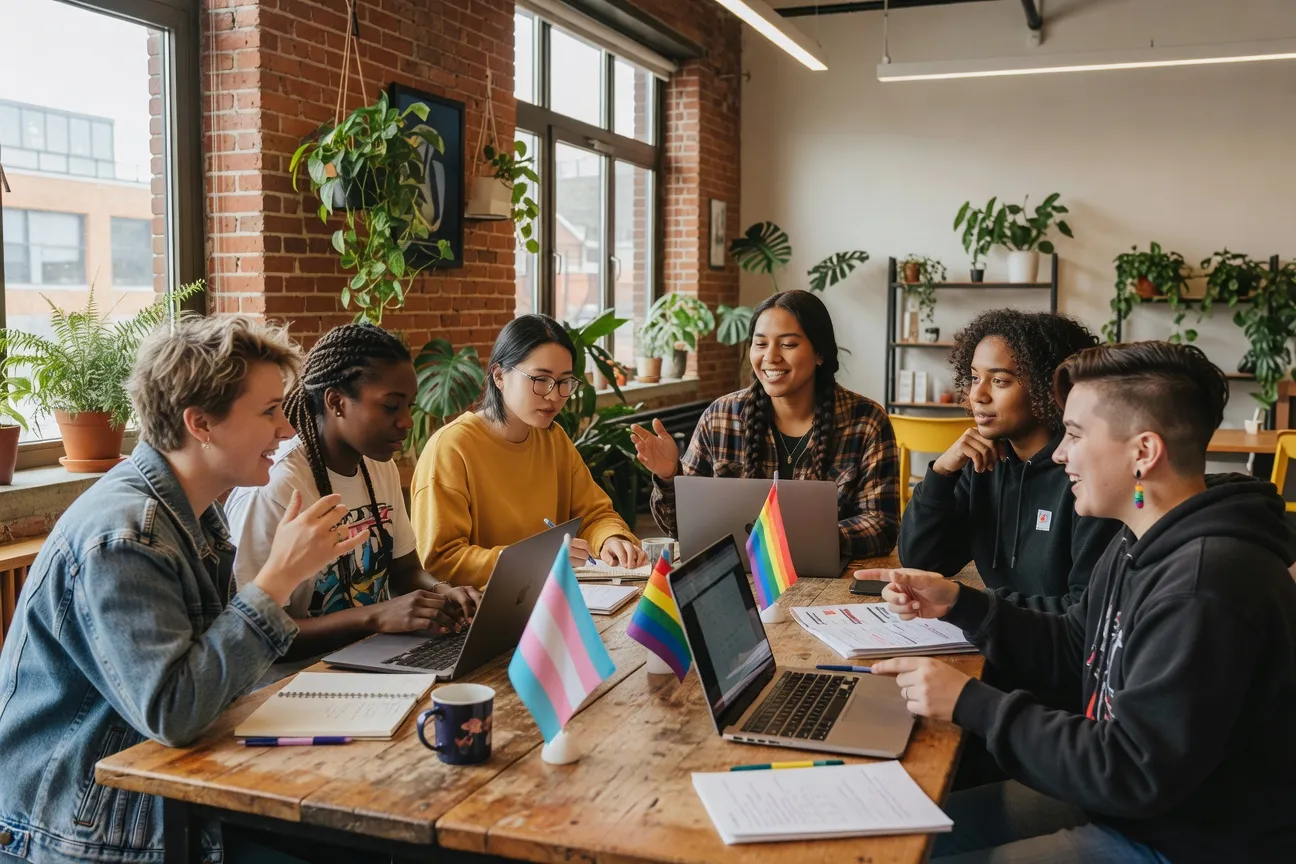
Marc-André :I am admiring, and sometimes puzzled. Today's young activists are faster, more connected, more intersectional than my generation. They articulate LGBT issues with racial, Indigenous, ecological, and anti-capitalist questions. It is a wealth. The diversity of the organizations they create — informal collectives, activist Instagram accounts, podcasts, fanzines — completely renews the forms of mobilization.
What sometimes throws me off is the speed of internal debates, the intensity of conflicts on social media, the difficulty in building long-term alliances. In my generation, we learned to live with disagreements for years because we didn't have the luxury of dividing ourselves. Today, coalitions are formed and dissolved in six months. I don't know if it's better or worse — it's different.
I am also very touched by their clarity on mental health. My generation was crushed in silence. Theirs dares to say 'I am not doing well, I am taking a break, I am seeking help.' This is a major progress. To situate the diversity of current commitments, I recommend the directory of LGBT associations and coalitions in Quebec, which provides a good snapshot of the 2026 landscape.
Sophie : Does the global rollback of LGBT rights since 2022 concern you?
Marc-André :Deeply. I have never been as worried since the early 1990s. The rise of anti-LGBT legislation in Hungary, Italy, the United States, and in several states of international diplomatic chains is a historic signal. What we thought was secured forever can be called into question in just a few years.
What worries me the most is the importation to Quebec of an anti-trans rhetoric built in American and British media. This rhetoric sometimes presents itself under feminist disguises or as a concern for children, which greatly complicates the response work. The Committee of Experts on Gender Identity created by the government in 2023 has been rightly perceived as a step in the wrong direction.
But there are also reasons to hope. The mobilization in Quebec is strong, structurally rooted in fifty years of legal and cultural victories. Organizations like CGLQ, Conseil quebecois LGBT, and Aide aux trans du Québec are resilient. And young people will not be pushed around. To better understand the existing resources, see the comprehensive guide to LGBT resources in Quebec in 2026.
Sophie : What advice would you give to emerging activists in 2026?
Marc-André :Three things, which are the lessons of forty years. The first: know your history. The rights you have today were not given; they were fought for. The Charter of 1977, the marriage in 2002, Law 35 of 2013, these are concrete victories paid for by generations of activists. Not knowing them is risking losing them through carelessness.
The second: take care of yourself. Activism can be draining. Anger is a force, but it can be exhausting. Seek psychological support if necessary, take breaks, and don’t hesitate to pass the torch. A generation of activists from the 80s fell into depression and substance use because we weren’t taught to protect ourselves. Mental health in activism is a real issue, and there are now specific resources on the themes of anxiety related to activism.
The third: build long-lasting alliances. Activism is not a sprint, it's a multi-generational marathon. Accept disagreements with those who share the essentials, even if you differ on methods. And pass it on. Seek out the youth, listen to them, train them. This is how the movement endures. To identify the community centers where this transmission takes place concretely, see the LGBT community centers in Quebec.
Quick questions: common misconceptions
Conclusion: 3 key takeaways
- Forty years of LGBTQ+ activism in Quebec testify to a collective memory forged in urgency (AIDS) and then institutionalized (marriage, trans rights). The transmission between generations is today the main challenge.
- Militant mental health is an underestimated but critical issue: the generation of the 1980s suffered in silence; the new generation is learning to protect itself, which represents a major advancement for the movement.
- The global rollback of LGBT rights since 2022 (Hungary, Italy, certain American states) should serve as a reminder: no gain is definitive, and mobilization cannot rest on its legal victories.
- The difference between advocating in Montreal and advocating in the regions remains considerable. Public investment in LGBT services in Gaspésie, Abitibi, Côte-Nord, and Saguenay is a structural priority for the coming years.
Frequently asked questions
When did LGBTQ+ activism begin in Quebec?
The Homosexual Liberation Front was created in October 1971 in Montreal, the first explicitly homosexual activist organization. However, informal networks had existed since the 1960s in the bars and apartments of downtown. The police raid at the Truxx bar in October 1977 marked the transition to mass mobilization.
Why do we talk about the Quebec Stonewall?
The term refers to the police raid on October 21, 1977, at the Truxx bar, which resulted in the arrest of 145 people. The next day, a demonstration gathered 2,000 people — the largest LGBT mobilization in Quebec at that time. Eight weeks later, the Quebec Charter of Rights included sexual orientation in the list of prohibited grounds for discrimination.
How did the AIDS crisis transform LGBT activism in Quebec?
She imposed a rapid professionalization: it was necessary to learn pharmacology, engage with health authorities, negotiate budgets, and support end-of-life care. Organizations like ACT MTL, COCQ-SIDA, and Séro Zéro were born from this necessity. The Coalition gaie et lesbienne du Quebec (CGLQ), founded in 1992, emerged from this structuring. The crisis also left a massive psychological trauma among the surviving activists.
How has activism adapted to trans issues?
With initial resistance, followed by gradual integration. The meeting of older gay and lesbian activists with young trans activists in the 2010s revealed the structural continuity of the struggles. Bill 35 of 2013 on changing sex designation without surgery and Bill 103 of 2016 were major advancements. Today, trans inclusion is non-negotiable within the Quebec LGBTQ+ movement.
What are the priority advocacy issues in 2026?
Three issues structure the movement: the mental health of LGBTQ+ youth (particularly trans youth), inclusion in the regions (services too concentrated in Montreal and Quebec City), and resistance to the importation into Quebec of an anti-trans rhetoric constructed in the United States and the United Kingdom since 2022.
How to support LGBTQ+ activism today?
Several avenues coexist: joining a community organization (CGLQ, Conseil québécois LGBT, local organizations), making a financial donation, becoming a volunteer for helplines or events (Pride, Day Against Homophobia), participating in public consultations when the government launches them, passing on historical memory to younger generations.
Is LGBT activism in the regions different from Montreal?
Very different. In rural areas, the critical mass is lacking, services are scarce, activists are often isolated and more exposed. The courage required is of a different nature than in the metropolis. Local groups (GRIS-Mauricie, GRIS-Estrie, student committees in regional CEGEPs) have been trying to catch up since 2010, but public investment remains very insufficient.