Making school more inclusive for LGBTQ+ youth in Quebec: an interview with a high school teacher
In brief: How is the Quebec school system becoming a safer environment for LGBTQ+ youth? Simon Bélanger, a high school teacher and head of a gay-straight alliance (GSA) for 12 years in Longueuil, shares his on-the-ground experience regarding anti-bullying policies, staff training, and student alliances.
Context of the interview
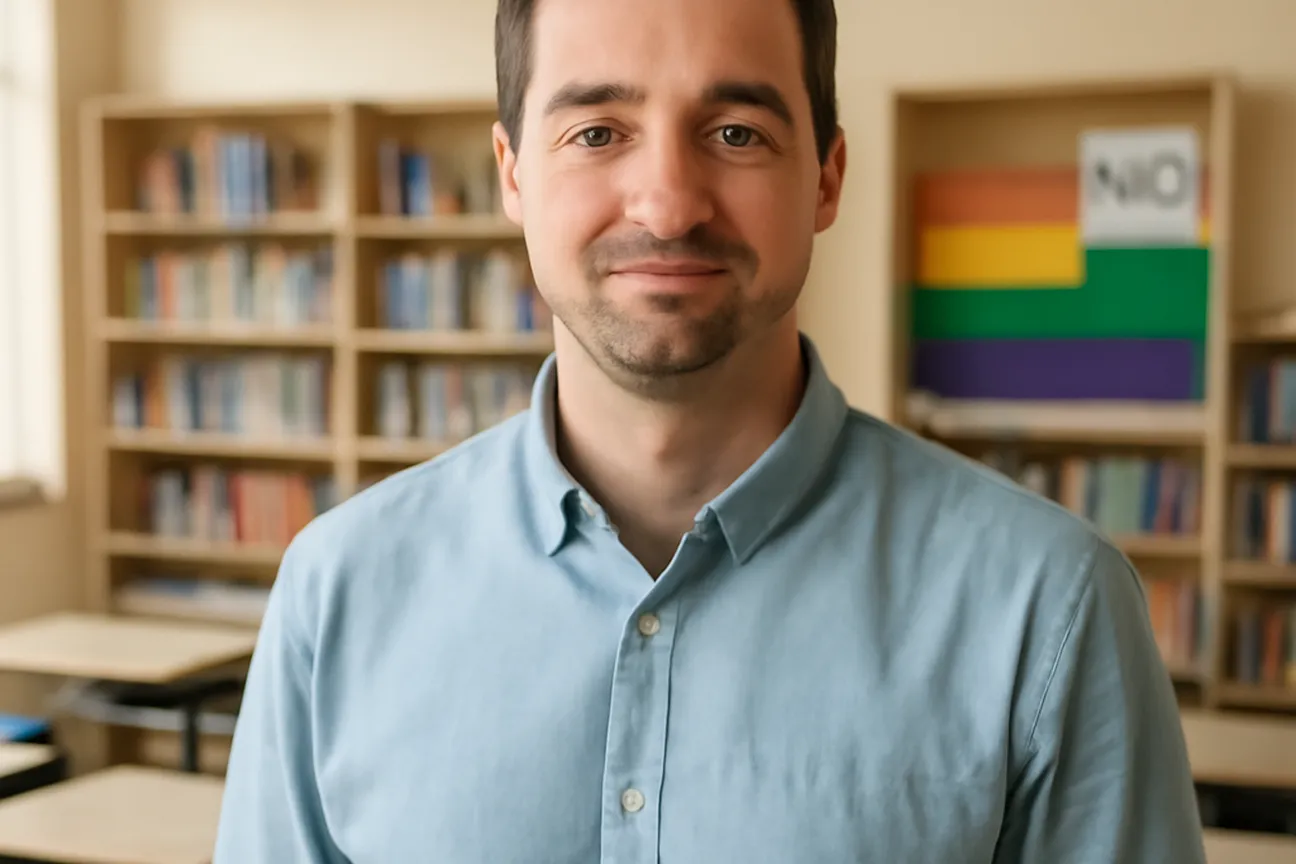
In the context of our series of interviews on LGBTQ+ inclusion in schools, we met with Simon Bélanger. A secondary school teacher in Longueuil for over 15 years, Simon stands out for his unwavering commitment to young people. He has been leading the Gay-Straight Alliance (GSA) at his school for 12 years, a safe and essential space for LGBTQ+ students and their allies. His hands-on experience is invaluable, especially since statistics reveal that LGBTQ+ youth in Quebec remain significantly more at risk of bullying and psychological distress in school, despite legislative advances such as Bill 56 of 2012 aimed at combating bullying and violence in schools. We want to understand how local initiatives like GSAs contribute to a more inclusive environment and how the education system can better support these young people. For more information on current challenges in education, see this article. Simon Bélanger shares with us his expertise, observations, and reflections on the progress made and the persistent challenges in the Quebec school system.The interview
Sophie :What is a gay-straight alliance (GSA) and how do you start one?
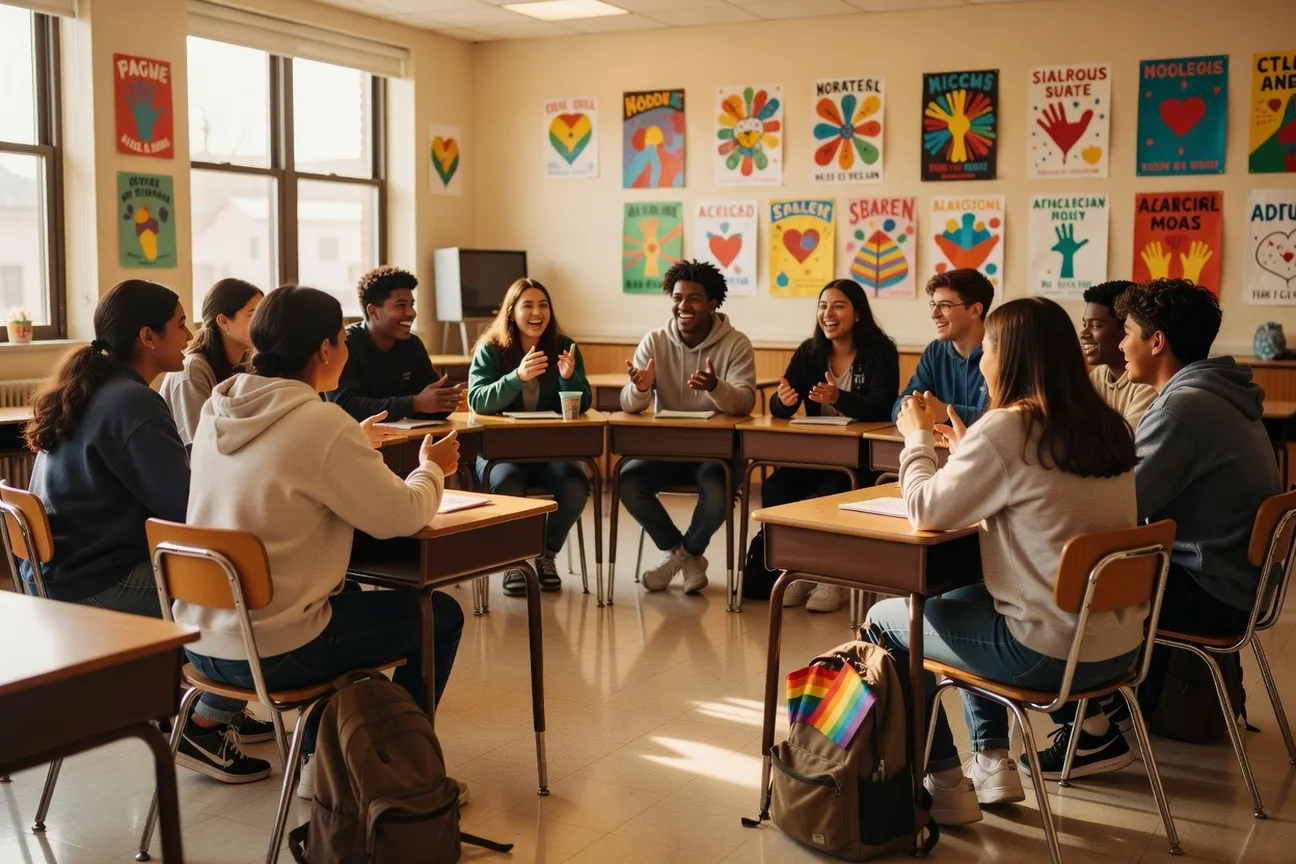
Simon :A GSA, or "Gay-Straight Alliance," is a voluntary student group that brings together LGBTQ+ students and their heterosexual and cisgender allies. It is a safe space where young people can discuss, support each other, plan awareness activities, and advocate for a more inclusive school environment. The idea originated in North America in the 1980s and 1990s in response to the isolation and discrimination experienced by LGBTQ+ youth in schools. Its role is threefold: social support, awareness, and advocacy.
To start a GSA, you first need to find a teacher or staff member who agrees to be the advisor, a trusted adult and an essential ally. It also helps to connect with the broader network of LGBTQ+ community centers in Quebec, which can offer guidance and materials for new alliances. Next, it is crucial to obtain the approval of the school administration. Without their support, the group will struggle to thrive. Once these steps are completed, you proceed to recruit students through discreet posters, word of mouth, or even announcements during student assemblies. It is important to have a dedicated space for meetings and a regular schedule, for example at lunchtime or after classes, to ensure the continuity and visibility of the group. We started with about ten students 12 years ago, and today we have around thirty, a sign that the need is very real.
Sophie :Do Quebec schools have a legal obligation to fight against homophobia?
Simon :Absolutely. Bill 56, adopted in 2012, is a fundamental pillar. It requires each school to have an anti-bullying and violence plan. This plan must specifically include grounds related to sexual orientation and gender identity. This is a major advancement that has forced schools to take these issues seriously and to integrate concrete measures into their internal policies. Before this law, the approach was often more reactive than preventive.
In addition, the Ministry of Education of Quebec (MEQ) published a framework policy in 2021 on the prevention of homophobia and transphobia. This document details the responsibilities of schools and school service centers, providing clear guidelines for creating inclusive environments. However, the implementation on the ground remains uneven. There are still significant gaps between school service centers and even between schools in the same region. Some enthusiastically and rigorously integrate these guidelines, while others settle for the legal minimum, or even less. There is a disconnect between legislative intent and the reality experienced by some students.
Sophie : Train teaching staff on LGBTQ+ inclusion: where do we stand in 2026?
Simon :Training programs exist, but they are still mostly voluntary. Organizations like GRIS-Québec do an amazing job by offering testimonials in the classroom and awareness workshops for staff. It is extremely effective to see LGBTQ+ individuals share their experiences; it breaks down prejudices and humanizes the reality of these young people. However, these training programs often depend on the initiative of the schools or the teachers themselves and are not systematically offered to all staff. The problem is that those who need it the most are sometimes the ones who do not sign up.
We have nonetheless noted significant progress since 2020. More and more school service centers are integrating modules on LGBTQ+ inclusion into their professional development plans. However, regional disparities remain strong. In large urban centers like Montreal or Quebec City, access to these resources is easier and awareness is more advanced. In remote regions, where resources are fewer and mentalities are sometimes more conservative, mandatory training remains an exception. A concerted effort at the provincial level is needed to standardize these practices.
Sophie : What is the role of school administrations in LGBTQ+ inclusion?
Simon :The role of the administration is absolutely crucial; it is even a determining factor in the success of a GSA and the overall atmosphere of the school. The administration sets the tone. Visible and proactive support from them, rather than mere passive tolerance, changes everything for the students. When the administration displays the rainbow flag, allows awareness activities, or funds staff participation in training, it sends a clear message to the entire school community: here, diversity is valued and protected.
Specifically, this also means applying consistent and firm sanctions in cases of homophobic or transphobic bullying. If students see that the administration takes these situations seriously, it discourages negative behaviors. Conversely, an administration that minimizes or ignores these issues creates an environment where bullying can thrive. The leadership of the administration is undoubtedly the key ingredient for GSA's not to be just student clubs, but real levers for change for the entire school. In our school, the support of the administration has been fundamental for the establishment and sustainability of our GSA.
Sophie : How to support a trans or non-binary youth at school?
Simon :The support for a young trans or non-binary person must be based on the unconditional respect of their identity. The first step, and the most fundamental, is to use the name and pronouns they have chosen. The MEQ policy allows this and it is a right. Calling a young person by their "deadname" or using incorrect pronouns, even unintentionally, can be very hurtful and invalidating. It is also important to ensure that they have access to the restrooms and changing rooms that correspond to their gender identity, or to offer neutral options, such as single-use gender-neutral restrooms. This is a matter of dignity and safety.
Another crucial aspect is the confidentiality protocol. It is essential to avoid involuntary "outing" at all costs, meaning revealing a student's gender identity to their parents or others without their explicit consent. Each situation is unique, and the decision to share this information rests with the young person. We also work closely with the psychoeducational services and social workers at the school, and often refer families to the broader interview on supporting trans and non-binary youth in Quebec for a more complete picture outside the school walls. These professionals can provide valuable psychological support to the young person and their family, and help staff better understand the specific issues related to transition. It is a team effort that requires sensitivity and ongoing training.
Sophie : Parents and school: how to communicate without conflict?
Simon :The dialogue with parents is a delicate balance. We always prioritize transparent communication about the school's inclusion policies, while not disclosing a specific student's identity without their consent. It is essential to remember that the school is a safe environment for all students, and that includes LGBTQ+ youth. When parents are worried or even opposed to these issues, we organize meetings. Active listening is crucial: understanding their fears, their hesitations, often based on a lack of information or prejudices.
During these discussions, we rely on factual information and remind everyone of the legal framework and the ministry's policies. This is not about debating the existence of identities, but about explaining how the school ensures a respectful environment for all. We avoid confrontation and prioritize progressive dialogue, emphasizing the importance of the well-being of all students. Often, simply providing information and assuring parents that their child is safe and respected at school can defuse tensions. Our goal is to build bridges, not to erect walls.
Sophie : What progress have you observed over the past 10 years?
Simon :In 10 years, I have seen a significant change. There is much less taboo around discussing sexual orientation and gender identity in the classroom. Before, it was a topic avoided, even forbidden. Today, thanks to sexuality education programs and greater societal openness, discussions are more candid and natural. We also see more students identifying as LGBTQ+ earlier in their school journey, which suggests they feel safer and accepted for being themselves. Generation Z is generally much more comfortable with the diversity of identities.
However, new challenges have emerged. Homophobia and transphobia do not disappear; they shift. Online bullying has become a major problem. Social media and video games are spaces where LGBTQ+ youth are still targeted, and this often spills over from the walls of the school. While we may have clear policies in the classroom, it is much more difficult to control what happens on screens at home. This is a complex challenge that requires new prevention and intervention strategies, often in collaboration with parents.
Sophie : What do you think is left to do?
Simon :There is still a lot to be done. First, training on LGBTQ+ inclusion should be mandatory and widespread for all school staff, from teaching staff to administration, including supervisors and support staff. It is not a luxury; it is a necessity to ensure a fair environment for everyone. Secondly, dedicated financial resources are needed for GSAs and inclusion initiatives, and schools would benefit from leaning on the existing directory of LGBTQ+ associations and youth groups across Quebec regions rather than starting from scratch. Teachers who get involved often do so on their personal time and with limited means. A specific budget would allow for more activities to be organized and for educational materials to be purchased.
Thirdly, we need uniform protocols between school service centers and schools. The current disparities create inequalities in access to protection and support for students. Finally, better support for remote regions is essential. GSAs are still rare there, and LGBTQ+ youth may feel particularly isolated. Specific resources and support programs are needed to help these schools develop their own initiatives. It is a long-term project, but every step counts for the well-being of our youth.

Quick questions: common misconceptions
Conclusion: 3 key takeaways
- Gay-Straight Alliances (GSA) are essential spaces for support and awareness for LGBTQ+ youth in schools, but their effectiveness and sustainability heavily depend on the leadership and visible support of school administration.
- Despite a robust legal framework in Quebec (Bill 56, MEQ Framework Policy 2021) that protects LGBTQ+ students, the implementation of these measures remains uneven, with significant disparities between major urban centers and remote regions, necessitating a standardization of practices.
- Homophobia and transphobia do not disappear; they transform: the next major challenge for schools is to counter online bullying, which spills over the walls of the institution and requires new intervention strategies and collaboration with families.
Frequently asked questions
What is a gay-straight alliance (GSA) at school?
A GSA is a group of voluntary students, LGBTQ+ and allies, who come together to create a safe space, organize awareness activities, and advocate for better inclusion. It is an essential place for social support and visibility for youth.
Do Quebec schools have a legal obligation to fight against homophobia?
Yes, Bill 56 (2012) requires schools to have an anti-bullying plan that includes grounds related to sexual orientation and gender identity. The MEQ framework policy (2021) also reinforces these obligations, requiring concrete measures to prevent homophobia and transphobia.
How can a young person report bullying related to their sexual orientation?
A young person can talk to a trusted adult at school (teacher, psychoeducator, administration), to their parents, or to the leaders of their GSA. Each school must have a clear procedure for reporting and addressing bullying. For additional resources, check out our LGBTQ+ youth support resources in Quebec.
Does the teaching staff receive training on LGBTQ+ inclusion?
Some training sessions are offered by organizations like GRIS-Québec, often on a voluntary basis. School service centers are increasingly integrating these modules, but mandatory and generalized training for all staff remains a challenge, especially in rural areas.
How to support a trans youth in their school journey?
It is essential to respect their chosen name and pronouns, to ensure access to appropriate restrooms/change rooms, and to guarantee confidentiality. Close collaboration with the psychoeducational services and social workers at the school is also valuable. For more details, read our interview on supporting trans and non-binary youth.
What to do if the school does not respond to a discrimination situation?
If the school does not respond adequately, it is possible to contact the school service center, the Student Ombudsman, or the Commission des droits de la personne et des droits de la jeunesse. These bodies can intervene to ensure that inclusion policies and the law are respected. For information on remedies, please consult our section on workplace discrimination (the principles are often transferable).