« Each flag tells a struggle » — Damien Lachapelle, historian of social movements in Montreal
In brief: Damien Lachapelle is a historian of social movements and militant visual culture based in Montreal. In this interview, he traces the history of LGBTQ+ flags from Gilbert Baker's rainbow flag to the Progress Pride flag of 2018, including the trans, non-binary, and bisexual flags.
Context of the interview
Context of the Interview
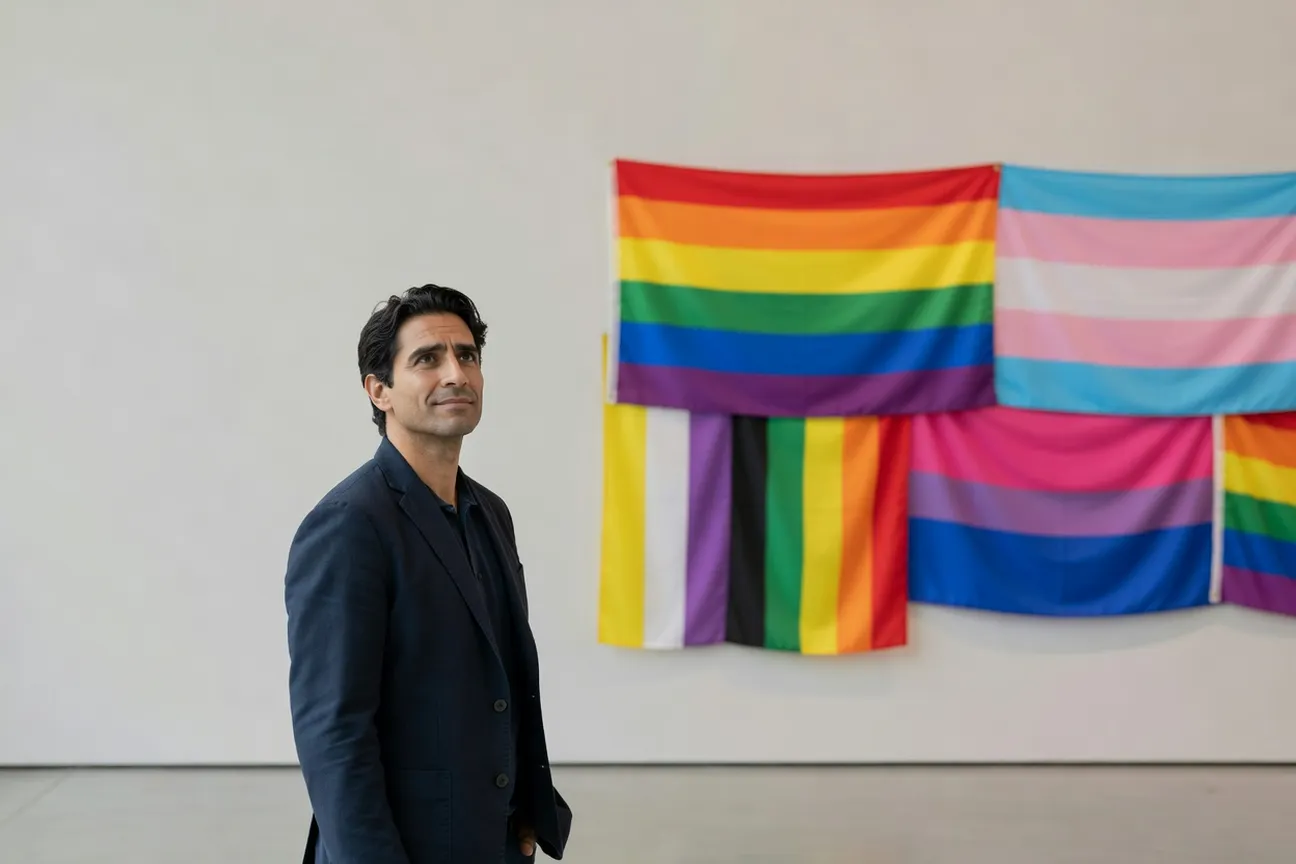
Damien Lachapelle is a renowned historian specializing in the study of social movements and militant visual culture. For several years, he has been examining the evolution of visual symbols, particularly LGBTQ+ identity flags. As of 2026, there are over 30 recognized flags, each representing an identity or cause within the community. These flags are not just simple pieces of fabric: they are powerful political and cultural tools. They allow often marginalized groups to claim their place in society and to be heard, in the same way that the broader LGBT community in Quebec relies on a network of resources and organizations to make itself heard. Understanding the proliferation of these flags means understanding the current struggles and demands of LGBTQ+ communities.
The interview
Sophie :How was the first rainbow flag created?
Damien :The first rainbow flag was created by Gilbert Baker in 1978 in San Francisco. Harvey Milk, one of the first openly gay politicians, commissioned this symbol for that year's pride day. The original flag had eight colors, each with a specific meaning.
The original colors were pink for sexuality, red for life, orange for healing, yellow for sunlight, green for nature, turquoise for magic/art, indigo for serenity, and violet for spirit. However, for practical production reasons, particularly the difficulty of obtaining pink fabric, the flag was simplified to six colors.
This simplification has not diminished its impact; on the contrary, the rainbow flag has become a universal symbol of diversity and inclusion within the LGBTQ+ community. It has initiated a symbolic revolution by providing a powerful and recognizable visual emblem around the world.
Sophie : What do the 6 colors of the classic rainbow flag symbolize?
Damien :The six colors of the classic rainbow flag each have a specific meaning. Red symbolizes life, orange represents healing, yellow is associated with sunlight and energy, green evokes nature, blue is linked to harmony, and purple represents spirit.
These meanings are not only individual but also collective, reflecting universal values sought by the LGBTQ+ community. The rainbow flag is designed to be an inclusive symbol that transcends cultural and social boundaries.
The universality of these colors allows each person to appropriate them while being part of a larger community. It is this ability to be both personal and collective that has allowed the rainbow flag to become such a powerful and enduring symbol.
Sophie : What is the Progress Pride Flag and why was it created?
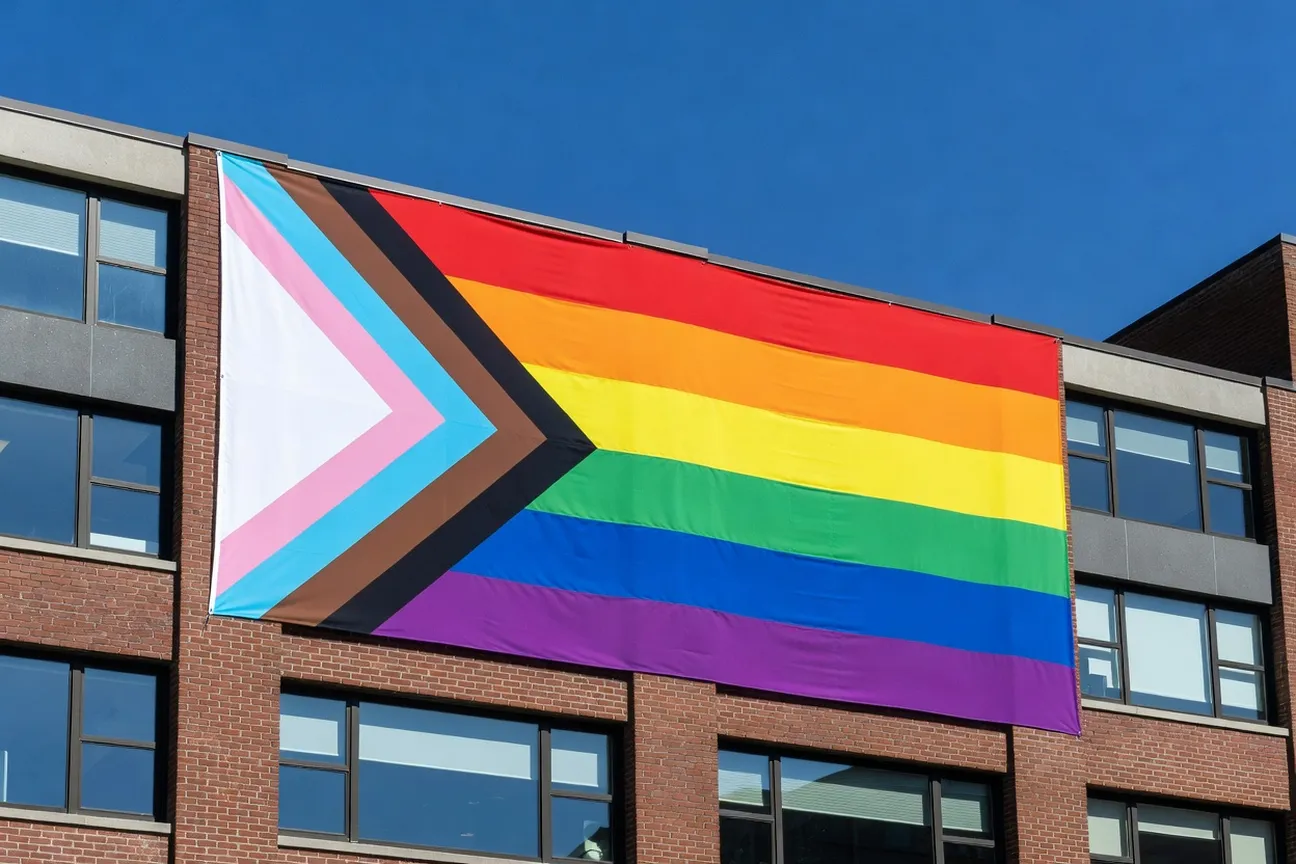
Damien :The Progress Pride Flag was created by Daniel Quasar in 2018. This flag incorporates a right-pointing triangle with additional colored stripes: black to honor the victims of AIDS, brown to represent racially marginalized people, and white, pink, and blue to include transgender individuals.
This flag was born from the criticism that the classic rainbow flag did not sufficiently integrate the diversity within the community. In particular, it aimed to address the perceived erasure of trans and racialized individuals in the traditional rainbow symbolism.
Since its creation, the Progress Pride Flag has been adopted by many municipalities and organizations, reflecting a growing commitment to more inclusive representation and recognition of the specific struggles within the LGBTQ+ community — a commitment that is also visible each year at the main LGBTQ+ events held across Quebec, where these flags are prominently displayed.
Sophie : What are the main flags of specific identities in 2026?
Damien :In 2026, several flags represent specific identities within the LGBTQ+ community. The transgender flag, created by Monica Helms in 1999, consists of pink, blue, and white stripes. The bisexual flag, designed by Michael Page in 1998, features pink, purple, and blue stripes.
The non-binary flag, created by Kye Rowan in 2014, features yellow, white, purple, and black stripes. Other flags include the pansexual flag, the asexual flag, and the intersex flag, the latter being created by Intersex Human Rights Australia and featuring a purple circle on a yellow background.
These flags serve a dual purpose: they act as identity tools, allowing individuals to recognize themselves and come together, and they also have a political function, advocating for the visibility and rights of each identity within society.
Sophie : Why do some contest the proliferation of LGBTQ+ flags?
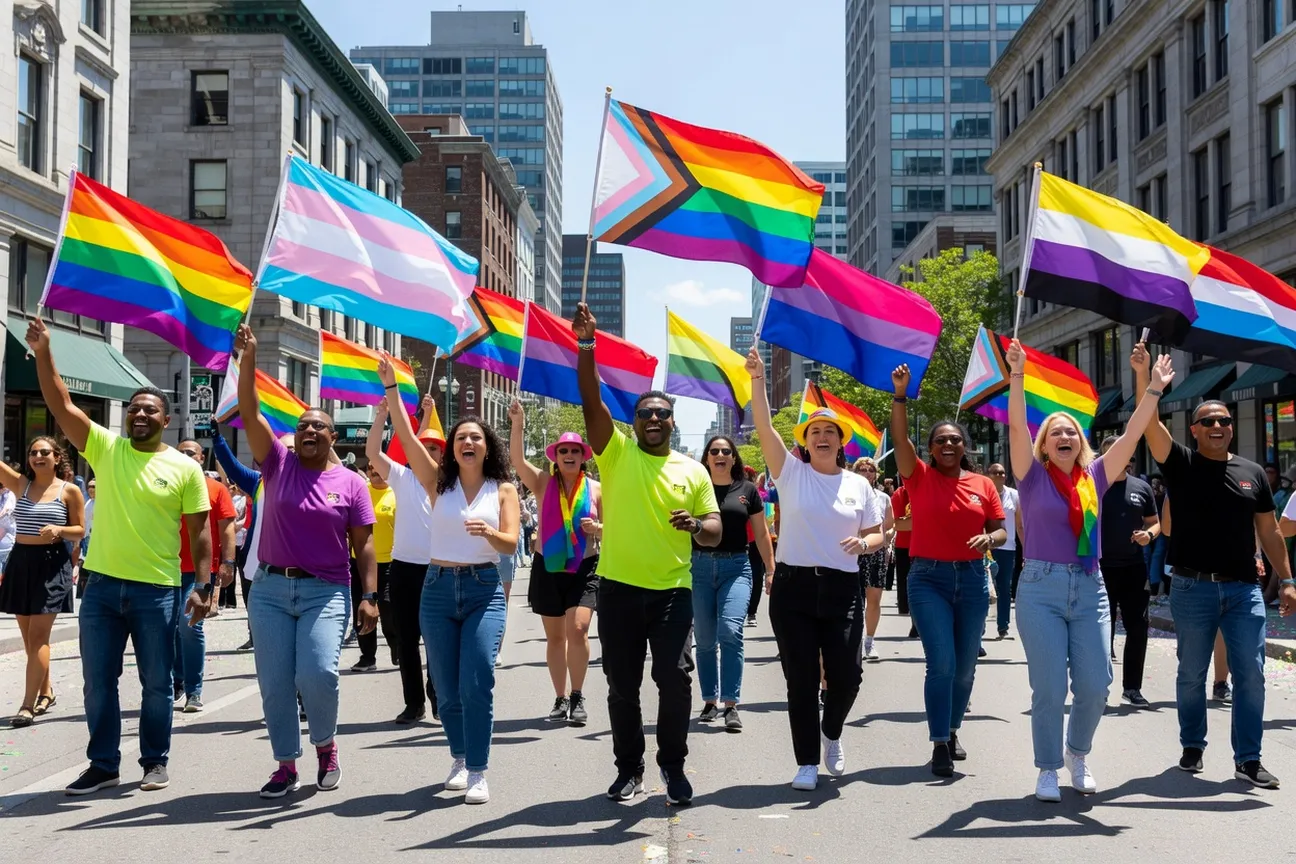
Damien :The proliferation of LGBTQ+ flags has sparked criticism both internally and externally. Some within the community believe that the increase in the number of flags leads to fragmentation that threatens unity. Other external critics denounce a potential confusion, even mockery towards the community.
Historically, each identity has needed its own visibility to be heard and to claim its rights. This tension between umbrella symbolism and specific representation reflects an ongoing debate about the best way to represent diversity within the community.
There is no consensus on this issue, and each group and individual must navigate between the need for specific visibility and the desire for collective solidarity.
Sophie : How are flags used politically in 2026?
Damien :In 2026, LGBTQ+ flags are often displayed on government buildings, but this is not without controversy, particularly in Quebec and Alberta. In some countries like Poland, Hungary, and Russia, the flags are used as acts of political resistance against hostile governments.
Their symbolic power is strong, and they are sometimes the target of vandalism, reflecting societal tensions around LGBTQ+ rights. Institutional responses vary, ranging from strong support to increased security measures to protect these symbols.
Flags remain powerful tools for highlighting struggles and demands, and their presence in public space is an indicator of the state of LGBTQ+ rights in a given country or region.
Sophie : Is there a specific LGBTQ+ flag for Quebec or Canada?
Damien :There is no specifically Quebec LGBTQ+ flag. In Canada, the national flag is often seen as an inclusive symbol, although there is no official flag that specifically represents the Canadian LGBTQ+ community.
However, some local initiatives have emerged, with municipalities creating their own flags to include local symbols. The rainbow fleur-de-lis is an example of an unofficial symbol used by some organizations in Quebec to represent the LGBTQ+ community.
These initiatives reflect a desire to combine local identity with LGBTQ+ pride, while showing that diversity and inclusion are valued at the local level.
Sophie : How to choose which flag to display during a Pride event?
Damien :The choice of the flag to display during a Pride event primarily depends on your identity. If you identify with a certain identity, it is natural to choose the flag that represents you best.
For allies, the classic rainbow flag or the Progress Pride Flag are appropriate choices. There is no obligation to carry a flag, and many choose to display several to reflect the diversity of their support.
It is important to respect the meanings of each flag and to understand the struggles they represent. For more information, check out our glossary of prides and Pride 2026.
Quick questions: common misconceptions
Conclusion: 3 key takeaways
- The rainbow flag, created in 1978 by Gilbert Baker, is the most universal LGBTQ+ symbol, but its history shows a constant evolution towards greater inclusion.
- The Progress Pride Flag (2018) incorporates trans and racialized individuals into its symbolism, reflecting internal debates on representation within the community.
- Each LGBTQ+ flag is a political and identity statement: understanding their history means understanding the struggles they represent.
Frequently asked questions
What do the colors of the rainbow flag mean?
The colors of the rainbow flag each have a meaning: red for life, orange for healing, yellow for the sunlight, green for nature, blue for harmony, and purple for the spirit.
What is the difference between the classic rainbow flag and the Progress Pride Flag?
The Progress Pride Flag includes a triangle with additional colors to represent transgender and racialized people, while the classic rainbow flag consists of six colors.
What are the colors of the transgender flag?
The transgender flag features pink, blue, and white stripes, symbolizing girls, boys, and those who are transitioning or non-binary, respectively.
What are the colors of the bisexual flag?
The bisexual flag features pink, purple, and blue stripes, representing attraction to the same sex, to both sexes, and to the opposite sex.
When was the LGBTQ+ rainbow flag created?
The rainbow flag was created in 1978 by Gilbert Baker at the request of Harvey Milk for San Francisco's Pride Day.
How many LGBTQ+ flags exist in 2026?
In 2026, there are more than 30 recognized flags, each representing an identity or a cause within the LGBTQ+ community.
Can the rainbow flag be displayed by non-LGBTQ+ individuals?
Yes, the rainbow flag can be displayed by allies of the LGBTQ+ community to show their support and solidarity.