The LGBT Community in Quebec: 2026 Guide to Resources, Rights, and Associations
In brief: The LGBT community in Quebec brings together nearly 600,000 people in 2026, structured around more than 80 organizations, iconic neighborhoods like Montreal's Gay Village, and world-renowned festivals. This guide presents a complete mapping of the community: populations, community spaces, support resources, acquired rights, and specific challenges for LGBT youth, transgender individuals, and those living in rural areas.
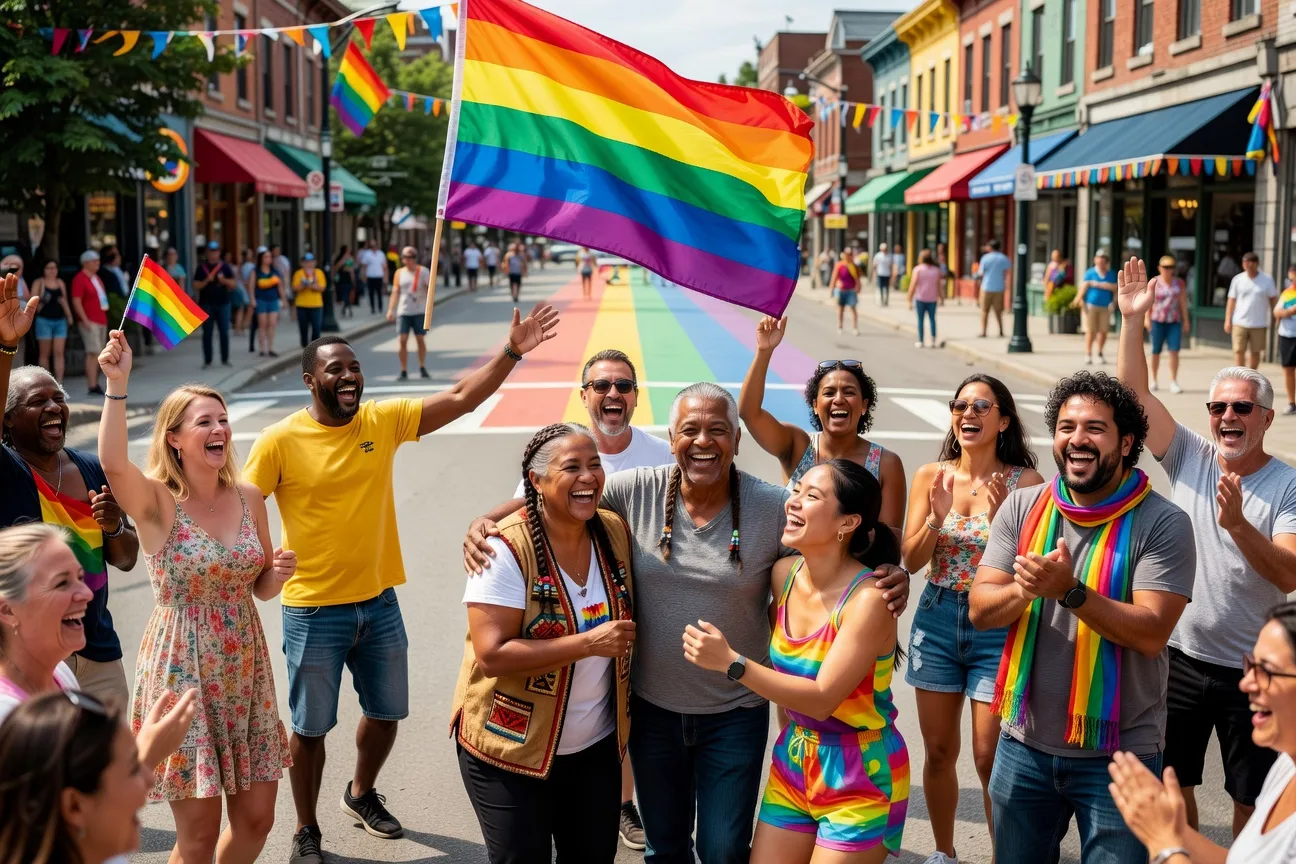
The LGBT community in Quebec by the numbers 2026
The Quebec LGBT community represents a significant portion of the province's population. According to converging estimates from Statistics Canada (Canadian Community Health Survey), the Institut de la statistique du Quebec, and several university studies, approximately 7% of the Quebec population aged 15 and older identifies as LGBT+, which is nearly 600,000 people in 2026. This proportion is slightly higher than the Canadian average (4%) and reflects both the actual demographic reality and a more accepting social climate than elsewhere in the country for openly self-identifying.
The community does not form a homogeneous block. It includes gay men (about 38% of the total), lesbian women (32%), bisexual individuals (22%), transgender and non-binary individuals (5%), and intersex, asexual, and queer individuals (3%). This internal diversity translates into specific realities, needs, and struggles that community organizations strive to document and advocate for with public authorities.
Generationally, the community is getting younger. Surveys from the Research Chair on Homophobia at UQAM show that more than 11% of Quebecers aged 15 to 24 now identify as LGBT+, compared to 5% among those aged 45-64. This generational gap can be explained by a gradual normalization of sexual and gender diversity, as well as by broader access to an identity vocabulary that previous generations did not have.
Quebec also has more than 80 LGBT community organizations listed in 2026, ranging from major national players like the CGLQ, Interligne, or the Conseil quebecois LGBT, to local collectives or specialized peer groups (youth, seniors, racialized communities, transgender individuals). This associative density is one of the highest in North America relative to the population.
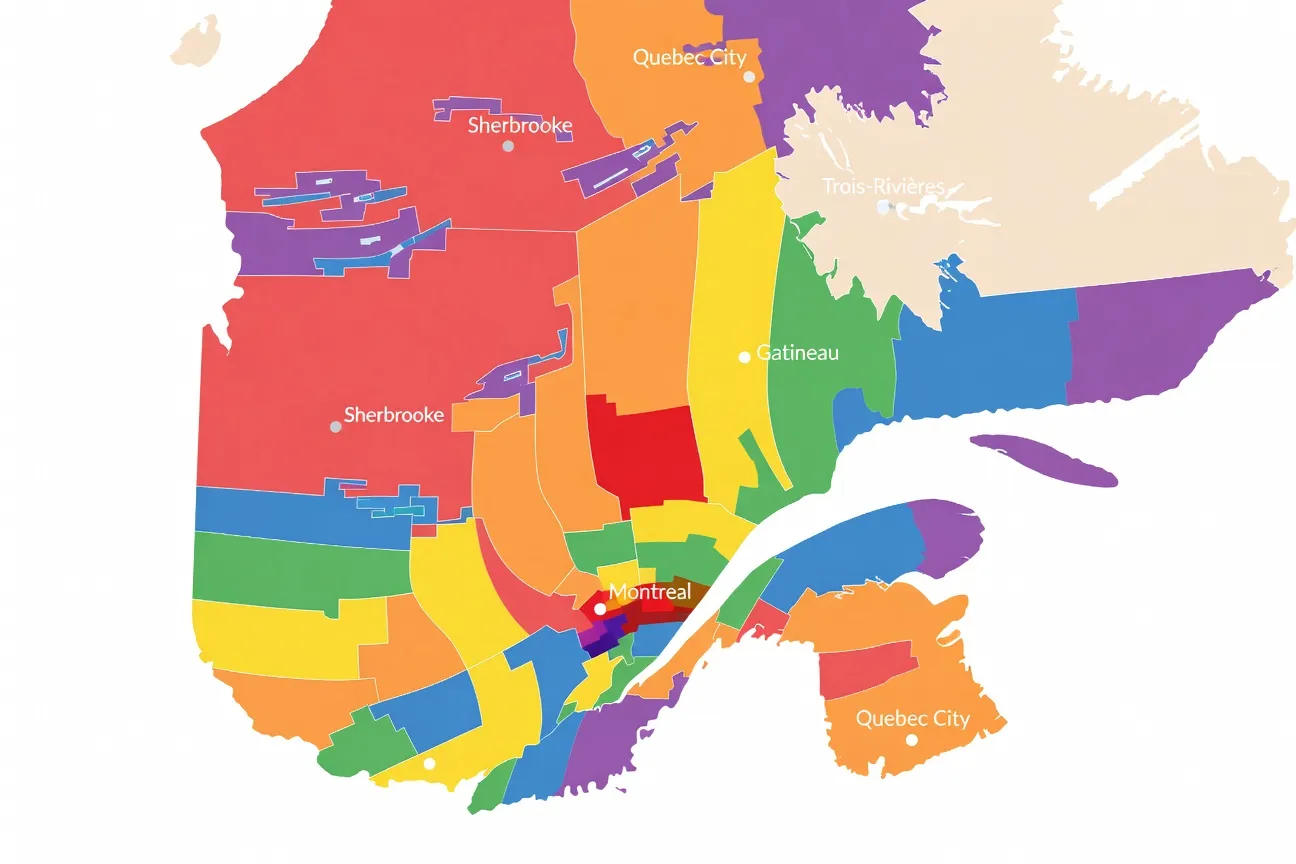
Where the LGBT community lives in Quebec
The Quebec LGBT community is primarily concentrated in urban areas, but its presence in all administrative regions has strengthened over the past two decades. The 2026 community map reveals four major hubs and a structured regional fabric.
Greater Montreal: 62% of the community
The Montreal agglomeration alone accounts for nearly two-thirds of the Quebec LGBT community, or about 370,000 people. The historical heart remains the Gay Village, along Sainte-Catherine Street East between Saint-Hubert and De Lorimier Streets. An emblematic neighborhood since the 1980s, the Village houses the majority of the bars, restaurants, shops, and LGBT community organizations in the metropolis, as well as most of the major federative events. Beyond the Village, more diffuse community hubs have developed in Plateau-Mont-Royal, Mile End, and Hochelaga-Maisonneuve, reflecting the younger and more multicultural demographics of the contemporary LGBT community.
Quebec City, Sherbrooke, Gatineau, Trois-Rivières
The city of Quebec has approximately 45,000 LGBT people. The Saint-Jean-Baptiste neighborhood, near Old Quebec, serves as a community hub with a few bars, the LGBTQ2+ community center of Quebec, and the presence of GRIS-Quebec. Sherbrooke (12,000 people), Gatineau (28,000 people), and Trois-Rivières (8,000 people) are active secondary regional hubs, each with at least one local community organization and an annual pride event.
The regions: diffuse but real presence
Saguenay-Lac-Saint-Jean, Estrie, Côte-Nord, Gaspésie, and Abitibi-Témiscamingue host more dispersed LGBT communities, often organized around regional associations such as Diversité Estrie, the LGBT Committee of Saguenay-Lac-Saint-Jean, or Arc-en-ciel d'Afrique for Afro-descendant communities in the region. Living openly as LGBT in rural areas remains more challenging than in urban settings, but the community fabric and digital resources have significantly reduced isolation compared to what it was twenty years ago.
50 years of community movements (1970-2026)
The history of the LGBT community in Quebec is rooted in the wake of the Quiet Revolution and the major social movements of the 1960s-1970s. Understanding the achievements of 2026 requires revisiting five decades of collective mobilization.
The 1970s: Emergence and Initial Structuring
In October 1971, the Homosexual Liberation Front (FLH) was born, the first explicitly homosexual activist group in Quebec. Inspired by the Stonewall riots (New York, 1969) and the countercultural movement, the FLH organized demonstrations, public debates, and published periodicals. The police raid on the Truxx bar in October 1977, which resulted in the arrest of 145 people, became a triggering event for broader political mobilization.
1977: Quebec, the First North American Jurisdiction to Protect Sexual Orientation
On December 15, 1977, the National Assembly amended the Charter of Human Rights and Freedoms to include sexual orientation as a prohibited ground for discrimination. This was a world first at the level of a subnational jurisdiction. Justice Minister Marc-André Bedard, under the government of René Lévesque, championed this amendment, which became the cornerstone of subsequent advancements. LGBT rights in Quebec find their legal foundation in this 1977 amendment.
The 1980s-1990s: AIDS Crisis and Institutionalization
The AIDS epidemic struck the Quebec gay community starting in 1981. It decimated an entire generation but also created unprecedented mobilization: ACT MTL, COCQ-SIDA, Séro Zéro, and several community housing initiatives were born. The Coalition gaie et lesbienne du Quebec (CGLQ) was founded in 1992 to politically advocate for the community's demands. The same decade saw the opening of Gai Écoute (1980, which became Interligne in 2017) and the founding of GRIS (Groupe de recherche et d'intervention sociale, 1994), specializing in demystification in school settings.
2002-2005: Recognition of Unions and Marriage
The adoption of the Civil Union Act in Quebec in 2002 and the federal legalization of same-sex marriage in 2005 marked the culmination of three decades of mobilization. Quebec became the first Canadian province to fully recognize homoparentality, paving the way for adoption and assisted reproduction for same-sex couples.
2010-2026: Trans Issues, Intersectionality, Youth
The last decade has seen the emergence of trans issues at the heart of community demands (Bill 35 in 2013, Bill 103 in 2016 on changing sex designation), attention to racialized and Indigenous LGBT individuals, and a growing concern for the mental health of LGBT youth, who are exposed to a suicide risk 4 to 7 times higher than that of the general population.
Iconic community spaces
The LGBT community life in Quebec is embodied in physical spaces that play a central role in socialization, activism, and the transmission between generations.
The Gay Village of Montreal
The Gay Village, which extends along Sainte-Catherine Street East between Saint-Hubert and De Lorimier Streets, remains the symbolic and economic epicenter of the LGBT community in Quebec. Pedestrianized every summer since 2008, it hosts dozens of bars, restaurants, shops, bookstores (including the legendary bookstore L'Eugélionne and l'Androgyne, now closed but memorialized), performance venues, and community organizations. The Maison du Plateau, the Montreal Gay and Lesbian Community Centre, and several sexual health consultation centers are prominently located there.
The LGBTQ2+ Community Centre of Quebec
In Quebec City, the LGBTQ2+ Community Centre of Quebec, located in the Saint-Jean-Baptiste neighborhood, brings together several associations under one roof, including GRIS-Quebec, Tracom, Trans Estrie, and several peer support groups. It is also the headquarters of Fierté Québec, which organizes the main LGBT celebration of the national capital every September.
Federating Festivals and Events
The 2026 calendar of LGBT pride events in Quebec includes more than fifteen major events spread throughout the year. Fierté Montréal (first week of August) and Fierté Québec (first week of September) are the cornerstones, but celebrations also take place in Sherbrooke, Gatineau, Trois-Rivières, Saguenay, Rimouski, Drummondville, and even in several smaller towns in the region. The Image+Nation film festival, founded in 1987, remains one of the oldest LGBT festivals in the world.
Places of Memory and Heritage
Several places carry a particular memorial significance: Place Émilie-Gamelin (historical starting point of the parade), Square Saint-Louis (a cultural hub for queer culture in the 1970s-1980s), or Faubourgs Park (formerly École-Pasteur Park, which hosts a memorial for the victims of the AIDS epidemic). The preservation of this intangible and built heritage is now an issue championed by several organizations.
Associations and organizations: overview 2026
The LGBT community organizations in Quebec include over 80 groups in 2026. Here are the main structural actors, classified by area of intervention.
Advocacy and Political Representation
- Coalition gaie et lesbienne du Québec (CGLQ) — founded in 1992, accredited by ECOSOC-UN since 2007, leads political and international advocacy.
- Conseil québécois LGBT — national reference for dialogue with the government of Quebec.
- Coalition des familles LGBT+ — advocates for same-sex parent families since 1998.
- Fondation Émergence — national awareness campaign and coordination of the International Day Against Homophobia and Transphobia in Quebec.
Direct Support and Helplines
- Interligne (formerly Gai Écoute) — 24/7 helpline and chat service, free and confidential. Over 30,000 calls per year.
- Réseau ASTT(e)Q — support for trans individuals, sexual health, and hormone therapy.
- AlterHéros — information and support service for LGBT youth.
- Aide aux Trans du Québec (ATQ) — specific support for trans individuals and their loved ones.
Demystification and Education
- GRIS (Groupe de recherche et d'intervention sociale) — demystification in school and professional environments. Present in Montreal, Quebec, and Mauricie.
- Chambre de commerce LGBT du Québec — entrepreneurial networking.
- SAVIE-LGBTQ — combating domestic violence in the community.
Specific Communities
- Centre de solidarité lesbienne — resources and activities for lesbian and bisexual women.
- Réseau Enchanté — network for LGBT seniors.
- Helem Montréal, Arc-en-ciel d'Afrique, Pride Pakistan — racialized communities and those from immigration.
- 2-Spirit Health Resource Center — Indigenous and Two-Spirit communities.
A complete mapping of LGBT organizations in Quebec is available with contact information, services offered, and geographic coverage areas.
Challenges 2026: visibility, mental health, LGBT youth
The legislative gains and institutional legitimacy should not mask the persistent challenges. Three issues shape the community conversation in 2026.
Mental Health of LGBT Youth
Public health surveys are clear: LGBT youth in Quebec face a suicide risk 4 to 7 times higher than their heterosexual and cisgender peers. Trans youth are particularly vulnerable, with suicide attempt rates ranging from 38 to 45% according to studies. This reality mobilizes community organizations (Interligne, AlterHéros, ATQ) and researchers (notably Line Chamberland's team at UQAM). Recommendations converge: improve training for school and medical staff, ensure access to gender-affirming care, and financially support specific resources.
Rise of Anti-Trans Discourse
Since 2022, Quebec has not escaped the global rise of anti-trans discourse, partly imported from the United States and the United Kingdom. The creation of the Gender Identity Advisory Committee by the Quebec government in 2023 has raised concerns among community organizations, which have warned about the potential legitimization of discriminatory discourse. Trans identity in Quebec remains a sensitive topic where vigilance and mobilization are required.
Lesbian Visibility and Invisibility
Lesbian women remain less visible in public spaces than gay men. The lesbian community in Quebec has fewer dedicated establishments, rarer media coverage, and less political representation. Lesbian feminist organizations (Centre de solidarité lesbienne, Réseau des lesbiennes du Québec) advocate for better consideration of lesbian specificities in public policies and media.
Discrimination in the Workplace
According to the 2024 survey by the Émergence Foundation, 1 in 3 LGBT people in Quebec report having experienced discrimination or harassment at work due to their sexual orientation or gender identity. Issues of homophobia in the workplace remain relevant and also mobilize unions, human resources, and the Human Rights Commission.
Living LGBT outside of Montreal: the regional reality
The image conveyed of the LGBTQ+ community in Quebec is often that of the Gay Village in Montreal. However, nearly 40% of LGBTQ+ individuals in the province live outside the large metropolitan area. Their daily reality differs significantly.
Geographic isolation is the primary obstacle. In the least densely populated MRCs (Basse-Côte-Nord, Îles-de-la-Madeleine, Abitibi-Ouest), there are no bars, organizations, or peer groups specifically for LGBTQ+. Young LGBTQ+ individuals often live their sexual orientation or gender identity in secrecy for years. Digital resources (Interligne online, Quebec Discord or Reddit groups, dating apps) have considerably alleviated this isolation, but do not replace in-person contacts.
The lack of competence among healthcare professionals in the region is another major barrier. Access to hormone therapy for transgender individuals, for example, may require travel of 200 km or more. Fertility centers for lesbian couples wishing to start a homoparental family are concentrated in Montreal and Quebec City. Community organizations are trying to fill these gaps through mobile clinics or partnerships with CLSCs.
Several regional initiatives deserve recognition: Diversité Estrie (Sherbrooke), GRIS-Mauricie (Trois-Rivières), the LGBT Committee of Saguenay-Lac-Saint-Jean, Pride Hudson in Ouest-de-l'Île, and Arc-en-ciel Côte-Nord. These structures organize social activities, support groups, and actively participate in regional pride celebrations that have multiplied since 2015.
Help resources and helplines
Several free, confidential, and accessible resources are available 24 hours a day for anyone LGBTQ+ in Quebec, their loved ones, or the professionals who support them.
| Resource | Contact | Specialty |
|---|---|---|
| Interligne | 1 888 505-1010 or interligne.co | General LGBTQ+ support, 24/7 |
| Aide aux Trans du Québec (ATQ) | aideauxtransduquebec.ca | Trans people and their loved ones |
| AlterHéros | alterheros.com | LGBTQ+ youth (13-30 years) |
| SAVIE-LGBTQ | 1 855 410-0511 | LGBTQ+ domestic and family violence |
| Coalition des familles LGBT+ | familleslgbt.org | Same-sex and trans families |
| Réseau ASTT(e)Q | 1 514 282-1717 | Sexual health and hormone therapy |
| SOS Suicide | 1 866 277-3553 | Suicidal crisis (general) |
The CGLQ also recommends consulting the complete directory of LGBTQ+ workshops and conferences offered by organizations for school, professional, and community settings.
How to support the LGBT community in Quebec
Supporting the LGBT community is not reserved for LGBT individuals themselves. Every citizen of Quebec can contribute to combating discrimination and strengthening the community fabric.
Become a member or ally
Most community organizations accept ally members, meaning heterosexual and cisgender individuals who wish to support the cause through their membership. This membership is often symbolic (10 to 30 dollars per year) but it funds concrete activities and gives political weight to organizations in relation to public authorities.
Provide financial support
Donations to LGBT community organizations entitle donors to a tax receipt for the majority of them (registered charities). Many offer monthly donation programs that ensure the financial stability essential for operations.
Volunteer
Volunteering is essential: phone listening, workshops in schools, event organization, peer group facilitation, administrative management. The profiles sought are varied: you do not need to be LGBT yourself to volunteer in most organizations.
Participate in unifying events
Attending pride parades, frequenting festivals (Image+Nation, Massimadi for Afro-Caribbean communities, Wapikoni Mobile for Indigenous communities), supporting LGBT-friendly businesses: these are all concrete actions that contribute to the community's visibility.
Raise awareness among your circle
The most effective work against homophobia and transphobia starts at home, at work, and in friend circles. The Émergence Foundation offers annual facilitation tools for the International Day Against Homophobia and Transphobia (May 17), easily usable in any setting.
Frequently asked questions
How many LGBT people will live in Quebec in 2026?
According to the Institut de la statistique du Québec, about 3.9% of Quebecers aged 15 and older belong to sexual minorities (2019-2021), or nearly 261,600 people. The proportion rises to 10.5% among Canadians aged 15-24. A detailed breakdown by age, gender and region is available in our complete feature on the percentage of LGBTQ+ people in Quebec.
What are the main LGBT organizations in Quebec?
The national pillars are the CGLQ, the Conseil quebecois LGBT, the Coalition of LGBT+ Families, the Émergence Foundation, Interligne, GRIS, AlterHéros, Aide aux Trans du Québec, and the Centre de solidarité lesbienne. Over 80 organizations are listed in 2026.
Is there an LGBT helpline in Quebec?
Yes. Interligne (formerly Gai Écoute) is the main LGBT listening line in Quebec: 1 888 505-1010 or chat at interligne.co. Free, confidential, and accessible 24 hours a day, 7 days a week.
Where is the Gay Village in Montreal?
The Gay Village extends along Sainte-Catherine Street East, between Saint-Hubert and De Lorimier Streets in Montreal. Pedestrianized every summer since 2008, it is home to the majority of LGBT bars, restaurants, and community organizations in the metropolis.
How to live LGBT in the regions of Quebec?
Isolation remains a challenge in the regions, but associations exist in most MRCs: Diversité Estrie, GRIS-Mauricie, LGBT Committee of Saguenay-Lac-Saint-Jean, Pride Hudson, Arc-en-ciel Côte-Nord. Digital resources (Interligne online, Discord groups) complement the local offerings.
What are the priority LGBT issues in Quebec in 2026?
Three issues shape the conversation: the mental health of LGBT youth (suicidal risk 4 to 7 times higher), the rise of anti-trans discourse since 2022, and discrimination in the workplace (1 in 3 LGBT individuals affected according to the Fondation Émergence).
How can I support the LGBT community in Quebec without being LGBT myself?
You can become an ally member of an organization (10 to 30 dollars per year), make a donation, volunteer, participate in pride parades, and raise awareness among your peers. Organizations accept heterosexual and cisgender volunteers.