The gay community in Quebec: 2026 guide to places, events, and resources
In brief: The Quebec gay community brings together nearly 228,000 men in 2026, representing about 38% of the entire LGBT community in the province. From the Gay Village in Montreal to regional pride events, from iconic bars to drag shows, from Black & Blue to sexual health prevention organizations, this guide presents a complete mapping of the places, events, and resources available to gay and bisexual men in Quebec.
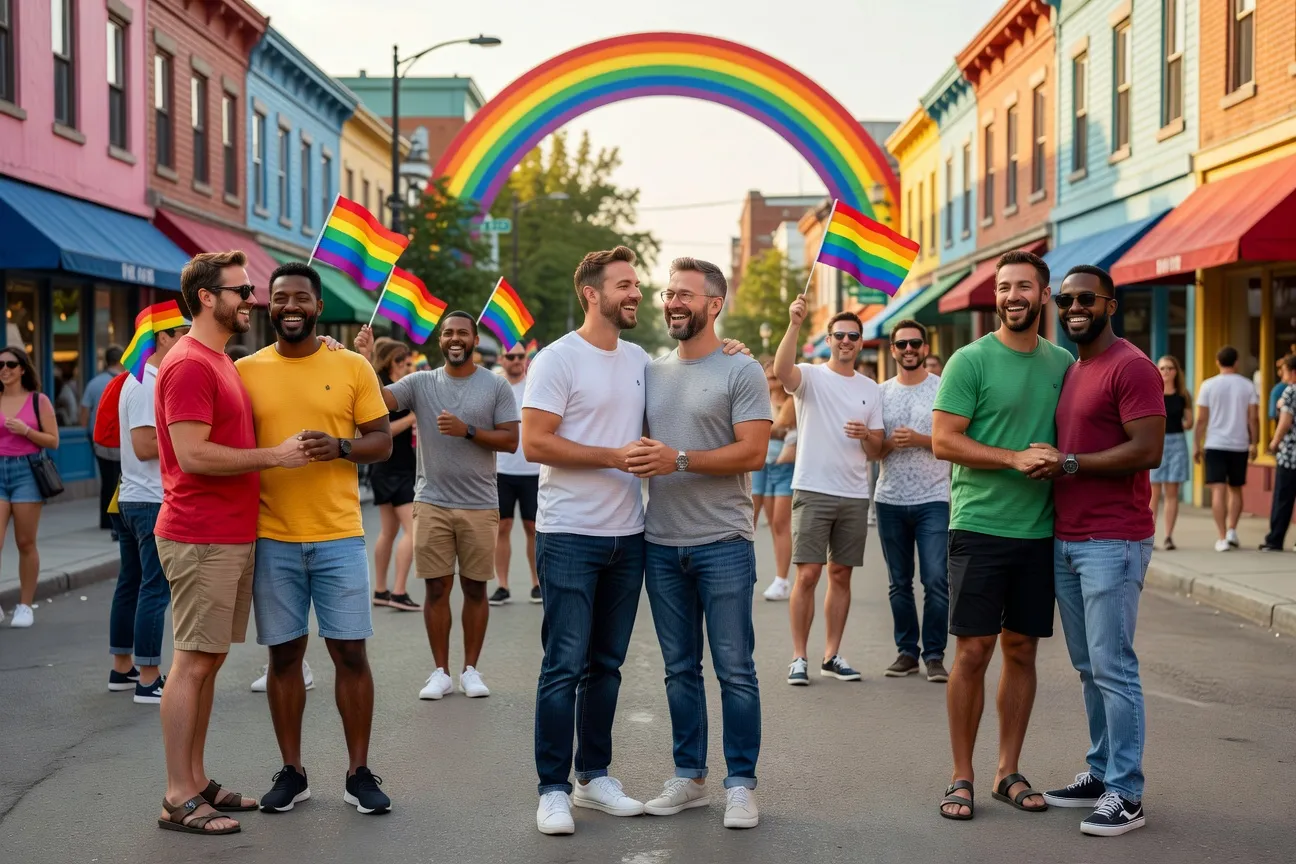
How many gay men in Quebec in 2026?
Gay and bisexual men are the most visible and structured component of the LGBTQ+ community in Quebec. According to converging estimates from Statistics Canada (Canadian Community Health Survey), the Institut de la statistique du Quebec, and the work of the Chair in Homophobia Research at UQAM, approximately 38% of the LGBTQ+ community in Quebec identifies as gay or bisexual men, which is nearly 228,000 people in 2026. This population represents about 2.7% of the total male population of the province aged 15 and older.
This proportion varies significantly by generation. Among 15-24 year-olds, nearly 4.5% of young men self-identify as gay or bisexual, compared to 1.8% among those aged 45-64. The generational gap does not mean that the actual prevalence has changed — researchers agree that it has historically remained stable — but that an increasing proportion of young men are willing to openly identify themselves, thanks to a more permissive social climate. To place these figures in the broader context, consult our comprehensive guide to the LGBTQ+ community in Quebec.
Geographic Distribution
Nearly 72% of gay men in Quebec live in the greater Montreal area, which is about 164,000 people. The concentration is particularly strong in the boroughs of Ville-Marie (Gay Village), Plateau-Mont-Royal, Rosemont, and Hochelaga-Maisonneuve. The Capitale-Nationale region ranks second with approximately 18,000 gay men, followed by Estrie, Outaouais, and Montérégie.
Socioeconomic Profiles
Surveys from the LGBT Chamber of Commerce of Quebec and SAVIE-LGBTQ document a contrasting reality. Gay men in Montreal report a median income slightly above the provincial average (+8%), a higher university education rate (52% compared to 32%), but also more concerning mental health indicators: increased prevalence of depression, anxiety, and risky behaviors, particularly among racialized, Indigenous, or rural gay men. This dichotomy between social visibility and structural vulnerabilities has shaped community actions for three decades.
The Gay Village of Montreal: Geography and Iconic Places
The Gay Village of Montréal is the most well-known gay neighborhood in French-speaking North America and one of the top ten in the world by commercial density. It stretches along Sainte-Catherine Street East, between Saint-Hubert Street to the west and De Lorimier Street to the east, covering nearly a kilometer of commercial facades almost exclusively oriented towards the LGBTQ+ clientele.
Summer Pedestrianization Since 2008
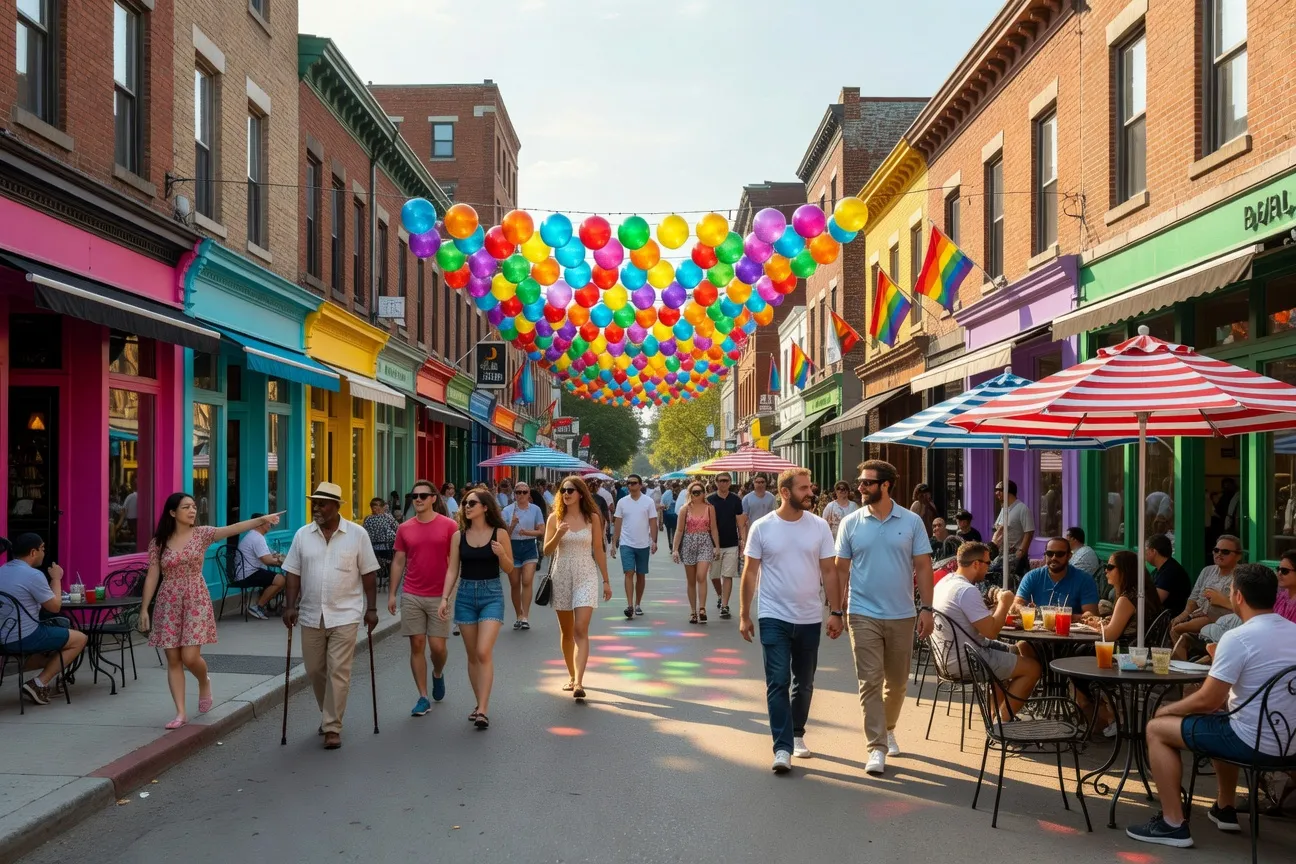
Every year, from mid-May to mid-September, Sainte-Catherine Street East is closed to automobile traffic. This pedestrianization, initiated in 2008 under the leadership of Claude Trudel and supported by the Village Commercial Development Society (SDC du Village), has transformed the neighborhood into an open-air public space. Terraces, artistic installations (notably the famous pink balls suspended by Aires libres until 2018, which have since been replaced by various rotating interventions), street performances, and seasonal markets enliven summer evenings. Attendance is estimated at over 4 million visitors per season.
Iconic Bars and Establishments
The Village has the highest concentration of gay bars in Quebec:
- Le Stud Bar — a Montréal institution since 1992, bear-themed atmosphere and club with a covered terrace.
- Le Cocktail (formerly Cabaret Mado) — a hotspot for drag in Montréal.
- Le Sky Pub & Club — bar and nightclub over three floors, renowned rooftop terrace.
- Le Bar Le Date — popular karaoke and relaxed atmosphere.
- Le Club Unity — a large historic nightclub in the neighborhood.
- Le Bar Renard — neighborhood bar, more intimate atmosphere.
- Le Complexe Sky — integrated bar, club, and restaurant.
Cultural and Heritage Sites
Beyond the bars, the Village is home to several significant cultural sites: Café Cléopatre (historic cabaret), Place Émelie-Gamelin (historic starting point of the Pride parade), Beaudry metro station (the first station in the network with rainbow colors since 2017), Théâtre Espace Libre, and several independent art galleries. Several community organizations have a presence there, including RÉZO (Gay and Bisexual Action) and some services from ACT MTL and Pride Montréal.
Shops, Bookstores, and Specific Services
The Village concentrates specialized shops (Priape, Boutique La Capoterie for sexual health), several gay-friendly medical clinics (Clinique L'Actuel, Clinique médicale du Village), baths and saunas, and numerous established restaurants like Saloon Café (an institution since 1990) or L'Express Asiatique. The commercial geography of the neighborhood meets almost all the daily needs of its clientele.
History of the Quebec gay community: from the FLH to today
The history of the Quebec gay community is inseparable from that of the Francophone political emancipation. For a detailed overview placed in its sociological context, see our interview with a researcher on the history of the Quebec LGBT movement.
Before 1969: criminalization and secrecy
Until 1969, male homosexuality was criminalized in Canada under the Criminal Code. Quebec gay men frequented clandestine places: some bars in Old Montreal, downtown hotels, and public parks. Police raids were frequent, blackmail and job loss were constant risks. The decriminalization of 1969 (Bill C-150 by Pierre Trudeau) opened a new era, but did not eliminate social stigma overnight.
1971-1977: the Homosexual Liberation Front and the Truxx raid
In October 1971, the Homosexual Liberation Front (FLH) was born, the first explicitly homosexual activist group in Quebec. Inspired by the Stonewall riots (New York, 1969) and the countercultural movement, the FLH organized demonstrations, debates, and periodicals. The police raid at the Truxx bar on October 22, 1977, which resulted in the arrest of 145 people, became the founding moment of broader political mobilization. The next day, 2,000 people demonstrated in Montreal — the largest gay demonstration in Canadian history to that date.
1977: the Quebec Charter protects sexual orientation
On December 15, 1977, under the government of René Lévesque, the National Assembly amended the Charter of Human Rights and Freedoms to include sexual orientation as a prohibited ground of discrimination. Quebec thus became the first North American jurisdiction to offer this legal protection. This amendment, championed by Justice Minister Marc-André Bédard, became the cornerstone of all subsequent advancements.
The 1980s: AIDS crisis
The AIDS epidemic struck the Quebec gay community starting in 1981. It decimated an entire generation of gay men. But it also created unprecedented mobilization: ACT MTL (1985), COCQ-SIDA (1989), Séro Zéro (which became RÉZO in 2013), and several community housing initiatives were born. It is in this context of collective mourning and mobilization that contemporary gay political identity was forged in Quebec.
1992-2005: institutionalization and recognition
The Coalition gaie et lesbienne du Quebec was founded in 1992. The Gay Village in Montreal, long unofficial, was officially recognized and named by municipal authorities in the 1990s. The Quebec law establishing civil union (2002), followed by the federal legalization of same-sex marriage (July 20, 2005, Bill C-38), crowned three decades of mobilization and marked a gradual normalization of gay presence in the Quebec public space.
2005-2026: new generations, new issues
The last twenty years have seen the emergence of new issues: mental health of young gay men, intersectionality (racialized gay men, Indigenous people, those with disabilities), aging of the community, normalization, and risks of depoliticization. The pedestrianization of the Village (2008), the arrival of PrEP in Quebec (covered by RAMQ since 2017), and the explosion of drag culture (Drag Race Canada, opening of cabarets) are redefining the cultural and health contours of the contemporary community.
Gay festivals and events in Quebec in 2026
The Quebec gay events calendar includes more than twenty major events in 2026. The complete calendar of LGBT pride events in Quebec in 2026 covers the entire provincial network. Here are the must-attend events specifically oriented towards the gay male community.
Pride Montreal (first week of August)
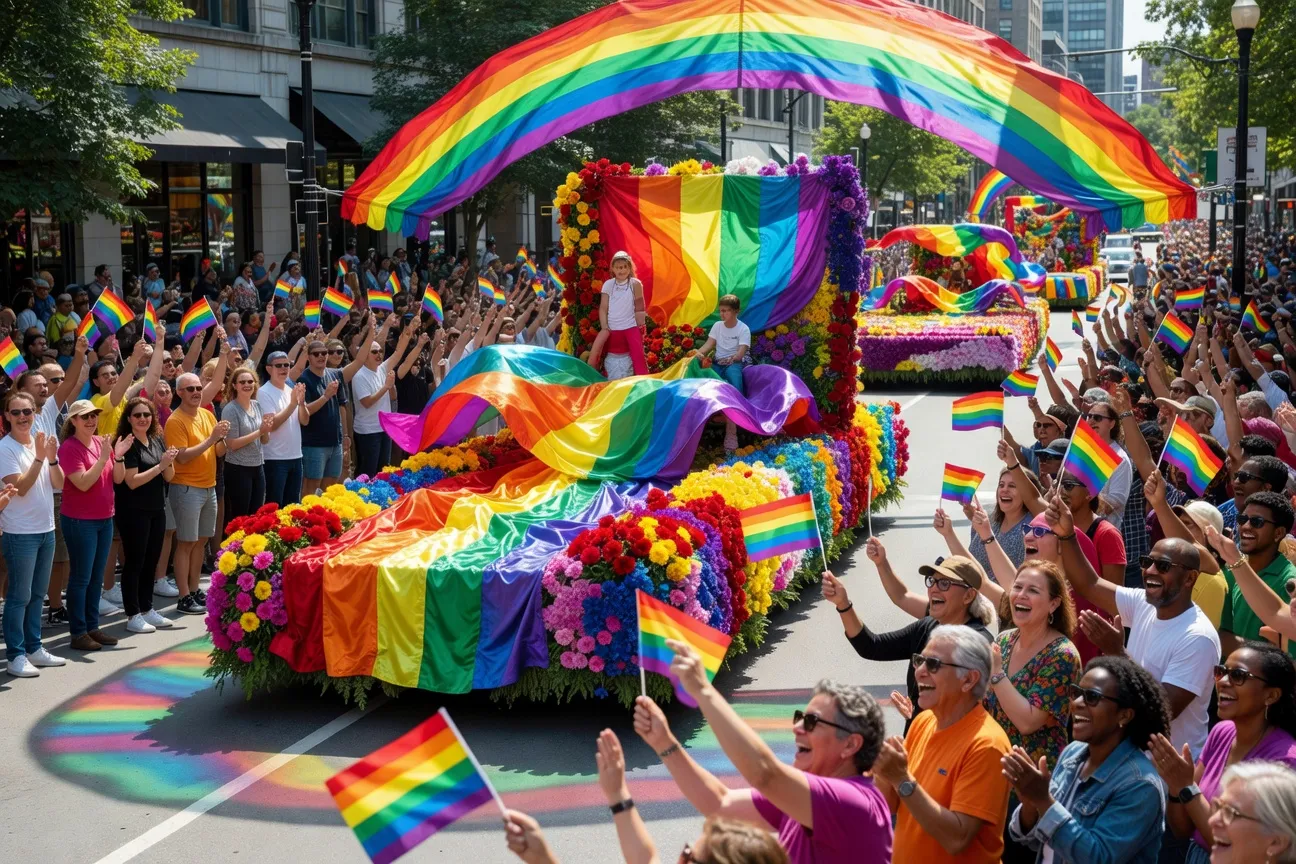
Pride Montreal is the largest LGBT event in Canada. In 2026, from August 3 to 9, the programming brings together nearly 400,000 people over eight days of activities: community day, concerts, conferences, official bar nights, and a closing parade on Sunday. The parade takes place on Sainte-Catherine Street East and features nearly 200 floats, organizations, unions, political parties, and commercial enterprises. It is the event of the year for the Quebec gay community.
Black & Blue (mid-October)
Created in 1991 by the BBCM Foundation (Bad Boy Club Montreal), Black & Blue is one of the largest gay circuit events in the world. The Canadian Thanksgiving weekend (mid-October) attracts over 15,000 international gay men to Montreal each year. The main event takes place at the Olympic Stadium or at the Esplanade of Parc Jean-Drapeau, accompanied by several after-parties in the Village clubs. Beyond the festive dimension, BBCM directly funds several community organizations fighting against AIDS.
Image+Nation (late November)
Image+Nation, founded in 1987, is one of the oldest LGBT film festivals in the world. Its 39th edition will take place in November 2026 in several venues in Montreal. The programming includes feature films, short films, documentaries, and thematic retrospectives (Afro-Caribbean queer cinema, transmasculine, Indigenous). The festival awards several prizes, including the Pierre-Henri Deleau Critics' Prize.
Massimadi (February)
Massimadi, the festival of Afro-Caribbean LGBTQ films and arts, has been held every February in Montreal since 2009. It highlights creators and racialized communities, often rendered invisible in mainstream events. An essential stop for understanding the vibrant intersectionality of the Quebec gay community.
Pride Quebec (first week of September)
Pride Quebec, more modest than its Montreal counterpart but rich in a warmer atmosphere, takes place from August 31 to September 6, 2026, in the Capitale-Nationale. The parade on Grande Allée attracts nearly 25,000 people. The programming includes a family component, health conferences, and several bar nights in the Saint-Jean-Baptiste neighborhood.
Regional Festivals
The provincial network has expanded since 2015. Sherbrooke, Gatineau, Trois-Rivières, Saguenay, Rimouski, Drummondville, and several other cities host annual prides, often in June or September. Pride Hudson (West Island), Arc-en-ciel Côte-Nord, and Diversité Estrie organize activities specifically for gay men.
Drag culture and gay nightlife in Quebec
Drag culture in Quebec, historically driven by the gay male community, has experienced an unprecedented explosion since 2015. The airing of Canada's Drag Race starting in 2020 and the arrival of Quebec artists on the Canadian and international scene have greatly increased the visibility and commercial appeal of drag.
The Mado Legacy
The Cabaret Mado (now Le Cocktail), founded by the famous drag queen Mado Lamotte in the heart of the Village, has long been the epicenter of Montreal and Quebec drag. Mado, an essential figure in the Francophone scene, has trained several generations of local artists and remains the recurring host of events. The Marche du Cabaret Mado, an annual satirical parade, remains a highlight of the summer calendar.
The Contemporary Drag Scene
Beyond the Cocktail, the Montreal drag scene extends to several venues: Cabaret Berlin, Pub Le Saint-Sulpice (occasional events), various ephemeral bars on the Plateau and in Hochelaga. The Montreal International Drag Festival (FIDM), launched in 2022, attracts nearly a hundred artists from around the world each fall. The drag king scene, long invisible, is gaining ground with collectives like Mons Mons and several transmasculine cabarets.
Drag in Quebec and the Regions
The Capitale-Nationale has its own drag scene, supported by venues like the Drague Cabaret Club. Sherbrooke, Gatineau, and Trois-Rivières regularly host drag events, often in partnership with regional pride celebrations. This geographical decentralization democratizes drag culture well beyond Montreal.
Nightlife: Circuit, Bears, Leather, Jocks
Quebec's gay nightlife is organized around several historically structured subcultures: the circuit scene (electronic music, international after-parties supported by BBCM), the bears community (Bear Heat, events organized at the Stud Bar), leather culture (Triskelion Montreal, a historical organization), and several more recent sub-groups (jocks, leather, latex). This segmentation reflects the maturity and internal diversity of the Montreal gay male community.
Associative life and organizations specific to gay men
The gay community organizations in Quebec include several dozen organizations specifically dedicated to gay and bisexual men. The 2026 directory of LGBT associations and coalitions in Quebec provides a complete overview. Here are the key players for the gay male community.
RÉZO (Gay and Bisexual Action)
RÉZO, formerly Séro Zéro, is the community organization of reference for the sexual and overall health of gay and bisexual men in Quebec. Founded in 1991, it offers rapid HIV and STI testing services, support groups, prevention activities in festive environments (interventions in bars, saunas, circuit events), and specific programs for migrant or racialized gay men. More than 8,000 men use its services each year.
ACT MTL (AIDS Community Care Montreal)
ACT MTL, founded in 1985 at the height of the AIDS crisis, is a bilingual organization that offers psychosocial support, medical accompaniment, and prevention for people living with HIV and their loved ones. Although its clientele has diversified over the decades, gay men remain largely represented.
COCQ-SIDA
The Coalition of Quebec Community Organizations Against AIDS (COCQ-SIDA), founded in 1989, federates all provincial organizations. It coordinates political advocacy, provincial prevention campaigns, and training for workers. Its annual report on the state of the epidemic in Quebec is a documented reference.
Réseau Enchanté and Gay Seniors
The Réseau Enchanté offers social activities, discussion groups, and psychological support for gay seniors, a population particularly vulnerable to social isolation. The loss of friends during the AIDS epidemic, more frequent singlehood, and the absence of descendants in this generation create a specific challenge. The mental health of gay seniors also engages partners like Combattre la dépression which offers tailored resources and support.
Helem Montréal, Arc-en-ciel d'Afrique, Latino LGBT+
Several organizations address the needs of gay men from racialized or migrant communities: Helem Montréal (Arab community), Arc-en-ciel d'Afrique (Afro-descendant communities), Latino LGBT+ (Latin American communities), Asian LGBTQ Network. These organizations play an essential role for particularly vulnerable populations facing double discrimination.
2-Spirit Health Resource Center
The 2-Spirit Health Resource Center, located in Montreal, serves the two-spirit Indigenous communities. It offers culturally safe care, support for transitioning individuals, and programs specifically adapted to decolonial and intersectional realities.
Health of gay men: PrEP, sexual health, mental health
Gay and bisexual men constitute a population with specific health issues, documented by the Institut national de santé publique du Québec (INSPQ) and the Direction régionale de santé publique de Montréal. For an overview of LGBT community centers where to find help in Quebec, consult our resource guide.
PrEP: pharmacological prevention of HIV
Pre-exposure prophylaxis (PrEP), an antiretroviral treatment taken preventively to block a potential HIV infection, has been covered by the Régie de l'assurance maladie du Québec (RAMQ) since 2017. By 2026, nearly 14,000 gay men in Quebec will be taking PrEP, compared to 3,000 in 2018. The most prescribed medications are Truvada (tenofovir+emtricitabine) and Descovy. PrEP has profoundly changed the epidemiological landscape: new HIV infections among gay men have dropped by 47% between 2017 and 2025. Several specialized clinics (Clinique L'Actuel, Clinique médicale du Village, RÉZO) facilitate access.
Rapid and anonymous testing
Several services offer rapid HIV and STI (chlamydia, gonorrhea, syphilis, hepatitis) testing for free, without an appointment, and confidentially: RÉZO (Village and Centre branch), ACT MTL, the Centre de santé sexuelle de Québec, and several CLSCs. Results are available in 60 seconds for rapid HIV tests and anonymized in case of positivity to allow follow-up without traceability.
U=U: undetectable equals untransmittable
The scientific consensus U=U (Undetectable = Untransmittable), validated by the WHO in 2018, establishes that a person living with HIV whose viral load has been undetectable for at least six months cannot transmit the virus to a sexual partner. This paradigm shift has transformed the lives of people living with HIV and is the subject of ongoing awareness campaigns led by COCQ-SIDA and community organizations.
Mental health and psychological well-being
Gay men in Quebec present more concerning mental health indicators than the average male: rates of depression are predominantly reported to be 2 to 3 times higher, chronic anxiety, and risk behaviors (substance use, risky sexual behaviors). The documented explanatory factors are numerous: minority stress, internalized homophobia, trauma related to family disclosure, isolation among youth or seniors. Access to gay-friendly or LGBT reality-trained professionals remains a challenge in the regions. The resource Combattre la dépression offers useful complementary tools, but recourse to specialized community organizations (RÉZO, AlterHéros, Réseau Enchanté, Interligne) remains a priority.
Substance use and chemsex
The phenomenon of chemsex (the use of psychoactive substances in a sexual context, notably GHB, methamphetamine, mephedrone) has been documented by RÉZO and the INSPQ since 2015. It concerns a minority (estimated at 4 to 7% of gay men in Montreal) but with sometimes serious health consequences. RÉZO and several clinics offer specific harm reduction programs.
LGBT Community Outside Montreal: Quebec, Sherbrooke, Gatineau, Regions
The image conveyed of the Quebec gay community is often that of the Gay Village. However, nearly 28% of Quebec gay men live outside the greater metropolitan area. Their daily reality differs significantly.
Quebec City: Saint-Jean-Baptiste, Drague Cabaret Club
The Capitale-Nationale has approximately 18,000 gay men in 2026. The Saint-Jean-Baptiste neighborhood, near Old Quebec, serves as a community hub. It is home to the Drague Cabaret Club (an institution since the 1980s), the bar Le Petit Champlain, the LGBTQ2+ community center of Quebec, and the headquarters of Fierté Québec. The scene is more modest than in Montreal but benefits from a warmer atmosphere and often stronger interpersonal connections.
Sherbrooke and Estrie
Sherbrooke has about 4,200 gay men. Diversité Estrie is the community organization of reference for the region. It runs peer groups, organizes Fierté Sherbrooke in June, and offers psychological support. Gay bars are rare in Estrie, but occasional events in several Sherbrooke establishments complement the offerings. The relative proximity to Montreal (1.5 hours) also facilitates ephemeral outings to the Village.
Gatineau and Outaouais
Gatineau, bordering Ottawa, has nearly 9,800 gay men. The proximity to Ottawa allows Gatinois to frequent the Ottawa scene (Centretown). Several community organizations serve both sides of the river: Bureau régional d'action sida (BRAS Outaouais), Pride Outaouais. Fierté Outaouais, held in September, attracts nearly 8,000 people each year.
Trois-Rivières, Saguenay, Rimouski, and more remote regions
Trois-Rivières (2,800 gay men), Saguenay-Lac-Saint-Jean (3,200), Rimouski, and the Côte-Nord are secondary regional hubs. The gay commercial fabric is very thin: generally no dedicated bars, but active community organizations (GRIS-Mauricie, Comité LGBT du Saguenay-Lac-Saint-Jean, Arc-en-ciel Côte-Nord). Geographic isolation is real. To guide you to the LGBT organizations in Quebec, consult our comprehensive guide.
Isolation numerically mitigated
Dating apps (Grindr, Scruff, Hornet, Romeo) have profoundly changed gay life in the region. Even in the least dense MRCs, occasional networks are forming. Quebec Discord and Reddit groups (notably r/QuebecGay) help break social isolation, even if they do not replace in-person contacts. The progressive coverage of regional pride events is also an essential unifying factor.
Challenges 2026: isolation, aging, intersectionality
Beyond legislative gains, several challenges shape the community conversation in 2026.
Aging and the AIDS Generation
Quebec gay men today aged 60 and over belong to what researchers call the AIDS generation. Many have lost a significant number of their friends and lovers in the 1980s and 1990s, live alone, without descendants, and have sometimes fragile physical health indicators (long-term effects of early antiretroviral treatments). The Réseau Enchanté, the groups of the CGLQ, and several residential initiatives (inclusive long-term care facilities) are trying to address this specific reality. Preserving the collective memory of this generation is a heritage issue carried notably by the Archives gaies du Québec (AGQ).
Isolation and Singleness
The rate of singleness among Quebec gay men is higher than in the general male population, particularly among those aged 35-50. The explanations are multiple: the limited size of the potential partner pool in the region, the transformation of dating methods via apps, and the cultural valorization of individual autonomy within the community. This isolation constitutes a factor of psychological vulnerability and a community challenge.
Intersectionality: Racialized, Indigenous, Migrants
The Quebec gay community is not a homogeneous block. Racialized, Indigenous, migrant gay men, those with disabilities, or living in poverty experience double discrimination, the extent of which is documented by the work of the Conseil québécois LGBT and the Commission des droits de la personne et des droits de la jeunesse. Helem, Arc-en-ciel d'Afrique, Latino LGBT+, the 2-Spirit Health Resource Center, and Massimadi are the main community spaces addressing these realities.
Normalization and Depoliticization
Part of the activist community has been alerting for several years to the risk of normalization/depoliticization: the commercialization of pride, the instrumentalization by certain companies (pinkwashing), the loss of the activist character of parades. The younger militant gay generations are calling for a return to the political roots of the struggle, in connection with contemporary issues: homophobia in the workplace, rights of LGBT refugees, and the fight against anti-trans discourse.
Marriage, Couple Life, and Homoparentality
Nearly 25 years after the Quebec law establishing civil union (2002) and 21 years after the federal legalization of same-sex marriage (2005), the celebration of gay marriages has become commonplace. More than 14,000 marriages between men were celebrated in Quebec between 2005 and 2025. For those preparing their celebration, specialized resources like Photo de mariage document contemporary photographic approaches, including for same-sex couples. Gay homoparentality (through adoption or surrogacy abroad) remains numerically minority but is growing.
Resources and helplines for gay men
Several free, confidential, and accessible resources are available for gay and bisexual men in Quebec, their loved ones, or the professionals who support them. The complete mapping of LGBT community centers in Quebec is available in our dedicated guide.
| Resource | Contact | Specialty |
|---|---|---|
| RÉZO | 1 514 521-7778 or rezosante.org | Sexual health, HIV/STI testing, PrEP |
| Interligne | 1 888 505-1010 or interligne.co | General LGBT listening, 24/7 |
| ACT MTL | 1 514 527-0928 | HIV support, medical accompaniment |
| Réseau Enchanté | reseauenchante.com | Gay seniors, support and activities |
| AlterHéros | alterheros.com | Young gay people (13-30 years old) |
| Clinique L'Actuel | 1 514 524-1001 | Gay medicine, PrEP, HIV |
| SOS Suicide | 1 866 277-3553 | Suicidal crisis (general) |
Support and Get Involved
Beyond consulting resources, actively supporting the gay community in Quebec involves several concrete actions: becoming a member of the CGLQ or another community organization, donating to sexual health prevention organizations, volunteering at a regional pride event, frequenting gay-friendly businesses, and participating in parades. The mapping of LGBT organizations in Quebec facilitates the identification of structures to support.
Frequently asked questions
How many gay men will live in Quebec in 2026?
Approximately 228,000 people, or nearly 38% of the Quebec LGBT community and about 2.7% of the male population of the province aged 15 and older. Nearly 72% live in the greater Montreal area.
Where is the Gay Village in Montreal?
The Gay Village extends along Sainte-Catherine Street East, between Saint-Hubert and De Lorimier Streets in Montreal. The Beaudry metro station, adorned with rainbow colors since 2017, is the most direct access point. The street has been pedestrianized every summer from May to September since 2008.
What are the main gay bars in Montreal?
The iconic bars of the Village include the Stud Bar (bear and club), the Cocktail (formerly Cabaret Mado, drag), the Sky Pub & Club (rooftop terrace), the Bar Le Date (karaoke), the Club Unity (historic nightclub), the Bar Renard, and the Complexe Sky.
What is the Black & Blue?
The Black & Blue is one of the largest gay circuit events in the world, organized every mid-October in Montreal by the BBCM Foundation (Bad Boy Club Montreal) since 1991. It attracts over 15,000 international gay men and directly funds community organizations fighting against AIDS.
Is PrEP available in Quebec?
Yes. PrEP (pre-exposure prophylaxis for HIV) has been covered by RAMQ since 2017. In 2026, nearly 14,000 gay men in Quebec are taking it. Several specialized clinics facilitate access: Clinique L'Actuel, Clinique médicale du Village, RÉZO.
Is there a gay life outside of Montréal?
Yes. Quebec, Sherbrooke, Gatineau, Trois-Rivières, and Saguenay have structured gay communities with local organizations and annual pride events. The Capitale-Nationale has 18,000 gay men and the Drague Cabaret Club in Saint-Jean-Baptiste. Isolation remains real in the most remote MRCs.
Où trouver de l'aide en cas d'isolement ou de détresse ?
Interligne (1 888 505-1010, 24/7) is the main LGBT help line. For the sexual and overall health of gay men: RÉZO (1 514 521-7778). For youth: AlterHéros. For seniors: Réseau Enchanté. In case of a suicidal crisis: SOS Suicide 1 866 277-3553.