LGBT Community Centers in Quebec 2026: Where to Find Help, Welcome, and Support
In brief: Quebec has a dozen LGBT community centers, plus about thirty partner organizations offering in-person support. This guide lists them by administrative region, details the services offered (welcome, listening, workshops, housing, health, legal) and provides hours and contact information. Whether you are questioning, transitioning, isolated, or simply curious, you will find an appropriate entry point.
What is an LGBT community center in Quebec
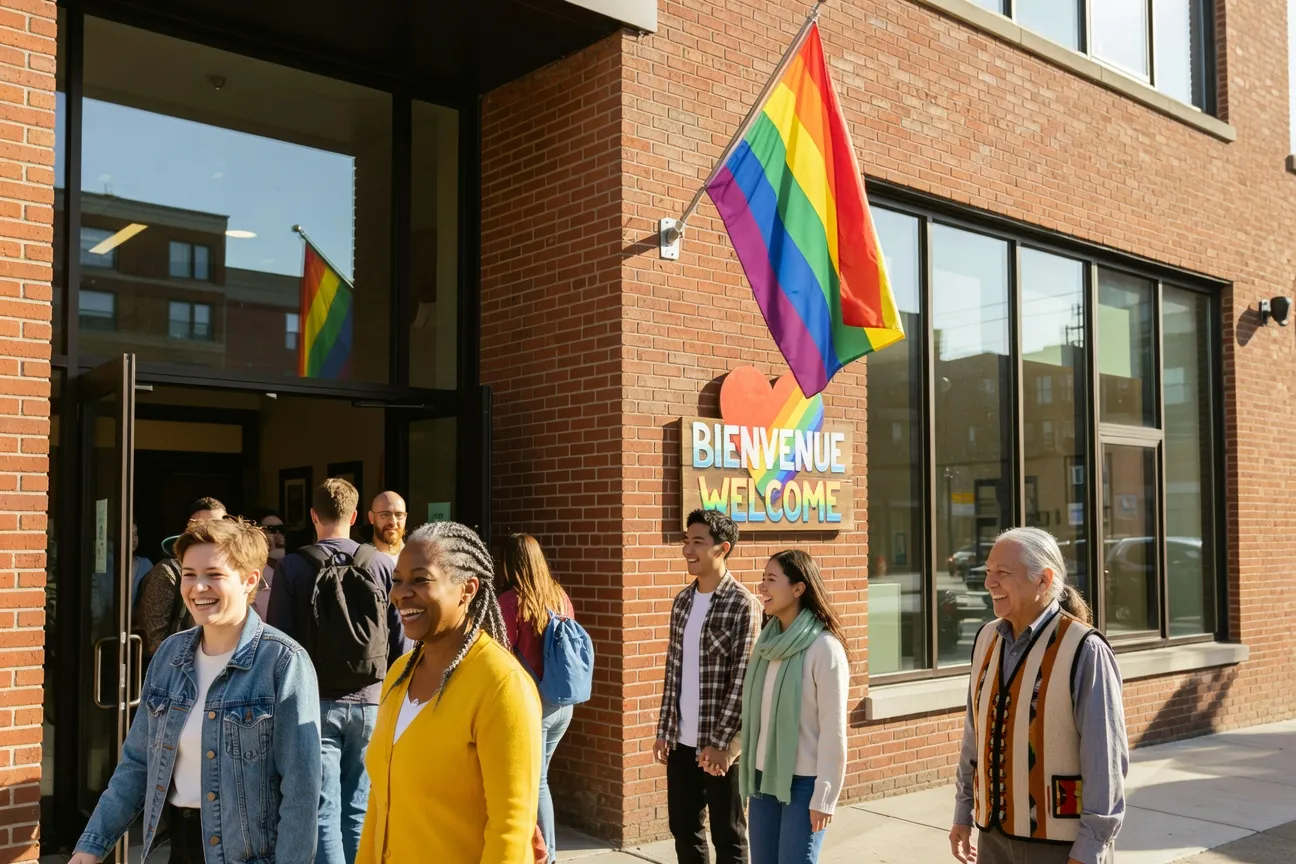
A LGBT community center is a physical space dedicated to welcoming, supporting, and bringing together lesbian, gay, bisexual, transgender, queer individuals, and more broadly, those of diverse sexual orientations and gender identities. In Quebec, these centers play an essential role: they provide a concrete entry point for those seeking information, support, or simply a sense of belonging to a community.
Contrary to what the term might suggest, LGBT community centers are not reserved for individuals who already identify as such. The majority also welcome questioning individuals, their loved ones (parents, partners, children, friends), professionals looking to better support this clientele, and engaged citizens wishing to volunteer or seek information.
The organizational model varies from one center to another. Some bring together several organizations under one roof (multi-service model), while others are specific to a particular audience (LGBT youth, lesbians, transgender individuals), and many work hand in hand with the broader directory of LGBTQ+ associations across Quebec's regions. Most operate as non-profits with a mix of public funding, private donations, and volunteer work. Services are almost always free or low-cost, and always confidential.
Montreal and Greater Montreal
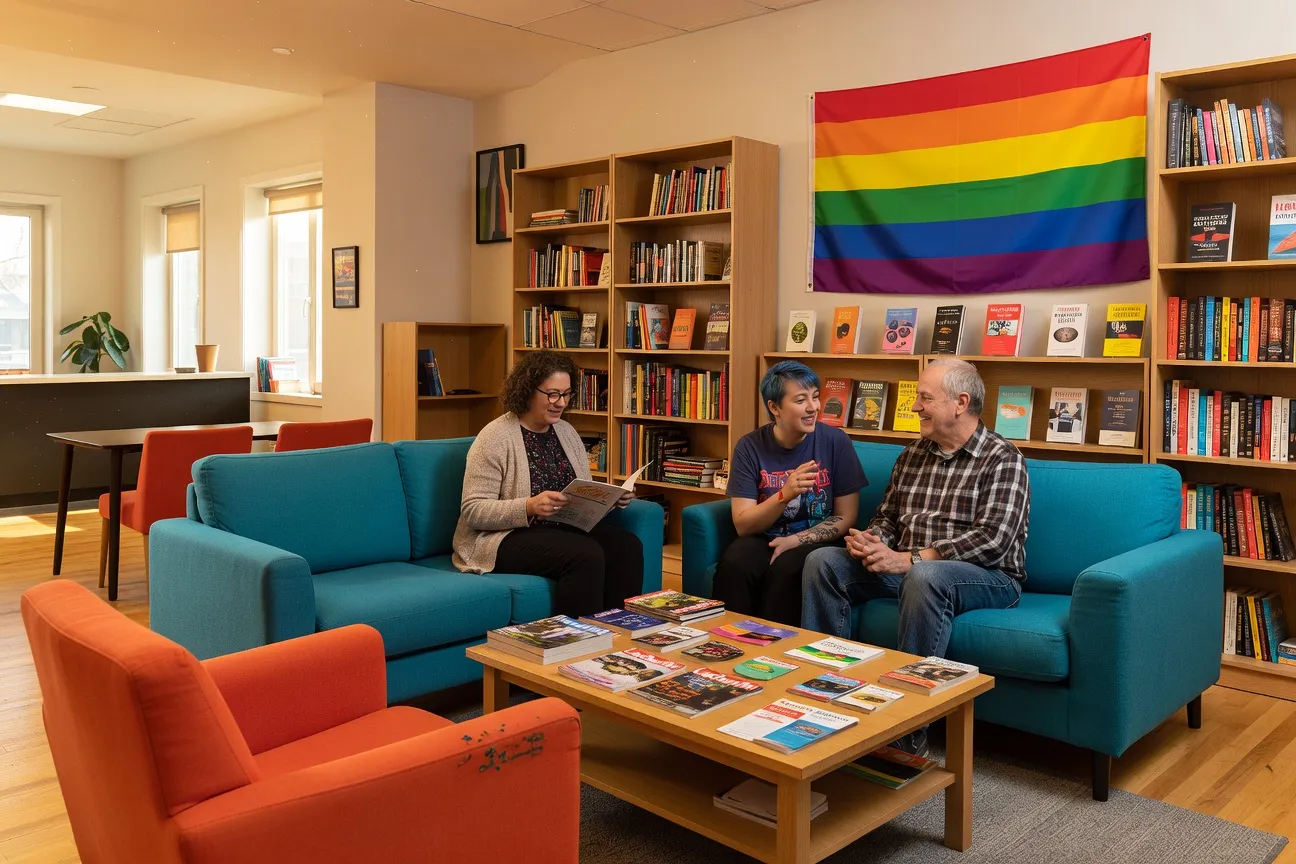
Montreal has the highest density of LGBT community centers in Quebec, reflecting the presence of nearly 60% of the province's LGBT population in the greater metropolitan area.
Montreal Gay and Lesbian Community Centre (CCGLM)
Located in the heart of the Gay Village, on Sainte-Catherine East Street, the CCGLM is one of the oldest LGBT community centers in Canada. It offers open reception from Monday to Friday from 1 PM to 5 PM, thematic discussion groups, a specialized library, and social activities. The center also hosts several member organizations, including the CGLQ, which has its headquarters there.
Lesbian Solidarity Centre (CSL)
Specifically dedicated to lesbian and bisexual women, the Lesbian Solidarity Centre offers a safe space for socialization, thematic workshops (parenting, health, activism), individual support services, and a specialized library that is one of the most comprehensive in French-speaking North America. Location: Plateau-Mont-Royal.
Project 10
A support center for LGBT youth aged 14-25, Project 10 offers open reception, peer groups in French and English, workshops, and individual support. Feminist, anti-racist approach focused on harm reduction.
AGIR (LGBTQ+ Action with Immigrants and Refugees)
For immigrant or refugee LGBT individuals, AGIR offers specialized reception, assistance with asylum procedures, peer groups, and a referral service to appropriate resources. Multilingual (French, English, Spanish, Arabic).
Astrolab
A shelter for LGBT youth in situations of residential instability, Astrolab is one of the few structures of its kind in Canada. Capacity of 14 places, individualized support, intensive service. Essential reference.
City of Quebec and Capitale-Nationale
The city of Québec has a structured LGBT community ecosystem primarily centered around the Saint-Jean-Baptiste neighborhood.
LGBTQ2+ Centre of Québec
Inaugurated in 2018, the LGBTQ2+ Centre of Québec has revolutionized community offerings in the national capital. It brings together GRIS-Québec, Tracom (support for trans individuals), Fierté Québec, and several peer groups under one roof. Open drop-in from Tuesday to Saturday, regular cultural programming, café space open to all.
Tracom
Specialized in support for trans individuals in the Québec region and Southern Québec. Peer groups, helpline, medical and legal accompaniment, informed by broader work on LGBTQ mental health and minority stress support resources. Particularly attentive response to youth in transition.
GRIS-Québec
Branch of the Groupe de recherche et d'intervention sociale, GRIS-Québec focuses on demystification in school and professional environments. Over 200 workshops per year in the region. Office at the LGBTQ2+ Centre of Québec.
Sherbrooke and Estrie
Estrie is one of the Quebec regions where the LGBT community fabric has become most structured over the past ten years, with Sherbrooke as a hub.
Diversity Estrie
LGBT community center of Estrie since 2011. Open welcome, discussion groups, awareness workshops, support for LGBT youth in schools. Office in downtown Sherbrooke. Service covers all of Estrie, including more rural MRCs.
IRIS Estrie
Specialized in sexual health prevention and support. Works closely with Diversity Estrie on LGBT health issues.
The Union of Lesbians
Younger (founded in 2019), the Union of Lesbians offers a space dedicated to lesbian and bisexual women in Estrie. Monthly social activities, thematic workshops, peer groups.
Gatineau and Outaouais
The Outaouais benefits from its proximity to Ottawa, which doubles the offer of English-language services. On the Quebec side, there are two main structures.
Jeunesse Idem
LGBT youth community center of Outaouais, specializing in welcoming 14-25 year olds. Individual support program, peer groups, workshops in schools. Office located in the Hull sector of Gatineau.
Fierté en Outaouais
With a broader audience, Fierté en Outaouais offers social activities, organizes the annual regional Pride (June), and provides general support to LGBT people of all ages.
Trois-Rivières and Mauricie
The Mauricie region has two main organizations that complement each other.
GRIS-Mauricie
Demystification in school and professional environments for the region. Extensive geographical coverage, including in more rural MRCs (Maskinongé, Mekinac).
Pivot Mauricie
LGBT support and welcome center for the region. Adult peer groups, support for trans individuals, thematic workshops. Office in Trois-Rivières.
Other regions and remote services
The other administrative regions do not always have a dedicated physical center, but local organizations and remote services fill the gap.
| Region | Main Organization | Type of Service |
|---|---|---|
| Saguenay-Lac-Saint-Jean | LGBT Committee Saguenay-Lac-Saint-Jean | Monthly activities, helpline |
| Bas-Saint-Laurent | Pride Rimouski + GRIS-Bas-Saint-Laurent | Peer groups, education |
| Côte-Nord | Arc-en-ciel Côte-Nord | Social activities, support |
| Abitibi-Témiscamingue | Clé en main Abitibi (LGBT component) | Individual support |
| Lanaudière et Laurentides | Plein Milieu, Avant-Garde Lanaudière | Families, youth |
| Montérégie | Source LGBT Montérégie | Peer groups, education |
For regions without a local organization, several services are available remotely:
- Interligne (1 888 505-1010): 24/7 phone listening and chat, anywhere in Quebec
- AlterHéros: online workshops and youth support for ages 13-30
- Aide aux Trans du Québec: helpline and remote support for trans individuals
- Coalition des familles LGBT+: remote counseling services for LGBT families
What services can be found in these centers
The exact offer varies from one center to another, but the following services are generally available.
Drop-in and orientation
Most centers offer drop-in services, without an appointment, during specific hours. A staff member can answer your questions, guide you to appropriate resources, or simply offer you a coffee and a listening ear.
Peer groups
Weekly or monthly meetings for people sharing a common situation: LGBT youth, transitioning parents, trans individuals, LGBT immigrants, questioning individuals, etc. Peer sharing is one of the most powerful tools of the community.
Thematic workshops
Sexual health, mental health, LGBT parenting, rights and legal issues, activism, transition, etc. Workshops are often free and accessible to non-members.
Individual support
Several centers offer individual consultations with trained professionals: psychosocial, legal, medical. These services are almost always free or at a very low cost.
Professional referrals
The centers maintain lists of professionals (doctors, psychologists, lawyers, notaries) with specific expertise in LGBT health or law. This referral bank is valuable, as the quality of professional support varies.
Social and cultural activities
Monthly 5 à 7 events, themed evenings, film screenings, conferences, festivals. The social aspect is essential: it helps create connections and combat isolation.
Specialized library
Several centers maintain a specialized library in LGBT history, sociology, literature, and culture. The Centre de solidarité lesbienne has one of the most comprehensive collections in French-speaking North America.
Frequently asked questions
How many LGBT community centers are there in Quebec?
A dozen physical LGBT community centers are active in Quebec in 2026, plus about thirty partner organizations providing support. The main hubs are Montreal, Quebec City, Sherbrooke, Gatineau, and Trois-Rivières.
Do you need to be a member to access the services of a center?
No. The drop-in, orientation, most peer groups, and workshops are accessible without membership. Becoming a member (with a symbolic fee of $10 to $30 per year) helps financially support the center, but it is not a prerequisite.
Are the centers accessible to heterosexual or cisgender individuals?
Yes. Close relatives (parents, partners, children), professionals who support an LGBT clientele, and engaged citizens are welcome. Most centers also welcome individuals who are questioning, without the need to declare themselves.
Is there an LGBT center in a remote area of Quebec?
Not physically in all regions, but all services are accessible remotely via Interligne (1 888 505-1010, 24/7), AlterHéros (online workshops) or Aide aux Trans du Quebec. Several regions also have local organizations: Comité LGBT Saguenay-Lac-Saint-Jean, Pride Rimouski, Arc-en-ciel Côte-Nord.
What to do if I am in crisis and no center is open?
Call Interligne (1 888 505-1010), available 24 hours a day. If the crisis is immediately life-threatening (active suicidal thoughts), call 988 (Canada-Quebec distress helpline) or 911.
Is there a specific center for lesbian women in Quebec?
Yes. The Centre de solidarité lesbienne in Montreal and the union of lesbians in Sherbrooke are the two centers specifically dedicated to lesbian and bisexual women. The lesbian community in Quebec also has other specific resources.
Are there specific centers for LGBT youth?
Yes. Projet 10 (Montreal, 14-25 years), Jeunesse Idem (Gatineau, 14-25 years), Astrolab (Montreal, housing) and AlterHéros (online, 13-30 years) are the main ones. The Coalition of LGBTQ+ Youth Groups brings together over 20 youth organizations in Quebec.
How to Cross the Threshold for the First Time
Entering an LGBT community center for the first time can be intimidating. Here are a few points to make this process easier.
You don’t have to identify yourself
No community center will ask you to declare your sexual orientation or gender identity. You may be questioning, simply curious, or coming for a loved one. This is explicitly welcome.
You don’t have to pay
Walk-in services, orientation, and most activities are free. Some centers ask for a symbolic membership fee (10 to 30 dollars per year) to become a member, but this is not a prerequisite for using the services.
You can call ahead
If the thought of entering without notice makes you uncomfortable, you can call the center to ask questions, explain your situation, and plan your visit. This is very common.
You can request confidentiality
All services at LGBT community centers are subject to confidentiality. No information will be shared with your family, employer, doctor, or anyone else without your explicit consent, except in cases of immediate danger to yourself or others.
If the door is closed, help is elsewhere
If the nearest center is not open, you can always call Interligne (1 888 505-1010), available 24 hours a day. Chat is also available at interligne.co. The LGBT organizations in Quebec coordinate their services so that no person in distress is left unanswered.