LGBTQ+ Associations in Quebec 2026: Complete Directory by Region and Type
In brief: Quebec has over 80 active LGBTQ+ associations and organizations in 2026. This comprehensive guide lists national coalitions, regional networks, youth groups, organizations specific to trans and non-binary individuals, lesbian and bisexual associations, as well as organizations dedicated to LGBTQ+ seniors and racialized communities.
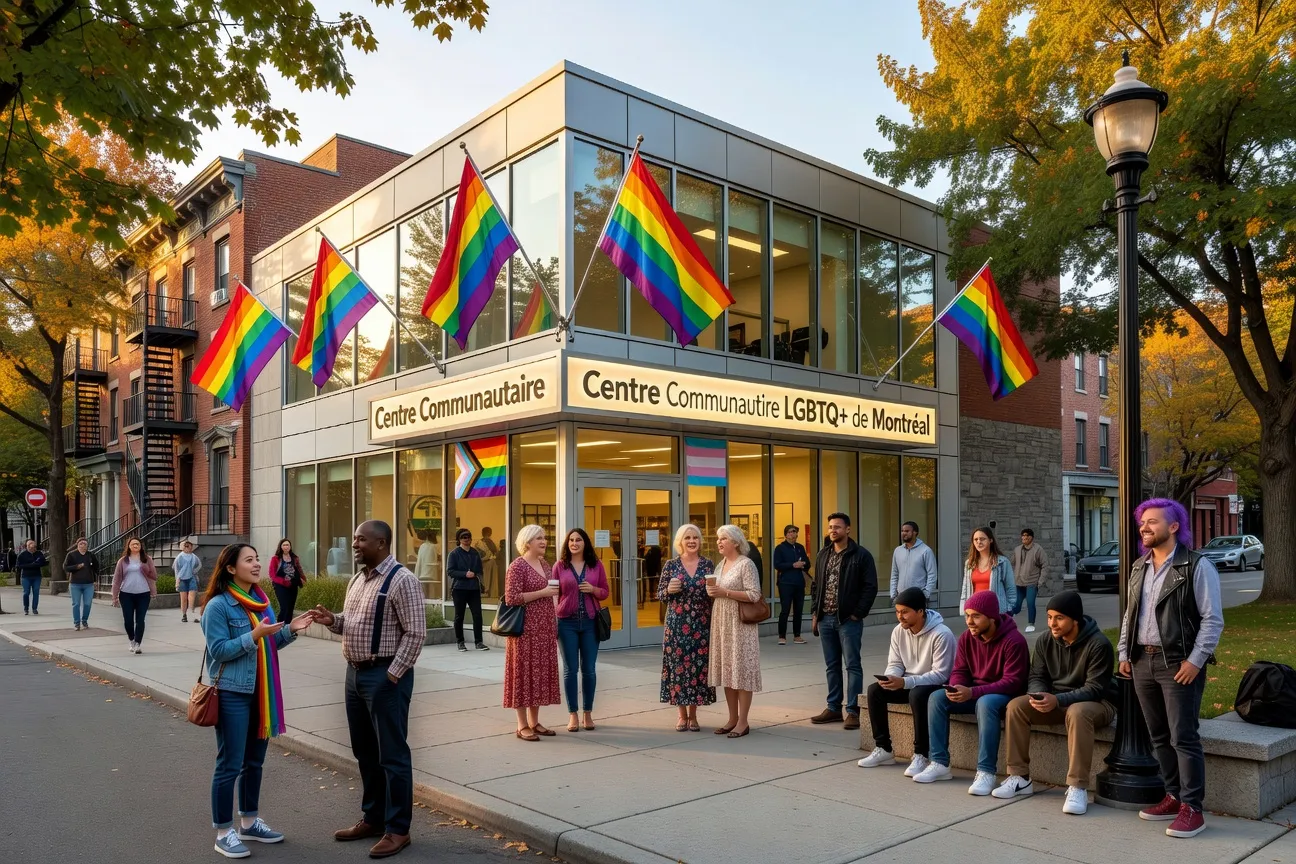
Overview of the LGBTQ+ community organizations in Quebec in 2026
Quebec has one of the richest LGBTQ+ community networks in North America. In 2026, there are more than 80 active community organizations spread across the entire provincial territory, ranging from large national coalitions to small local collectives. These organizations cover a wide spectrum of missions: psychosocial support, advocacy, sexual health, activism, arts and culture, and medical assistance.
The structuring of this community network has developed in several historical waves. The first formal organizations emerged in the 1970s-1980s, in the wake of the civil rights struggles and the AIDS crisis. The 1990s-2000s saw a professionalization of the sector and the emergence of specialized organizations (youth, trans health, racialized communities). The period from 2010 to 2026 is marked by a proliferation of digital groups and greater intersectional diversification.
In terms of funding, the majority of these organizations rely on the Community Organizations Support Program (PSOC) from the Ministry of Health, federal grants through Status of Women Canada and Canadian Heritage, as well as private donations. Financial sustainability remains a major issue — several organizations operate with very limited budgets and volunteer or precarious staff.
This directory is not exhaustive but covers the most active and visible organizations in 2026. For a complete list, consult the directory of the CGLQ and the Alliance of LGBTQ+ Community Organizations of Quebec.
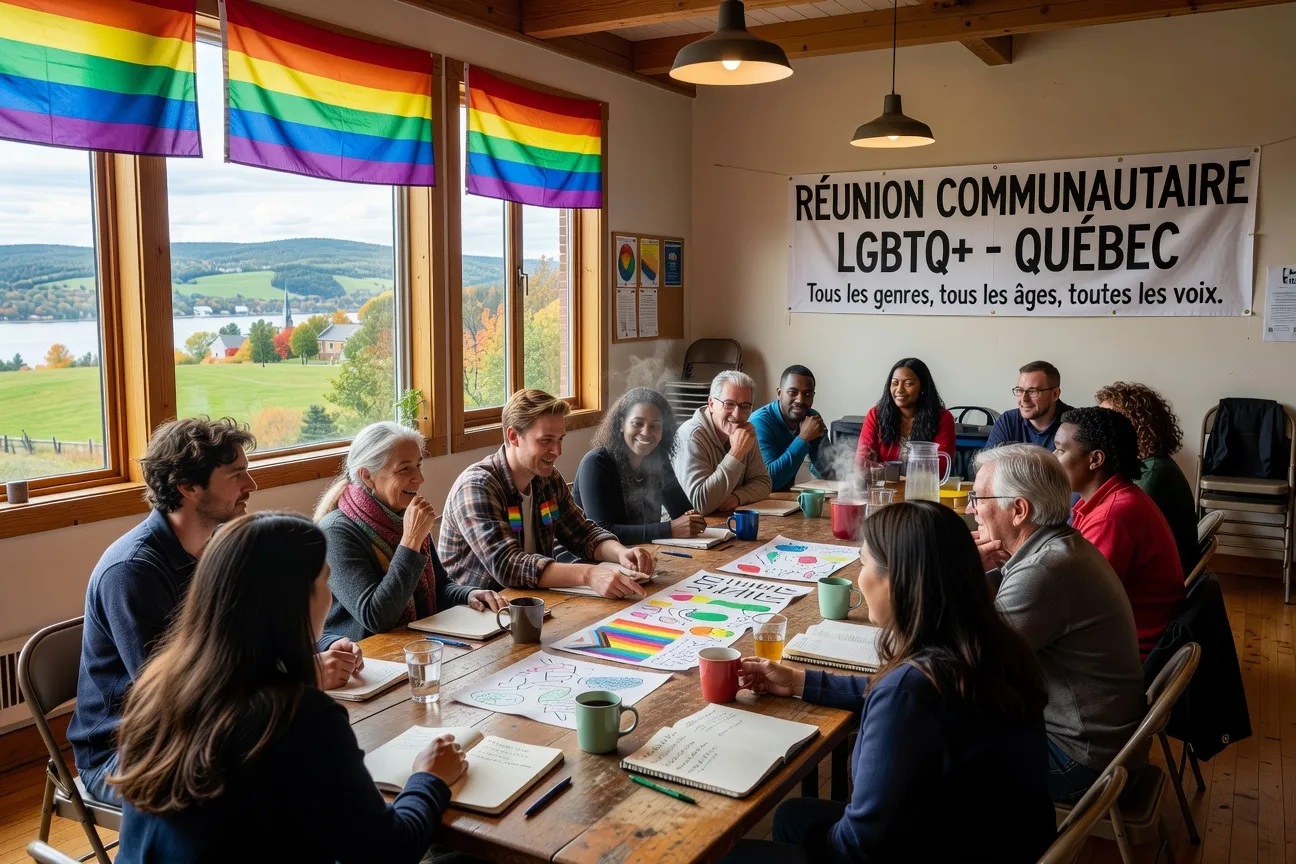
National coalitions: CGLQ, RÉZO, GRIS-Quebec
At the top of the Quebec associative fabric, several provincial organizations play a role in coordination, advocacy, and direct service to communities.
Coalition gaie et lesbienne du Québec (CGLQ) — Founded in 1992, the CGLQ is the oldest LGBTQ+ rights advocacy organization established in Quebec. Accredited by the United Nations Economic and Social Council (ECOSOC), it carries the community's claims at the provincial, federal, and international levels. The CGLQ maintains a resource directory, organizes awareness events, and intervenes in public policies.
RÉZO — An organization specialized in the sexual health of men who have sex with men (MSM), including trans men. RÉZO offers testing services, HIV prevention, support for people living with HIV, and training for health professionals. Based in Montreal, its influence extends across the province.
GRIS-Québec (Groupe de Recherche et d'Intervention Sociale) — Founded in 1994, GRIS-Montréal and its regional branches (GRIS-Québec, GRIS-Chaudière-Appalaches) send LGBTQ+ volunteers into high schools for demystification workshops. The program has reached over 50,000 Quebec students since its inception.
Conseil québécois LGBT — An umbrella organization that brings together and represents Quebec LGBTQ+ associations to government bodies. It coordinates consultations and common positions of the movement.
Interligne — Formerly Gai Écoute (founded in 1980), Interligne offers a 24/7 helpline (1-888-505-1010) and referral services for the entire province. By 2026, the organization will also have a chat service and a mobile app.
Alliance Arc-en-Ciel de Quebec: regional network in detail
The Alliance Arc-en-Ciel de Québec is the main LGBTQ+ community network in the Capitale-Nationale region. Founded to address the specific needs of the community outside of Montreal, it coordinates several partner organizations and offers direct services.
Services offered: weekly support groups for LGBTQ+ individuals, a specific program for trans individuals, referral services to medical and psychosocial resources in the Quebec region, training for professionals, and organization of community events.
Regional structure: The Alliance Arc-en-Ciel is a member of a larger network of regional alliances that cover several areas of Quebec. These regional alliances operate relatively autonomously while sharing common resources and guidelines.
Partnerships: The Alliance Arc-en-Ciel works closely with the CIUSSS de la Capitale-Nationale, the secondary schools of the Commission scolaire de la Capitale, and several mental health organizations. It is also present in the network of Quebec youth houses for awareness workshops.
For individuals living in the Quebec region, the Alliance Arc-en-Ciel is often the first point of entry to local LGBTQ+ resources. See also our detailed regional directory of LGBTQ+ community centers in Quebec.
Youth Groups: Jeunes Idem, Égalité Canada Youth, School Groups
LGBTQ+-specific organizations focused on youth play a fundamental role in preventing distress and affirming the identity of adolescents and young adults.
Projet 10 — A Montreal-based organization specializing in support for LGBTQ+ youth aged 14 to 25. Projet 10 offers support groups, individual psychosocial support, workshops in schools, and specific resources for trans youth, racialized youth, and youth in precarious situations. All services are completely free.
Égale Canada — Bureau québécois — A national LGBTQ+ rights advocacy organization with an active youth program in Quebec. Égale Canada engages in educational policy, publishes resources for teachers and school administrators, and supports Gay-Straight Alliance (GSA) clubs in high schools.
Alliances gai-hétéro (Gay-Straight Alliances — GSA) — These student clubs, present in several hundred Quebec high schools, provide an inclusive space for LGBTQ+ students and their allies. Their effectiveness in reducing homophobia and improving the well-being of LGBTQ+ students is documented by several studies.
AlterHéros — A youth organization specializing in sexual and gender diversity, AlterHéros manages an online chat service, publishes educational resources, and offers training for professionals. Its digital platform is particularly accessible for youth in rural areas.
LGBTQ+ groups in CEGEPs and universities — Almost all Quebec universities and many CEGEPs have autonomous LGBTQ+ student associations that organize events, peer resources, and referral services.
Lesbian and Bisexual Associations in Quebec
Lesbian and bisexual women have long played a leading role in the LGBTQ+ movement in Quebec, while developing spaces specific to their realities.
Lesbians of Quebec — A provincial grouping that organizes events, social networks, and resources for lesbian women from all regions. The group is particularly active on social media and facilitates connections between lesbian women in the regions and in Montreal.
Network of Lesbians of Quebec (RLQ) — An organization that works for the visibility and rights of lesbian women, with a focus on research, documentation, and political representation.
Bi's Initiative — A support and awareness group dedicated to bisexual people in Quebec. Biphobia — discrimination specific to bisexual individuals, sometimes experienced even within LGBTQ+ spaces — is one of the central issues of the organization.
Lesbian Groups in Montreal: Several bars and social spaces specifically for women and lesbians exist in the Village and in other neighborhoods of Montreal. Hiking, reading, sports, and cultural groups allow for meetings in various contexts.
For same-sex families formed by two women, specific resources exist through the Coalition of LGBTQ+ Families and LGBTQ+ parent groups in several cities. See also our guide on same-sex families in Quebec.
Trans and non-binary organizations active in 2026
The trans movement in Quebec has specialized organizations that cover both direct support and advocacy for rights as well as professional training.
Association des transgenres du Québec (ATQ) — Founded in 1998, the ATQ is the oldest and most established trans organization in Quebec. It offers support groups, information workshops, a helpline, administrative support services for gender marker change processes, and training for health and education professionals.
ASTT(e)Q (Action Santé Travesti(e)s et Transsexuel(le)s du Québec) — An organization specialized in the health and rights of trans individuals in precarious situations, including trans sex workers. ASTT(e)Q works with a harm reduction approach and peer support.
TransEstrie — A support group for trans individuals in the Sherbrooke and Estrie region. It offers regular meetings and referrals to local medical resources.
Trans Outaouais — A regional organization active in the Gatineau area for trans individuals, offering peer groups and connections to local health services.
It is worth noting that several specific non-binary groups have emerged since 2020, primarily through online platforms, and provide important support spaces for individuals who do not fully identify with more traditional trans organizations.
LGBTQ+ Indigenous and Racialized Associations: Specific Voices
LGBTQ+ individuals from racialized or Indigenous communities experience intersectional realities that require tailored spaces and resources. In 2026, several Quebec organizations are specifically working on these realities.
Massimadi — Montreal's Afro-LGBTQ+ Film and Arts Festival, Massimadi is both a cultural event and a visibility platform for LGBTQ+ individuals of African and Caribbean descent. The organization also holds workshops and community resources throughout the year.
2-Spirited People of the 1st Nations (2S1N) — Although based in Toronto, this national organization supports Two-Spirit individuals in Quebec and collaborates with Indigenous groups in Montreal to provide culturally appropriate spaces.
Montreal Native Friendship Centre — Offers services for Indigenous peoples in urban settings, including a welcoming approach to the issues faced by Two-Spirit and Indigenous LGBTQ+ individuals.
Coalition of Community Organizations for Workforce Development (COCDMO) — While not specifically LGBTQ+, this coalition works towards the inclusion of racialized LGBTQ+ individuals in the job market.
For LGBTQ+ families from diverse cultural communities, organizations like famillesdurables.fr document the realities of inclusive families and intergenerational transmission in multicultural contexts.
LGBTQ+ Groups in Remote Regions (Saguenay, Outaouais, Estrie)
Beyond Montreal and Quebec City, many regions in Quebec have local LGBTQ+ groups, often informal but essential for their communities.
Outaouais — Couleurs Outaouais: LGBTQ+ community organization active in the Gatineau region. It offers social activities, support groups, and collaborates with local health services to improve the reception of LGBTQ+ individuals.
Saguenay — LGBTQ+ Saguenay-Lac-Saint-Jean: Peer group active mainly through social media and regular meetings. The region has limited resources but a close-knit community that compensates with solidarity.
Estrie — Arc-en-Ciel Estrie: Organized around Sherbrooke, Arc-en-Ciel Estrie offers support groups, social activities, and referrals to medical resources in the region.
Côte-Nord and Gaspésie: These regions have fewer formal resources, but local Facebook groups and informal networks allow for connections. AlterHéros and the ATQ are particularly important for individuals in these regions seeking online support.
Abitibi-Témiscamingue: The LGBTQ+ community in this region primarily organizes around informal groups and the ATQ platform. Rouyn-Noranda is beginning to develop a more structured community presence.
For all regions, digital resources (Facebook groups, Discord, chat platforms) play an increasingly central role for LGBTQ+ individuals who do not have access to in-person services.
LGBTQ+ senior associations in Quebec
LGBTQ+ seniors face specific challenges that are often overlooked: increased loneliness, fear of going back into the closet when entering a residence, and lack of tailored services in long-term care. In 2026, several organizations begin to address these needs.
LGBTQ+ Seniors of Quebec: Support group and social activities for LGBTQ+ individuals aged 55 and over, based in Montreal but accessible online. Offers weekly meetings, cultural activities, and information sessions on the rights of LGBTQ+ seniors.
Montreal Gay and Lesbian Community Centre (CCGLM): Offers specific programs for LGBTQ+ seniors, including intergenerational discussion groups and workshops on end-of-life care planning with an LGBTQ+ perspective.
Inclusive Residences: Several residences for seniors in Montreal have adopted explicit inclusion policies for LGBTQ+ residents. The Quebec Association of Residences for Seniors (AQESSS) is working to expand these policies.
The specific issues faced by LGBTQ+ seniors also include the legal recognition of their partners and chosen families in care facilities, an issue that several organizations are actively advocating for with the provincial government.
How to create or join an LGBTQ+ association in your city
Joining or creating an LGBTQ+ association is within everyone's reach, regardless of the size of their community or their organizational experience.
To join an existing association:
- Consult the CGLQ directory (cglq.ca) or the directory of the Alliance of LGBTQ+ Organizations
- Search on Facebook for local groups using the keywords “LGBTQ [your city name]” or “queer [your region name]”
- Contact Interligne (1-888-505-1010) who can guide you to resources in your area
- Check if your school, CEGEP, or university has an LGBTQ+ student association
To create a new group:
- Identify interested LGBTQ+ individuals in your community (social networks, posting in welcoming places)
- Start with informal meetings — a café, a park, a public library
- Contact the CGLQ or the Conseil québécois LGBT for organizational support and access to existing funding networks
- Explore funding programs from PSOC (Community Organizations Support Program) for potential official recognition
Practical resources for organizers: the Conseil québécois LGBT publishes community organization startup guides. Égale Canada also offers resources for creating and strengthening gay-straight alliances in schools.
Frequently asked questions
What is the main LGBTQ+ association in Quebec?
The Coalition gaie et lesbienne du Québec (CGLQ), founded in 1992 and accredited by the United Nations Economic and Social Council (ECOSOC), is the most established organization. Interligne (formerly Gai Écoute) is the best known to the general public for its 24/7 helpline (1-888-505-1010).
How to contact the Alliance Arc-en-Ciel de Québec?
The Alliance Arc-en-Ciel de Québec can be contacted through its website and social media. It offers regular support groups for LGBTQ+ individuals in the Capitale-Nationale region, as well as specific services for transgender individuals.
Are there LGBTQ+ organizations for youth outside of Montreal?
Yes. AlterHéros (alterheros.com) is accessible from anywhere in the province via the internet. Arc-en-Ciel Estrie, Couleurs Outaouais, and informal regional groups exist in several areas. Gay-Straight Alliances (GSA) are present in many Quebec high schools.
How to find a trans support group in Quebec?
The Association des transgenres du Québec (ATQ, atq1980.org) offers in-person support groups in Montreal and online services accessible throughout Quebec. TransEstrie (Sherbrooke) and Trans Outaouais (Gatineau) are active in their respective regions.
Can one join a Quebec LGBTQ+ association from abroad?
Some organizations, such as CGLQ or Égale Canada, accept international members or offer ways to support their mission from abroad. For direct support resources, they are generally reserved for individuals residing in Quebec or Canada.