LGBT Associations and Coalitions in Quebec: Complete Directory 2026
In brief: Quebec has over 80 active LGBT associations and coalitions in 2026, organized into national, regional, and thematic networks. This directory lists them by mission (advocacy, support, health, youth, families), by administrative region, and by target audience (lesbians, trans, racialized communities, seniors).
Overview of the Quebec LGBT Community Organizations
Quebec has one of the densest LGBT associative networks in the world relative to its population. In 2026, there are more than 80 active organizations across the province, of which about thirty have a national scope and around fifty operate at the regional or local level. Most are non-profit organizations (NPOs) incorporated under the Companies Act of Quebec and funded by a mix of public grants (public health, Minister of Justice, Secretariat for the Status of Women and LGBT Status), private donations, and membership fees.
This associative density can be explained by three factors. First, the long history of LGBT mobilization in Quebec, which dates back to 1971 with the Homosexual Liberation Front. Second, the Quebec culture of community organizations as a third sector of the social framework, inherited from the major reforms of the 1960s-1970s. Third, the real government support, particularly since the creation in 2011 of the Office for the Fight Against Homophobia and Transphobia at the Ministry of Justice, which funds several dozen organizations each year.
Associations often organize into thematic coalitions to amplify their impact. The LGBT+ Families Coalition, the Quebec LGBT Council, the LGBTQ+ Youth Groups Coalition, and the CGLQ each bring together several dozen members. This article presents them in a structured manner to help anyone find the appropriate contact for their situation.
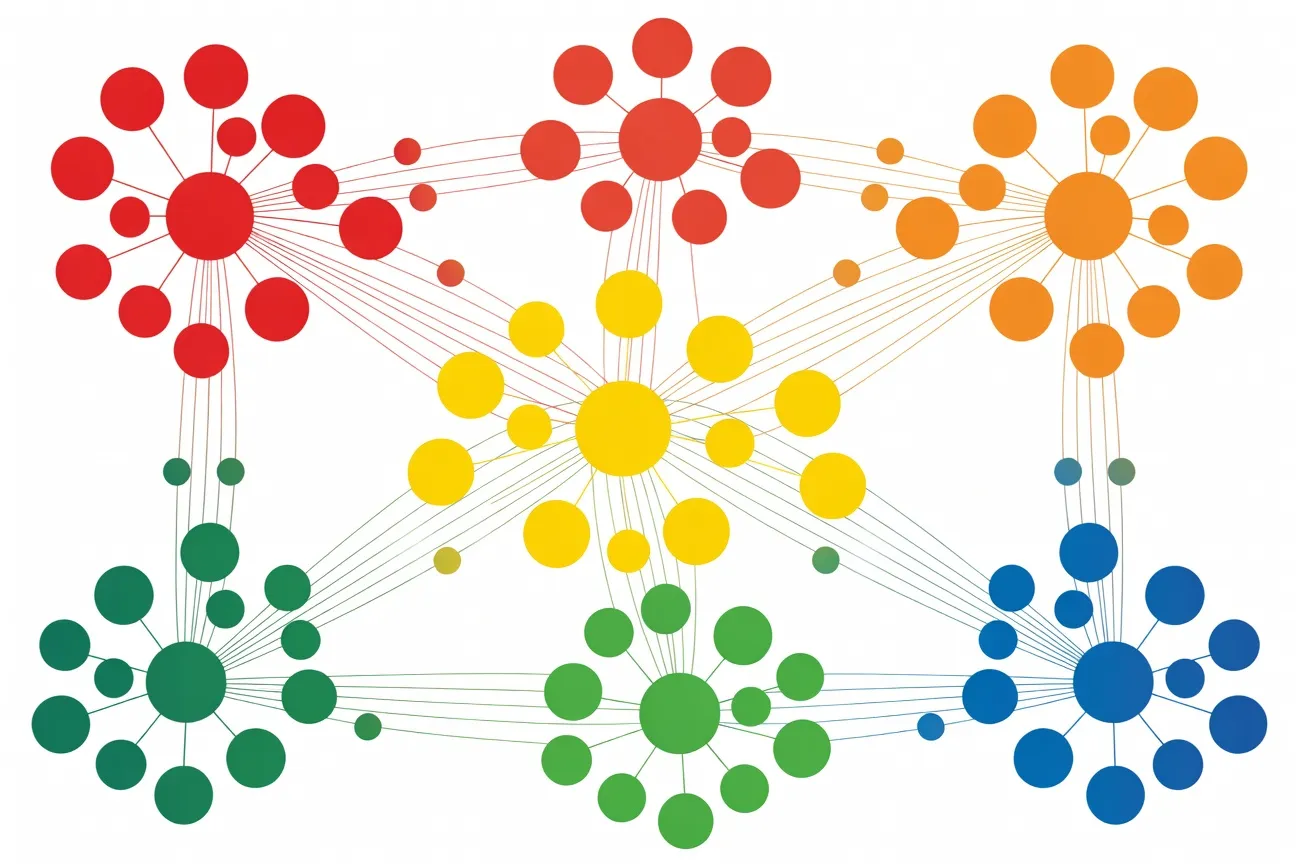
The major national coalitions
Four coalitions structure the political representation of the LGBT community at the Quebec level. They serve as interlocutors for governments, the media, and international bodies.
Coalition gaie et lesbienne du Québec (CGLQ)
Founded in 1992, the CGLQ is one of the oldest LGBT coalitions in the province. It is distinguished by its consultative status with the UN ECOSOC, obtained in 2007, making it one of the few French-speaking LGBT NGOs accredited by the UN. The CGLQ carries Quebec's claims onto the international stage and regularly participates in the work of the Human Rights Council in Geneva.
Conseil québécois LGBT
The Conseil québécois LGBT (CQ-LGBT) is the privileged interlocutor of the Quebec government on LGBT issues. It brings together several dozen member organizations and works closely with the Secretariat for the Status of Women and LGBT Status. The CQ-LGBT also leads the Quebec Charter for Sexual Diversity and Gender Plurality in the Workplace, signed by several hundred employers.
Coalition des familles LGBT+
Created in 1998 under the name Coalition des familles homoparentales, it was renamed Coalition des familles LGBT+ to more broadly include families with trans, non-binary, or queer parents. Its central mission: to promote the recognition, inclusion, and well-being of LGBT+ families in all environments. It played a central role in the adoption of the Act establishing civil union in 2002 and continues to address school and legal issues.
Coalition des groupes jeunesse LGBTQ+
Recent (2018), it federates more than twenty organizations that work with LGBT youth in Quebec. Its mission: to structure a coordinated response to the issues facing LGBT youth (suicidality, bullying, mental health, running away, homelessness). It is the reference interlocutor for school boards and the Ministry of Education.
Political and legal advocacy associations
Beyond coalitions, several specialized associations advocate for targeted demands with decision-makers.
- Fondation Émergence — Coordinates in Quebec the International Day Against Homophobia and Transphobia (May 17). Educational tools, national media campaigns, annual public opinion surveys.
- LGBT Chamber of Commerce of Quebec — Advocates for the inclusion of LGBT-friendly businesses, certifies inclusive workplaces, organizes entrepreneurial networking events. Its recommendations are taken into account by economic ministries.
- Egale Canada (Quebec section) — Federal legal advocacy, intervention in landmark cases before the courts. Egale Canada has intervened in the majority of major Canadian LGBT legal cases.
- SAVIE-LGBTQ — Specializes in combating violence (sexual, domestic, familial) within the community. Intervenes with police services, the judiciary, and shelters.
Listening lines, support and mutual aid
Peer support is one of the historical pillars of the LGBT community fabric in Quebec. Several services are available for free.
| Organization | Phone | Availability | Target Audience |
|---|---|---|---|
| Interligne | 1 888 505-1010 | 24/7, phone and chat | All LGBT individuals and their loved ones |
| AlterHéros | 1 514 846-1717 | Monday-Friday 1 PM-5 PM | LGBT youth 13-30 years old |
| Aide aux Trans du Québec (ATQ) | 1 514 254-9038 | Tuesday-Friday 7 PM-10 PM | Trans individuals and their loved ones |
| Tracom | 1 418 523-4997 | Tuesday-Thursday 7 PM-10 PM | Trans individuals in the Quebec-South region |
| SAVIE-LGBTQ | 1 855 410-0511 | 24/7 | Victims of domestic violence in the LGBT community |
All these services are free, confidential, and anonymous. Many offer in-person consultations by appointment, in addition to phone and chat services.
Health, mental health and hormone therapy
Several community organizations address health issues specific to LGBT individuals.
- Réseau ASTT(e)Q — Sexual health and hormone therapy for trans individuals. Medical referral service, administrative support (name change, gender marker).
- COCQ-SIDA — Coalition of over 25 community organizations fighting against HIV/AIDS in Quebec. Prevention, support for people living with HIV, advocacy.
- Séro Zéro — Free rapid testing, post-testing support, prevention workshops in the bars of the Village.
- Clinique médicale L'Actuel — Medical clinic specialized in LGBT health, located in the Gay Village of Montreal. Sexual health, mental health, hormone therapy.
- RECTAS — Network for trans education and health. Training for health professionals in Quebec.
Access to gender-affirming care remains unequal across Quebec. Trans identity in Quebec is the subject of ongoing efforts to make these services accessible everywhere, including in rural areas.
LGBT Youth Specialized Associations
The issues facing LGBT youth (suicidality, bullying, running away, homelessness) mobilize a particularly active dedicated network.
- GRIS (Groupe de recherche et d'intervention sociale) — Demystification in school, college, and professional environments. Present in Montreal, Quebec, Mauricie, Outaouais, Sherbrooke. Over 1,000 workshops per year.
- AlterHéros — Information and support service for youth aged 13-30. Highly consulted website, online workshops.
- Astrolab — Shelter for LGBT youth in residential instability in Montreal.
- Projet 10 — Support center for youth aged 14-25, Montreal. Feminist and anti-racist approach, services in English and French.
- Coalition des groupes jeunesse LGBTQ+ — Federates over 20 youth organizations, coordinating advocacy in educational settings.
Same-sex parent families and transgender people in families
The homoparental families in Quebec and families with a trans parent benefit from specific resources.
- LGBT+ Families Coalition — Advocacy, training for school environments (LGBT Families at School program), legal advisory services.
- Plein Milieu — Support for young families, peer groups for LGBT parents, parenting workshops.
- Peer Support Group Aidance Trans — Support for families with a member who is trans, transitioning, or questioning.
- Astrolab Family — Specific program for families with a young trans or non-binary individual.
Specific communities: lesbians, racialized, seniors, Indigenous
Intersectionality is increasingly shaping the associative fabric. Several organizations address specific sub-communities within the overall LGBT community.
Lesbian and Bisexual Women
- Centre de solidarité lesbienne (Montreal) — Social activities, workshops, individual support, specialized library space.
- Réseau des lesbiennes du Québec — Specific political mobilization, representation with the government.
- L'union des lesbiennes — Younger group (Sherbrooke, Estrie), peer group and social activities.
Racialized and Immigrant Communities
- Helem Montréal — Arab LGBT community.
- Arc-en-ciel d'Afrique — Afro-descendant LGBT communities in Quebec.
- Massimadi Festival — Annual festival for Afro-Caribbean LGBT communities.
- Pride Pakistan, AGIR (Action LGBTQ+ with Immigrants and Refugees) — Support for immigrant and refugee LGBT individuals.
LGBT Seniors
- Réseau Enchanté — Social activities, specific celebrations for LGBT seniors.
- Fondation Emergence (Aînés program) — Fighting homophobia in residences for elderly individuals.
Indigenous and Two-Spirit Communities
- 2-Spirit Health Resource Center — Health and support for Two-Spirit individuals.
- Wapikoni Mobile — Audiovisual program highlighting Indigenous LGBT voices.
Directory by administrative region
Here are the main organizations by administrative region of Quebec. This list is not exhaustive but covers the most active associations.
| Region | Main Organizations |
|---|---|
| Montreal | CGLQ, CQ-LGBT, Coalition familles LGBT+, Interligne, GRIS-Mtl, AlterHéros, Centre de solidarité lesbienne, ASTT(e)Q, Helem, Arc-en-ciel d'Afrique, AGIR |
| Capitale-Nationale (Quebec) | GRIS-Quebec, Tracom, Fierté Quebec, Centre LGBTQ2+ de Quebec |
| Outaouais (Gatineau) | Jeunesse Idem, Fierté en Outaouais |
| Mauricie (Trois-Rivières) | GRIS-Mauricie, Pivot Mauricie |
| Estrie (Sherbrooke) | Diversité Estrie, IRIS Estrie, L'union des lesbiennes |
| Saguenay-Lac-Saint-Jean | Comité LGBT Saguenay-Lac-Saint-Jean |
| Bas-Saint-Laurent | Pride Rimouski, GRIS-Bas-Saint-Laurent |
| Côte-Nord | Arc-en-ciel Côte-Nord |
| Abitibi-Témiscamingue | Clé en main Abitibi (LGBT component) |
| Lanaudière et Laurentides | Plein Milieu, Avant-Garde Lanaudière |
Frequently asked questions
How many LGBT associations exist in Quebec in 2026?
More than 80 active organizations are listed in Quebec in 2026, including about thirty with a national scope and around fifty regional or local ones. This figure places Quebec among the jurisdictions with the densest LGBT associative fabric in the world.
What is the difference between the CGLQ and the Conseil quebecois LGBT?
The CGLQ (Coalition gaie et lesbienne du Quebec) is an NGO founded in 1992, accredited by ECOSOC-UN. The Conseil quebecois LGBT is a coalition of organizations that engages in dialogue with the government of Quebec. The two structures are complementary: CGLQ addresses international issues, while CQ-LGBT addresses provincial issues.
How can I find the nearest association to my location?
Consult the directory by region above or contact Interligne (1 888 505-1010), which can direct you to the most relevant organization based on your location and needs.
Are LGBT associations open to heterosexual individuals?
Yes, the majority of LGBT associations accept allied members, heterosexual and cisgender volunteers, and donors. This is even explicitly encouraged by most of them, who see intercommunity solidarity as a lever for social inclusion.
Is there a coalition specifically for LGBTQ+ families?
Yes. The Coalition of LGBT+ Families (formerly the Coalition of Homoparental Families), founded in 1998, is the reference organization. It supports families in their legal, educational, and medical processes, and advocates for their full and complete recognition.
Are there associations for racialized LGBT people in Quebec?
Yes. Helem Montreal (Arab community), Arc-en-ciel d'Afrique (Afro-descendant communities), Pride Pakistan, AGIR (immigrants and refugees), 2-Spirit Health Resource Center (Two-Spirit Indigenous) are the main ones. The Massimadi festival highlights LGBT Afro-Caribbean communities.
How to fund an LGBT association in Quebec?
Most organizations accept online donations through their websites and provide tax receipts (registered charities). Many have monthly donation programs that ensure financial stability. Membership as an ally or regular member is also a form of support.
How to choose the association to contact
Given the diversity of associations, it can be difficult to know who to contact. Here are some guidelines based on your situation.
You are in distress or crisis
Call Interligne (1 888 505-1010), available 24 hours a day. If the crisis is immediately life-threatening (active suicidal thoughts), call 988 (Canada-Quebec distress helpline) or 911.
You are looking for information on transition
Aide aux Trans du Québec (1 514 254-9038) or Réseau ASTT(e)Q are the primary references. For trans youth, AlterHéros and Centre 2110 (Quebec) are also suitable.
You are a parent and your child is coming out
The Coalition des familles LGBT+, AlterHéros (parental section) and Plein Milieu offer tailored support.
You want to report discrimination in the workplace
The Conseil québécois LGBT manages the Quebec Charter for sexual diversity in the workplace. The CGLQ can also intervene on issues of homophobia and direct you to legal resources (Egale, Commission des droits de la personne).
You are in a region and do not identify a local organization
All national coalitions (CGLQ, CQ-LGBT, Coalition familles LGBT+) have services accessible remotely. Interligne is available throughout Quebec.