Help for LGBTQ+ Youth in Quebec: Resources, Helplines, and Support 2026
In brief: LGBTQ+ youth in Quebec face specific challenges: suicide risk 4 to 7 times higher, bullying, isolation, family rejection. This 2026 guide lists the concrete resources available: 24/7 helplines, AlterHéros for ages 13-30, ATQ for trans youth, GRIS in schools, family support, and regional assistance. A practical reference for youth, their loved ones, and support workers.
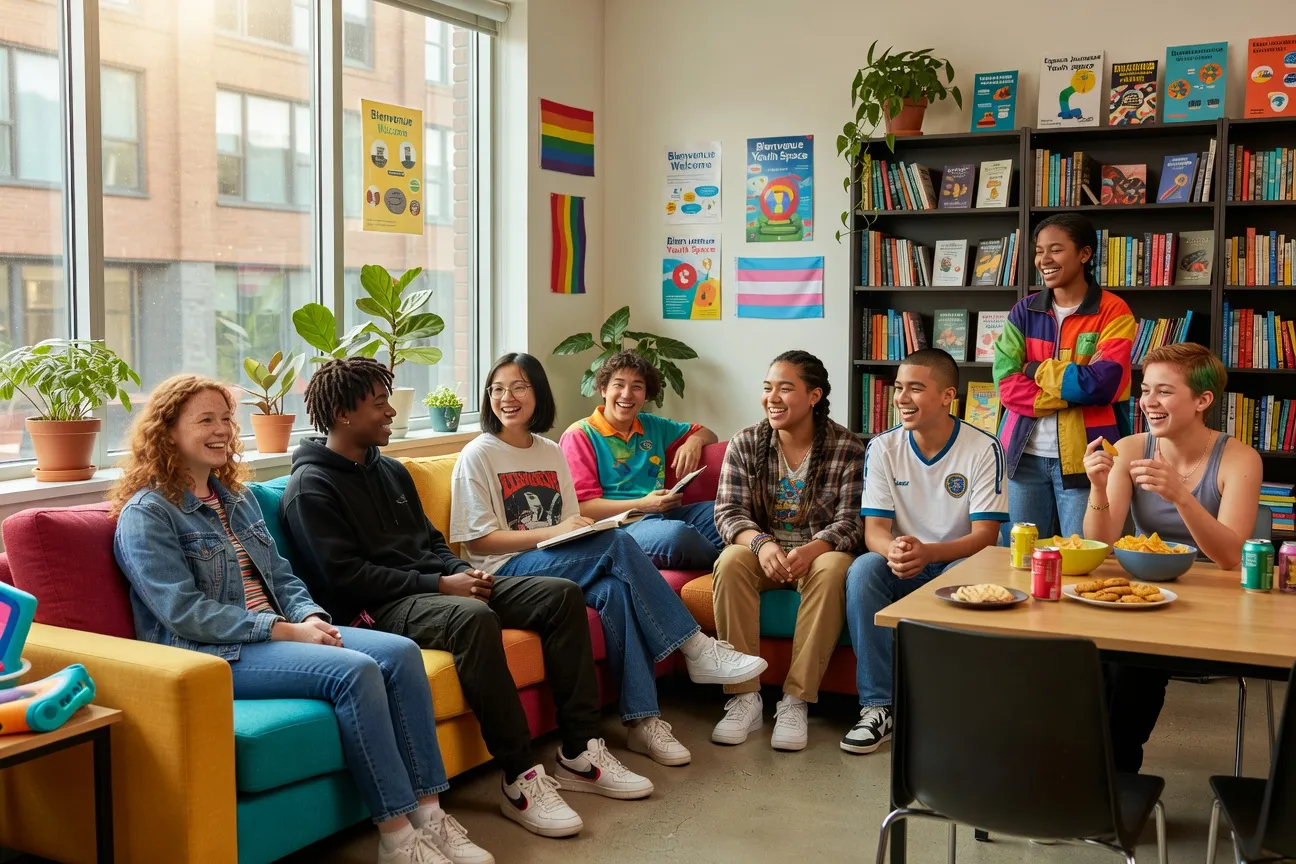
Why specific support for LGBTQ+ youth in Quebec?
If you are in crisis or have suicidal thoughts, call now:
- Interligne (LGBT, 24/7) : 1 888 505-1010 or chat at interligne.co
- SOS Suicide (general, 24/7) : 1 866 277-3553
- Tel-jeunes (5-20 years, 24/7) : 1 800 263-2266
- 911 in case of immediate life-threatening emergency
These lines are free, confidential, and accessible throughout Quebec, in French and English.
Quebec LGBTQ+ youth today are growing up in a society that is much more welcoming than it was twenty or thirty years ago. The Charter of Human Rights and Freedoms has protected sexual orientation since 1977 and gender identity since 2016. Media, schools, and popular culture have integrated sexual and gender diversity to an unprecedented degree. Yet, behind this overall positive image, the numbers reveal a much more contrasted reality that fully justifies the existence of specialized resources.
According to converging surveys from the Research Chair on Sexual Diversity and Gender Plurality at UQAM and the National Institute of Public Health of Quebec, LGBTQ+ youth present a suicidal risk 4 to 7 times higher than their heterosexual and cisgender peers. Trans youth are particularly vulnerable: according to the Canadian Trans Youth Health Survey, 38 to 45% of trans adolescents report having attempted suicide at least once. These rates are among the highest documented for a subpopulation in Canada.
This distress does not stem from sexual orientation or gender identity themselves — research is unequivocal on this point — but rather from the social consequences of rejection, bullying, isolation, familial rejection, and internalized stigma. LGBTQ+ youth are also more exposed to depression in adolescents, anxiety disorders, risky behaviors, and substance use. That is why specific, competent, and accessible support remains essential, even in a province as legally advanced as Quebec.
Fortunately, the Quebec community fabric is dense and structured. Over 80 LGBT organizations are listed in 2026, many of which are dedicated to or heavily invested in supporting youth. Our LGBT community guide in Quebec presents the complete landscape, but this article focuses specifically on resources available to those aged 12-25 and those who support them.
Lifelines and Chat Services Available 24/7 in Quebec
The first resource to know is a helpline. When a young person doesn’t know who to turn to, lives in a region without a local organization, or prefers anonymity before confiding in someone close, the phone and online chat provide immediate access to a trained counselor. All the resources mentioned here are free, confidential, and accessible 24 hours a day, seven days a week.
Interligne — the main LGBT helpline in Quebec
Formerly Gai Écoute (founded in 1980), Interligne is the Quebec reference for LGBT listening. The organization handles over 30,000 contacts per year, primarily by phone (1 888 505-1010) and through online chat at interligne.co. The counselors are trained in LGBTQ+ realities and crisis intervention. The most common reasons for calls among those under 25: doubts about orientation, fear of coming out, family conflicts, bullying, isolation, gender dysphoria, suicidal thoughts. No time limit is imposed on the call.
Tel-jeunes — the general helpline for ages 5-20
Tel-jeunes (1 800 263-2266 or teljeunes.com) is a general helpline, but its counselors are trained in LGBTQ+ issues. For young people who do not feel ready to call an explicitly LGBT line, it is a reassuring entry point. Tel-jeunes also offers a text service (514 600-1002) that is widely used by teenagers.
Jeunesse, J'écoute — pan-Canadian
Jeunesse, J'écoute (1 800 668-6868) is the Canadian equivalent of Tel-jeunes, accessible in French. The counselors are trained in LGBTQ+ issues, and the organization has a specific component for youth from First Nations.
SAVIE-LGBTQ — for violence in the community
SAVIE-LGBTQ (1 855 410-0511) specifically addresses domestic and family violence experienced by LGBTQ+ individuals. It is the resource to contact for young people experiencing parental, sibling, or same-sex partner violence. The service covers all of Quebec and also provides support for accessing police and legal services.
Summary table of helplines
| Resource | Number / Site | Target audience |
|---|---|---|
| Interligne | 1 888 505-1010 / interligne.co | LGBT all ages, 24/7 |
| Tel-jeunes | 1 800 263-2266 / text 514 600-1002 | 5-20 years, 24/7 |
| Jeunesse, J'écoute | 1 800 668-6868 | Youth (Canada), 24/7 |
| AlterHéros | alterheros.com | LGBT youth 13-30 years |
| SAVIE-LGBTQ | 1 855 410-0511 | LGBTQ+ violence victims |
| SOS Suicide | 1 866 277-3553 | Suicidal crisis (general), 24/7 |
To explore physical welcome spaces complementary to these helplines, consult our guide to LGBT community centers in Quebec which lists welcome places with hours and contact information.

AlterHéros: the main resource specialized for LGBT youth in Quebec
AlterHéros (alterheros.com) is the Quebec community organization specifically dedicated to young people of sexual and gender diversity aged 13 to 30. Founded in 2002, the organization has developed an intervention model based on personalized response and peer support, which distinguishes it from generalist helplines.
The confidential Q&A service
The heart of the AlterHéros service is its anonymous online Q&A system. A young person asks a question (about orientation, gender identity, coming out, first relationships, sexual health, rights, etc.) and receives a personalized response written by a trained intervenor, generally within 48 hours. More than 15,000 questions have been addressed since 2002, forming a publicly accessible database that constitutes a valuable educational resource in itself.
Discussion workshops and peer groups
AlterHéros regularly organizes discussion workshops in person and online on specific themes: coming out in school, first romantic relationships, sexual health, social transition, intersection with other identities (racialized, neurodivergent, disabled). These peer spaces are essential for breaking isolation and allowing young people to meet others like themselves.
The mentoring program
Since 2018, AlterHéros has offered a mentoring program that pairs a young person (16-25 years old) with a trained adult LGBTQ+ mentor. The mentoring lasts several months and helps support major life transitions: leaving the family home, entering university, first job, gender transition, etc. An internal evaluation shows that young people who benefited from the program report a significant reduction in their psychological distress.
Educational content
The site alterheros.com hosts dozens of verified information sheets, accessible in simple language, on recurring topics: definitions, glossary, sexual health, legal rights, how to support a loved one, how to react to harassment. It is also a useful resource for parents, teachers, and youth workers looking to better support a young person. AlterHéros naturally ranks among the most active LGBT associations and coalitions in Quebec on youth issues.
Specific support for trans and non-binary youth
Trans and non-binary youth represent a particularly vulnerable subgroup within the LGBTQ+ community. Gender dysphoria, family misunderstanding, delays in accessing gender-affirming care, daily misgendering, and the rise of anti-trans discourse since 2022 create an especially challenging context. Several resources are dedicated to or particularly competent in addressing these issues.
Trans Help Quebec (ATQ)
Trans Help Quebec (aideauxtransduquebec.ca) is the historical organization providing support to trans individuals in the province. Founded in 1980 under the name Action Santé Travesti(e)s et Transsexuel(le)s du Québec, it has supported several generations in their transition journeys. ATQ offers a peer support hotline (with trans peer workers), weekly support groups in Montreal, information services on medical and legal processes (changing gender and first name on civil status), and specific resources for adolescents and their families. To understand the entire framework, consult our guide on gender identity in Quebec: rights and resources.
ASTT(e)Q Network and Gender-Affirming Care
The ASTT(e)Q Network (514 282-1717) specifically supports the health of trans individuals: access to hormone therapy, medical follow-up, sexual health. The Clinique l'Actuel and the Metropolitan Surgery Centre in Montreal are the main medical hubs. For minors, follow-up generally goes through the Sexual and Gender Diversity Clinic at CHU Sainte-Justine, which offers a multidisciplinary approach (pediatric endocrinologist, psychologist, social worker).
Transgender Kids Canada
This pan-Canadian organization (enfantstransgenres.ca) is specifically dedicated to pre-pubescent and adolescent trans children, and their families. It offers peer groups for parents (often feeling lost regarding their child's transition), groups for the children themselves, and a fund to cover certain non-reimbursed care by RAMQ.
Tracom and Regional Support
Tracom (Trans Action Aide Communautaire) in Quebec, Trans Estrie in Sherbrooke, and several regional collectives complement the offerings. The map of trans support has significantly expanded since 2015, and the geographical coverage of Quebec is now nearly complete, although access to care remains unequal depending on the region.
Specific Issues for Trans Youth in 2026
Three issues particularly mobilize organizations in 2026: (1) the delays in accessing hormone therapy for minors, sometimes exceeding 12 months, which prolong dysphoria; (2) the issue of puberty blockers, which has become a point of political tension; (3) the respect for names and pronouns in school environments, applied unevenly depending on school boards. The Council of Elders established by the government in 2023 submitted a report in 2024, which community organizations still denounce for certain restrictive recommendations.
Support in the school environment: GRIS and teacher allies
School is the environment where LGBTQ+ youth spend the most time and where they are most exposed to harassment and stigma. According to the Canadian School Climate Survey (Egale Canada), 64% of LGBTQ+ students in Quebec report regularly hearing homophobic or transphobic slurs in their school. Several initiatives aim to transform this environment.
GRIS: Demystification by Volunteers
The Groupe de recherche et d'intervention sociale (GRIS) is the leading organization for demystification in schools in Quebec. GRIS-Montreal, founded in 1994, has expanded with GRIS-Quebec, GRIS-Mauricie, GRIS-Châteauguay-Vallée-du-Haut-Saint-Laurent, GRIS-Estrie, and several local branches. The model is simple and demonstrably effective: trained LGBT volunteers come to the classroom, share their structured life stories, and answer students' questions. Over 2,000 workshops are conducted each year across Quebec, reaching tens of thousands of secondary and CEGEP students. Longitudinal evaluations show a measurable reduction in prejudices post-workshop.
Diversity Committees and Gay-Straight Alliances (GSA)
More and more Quebec secondary schools are hosting a diversity committee or a gay-straight alliance (GSA), led by a staff member and composed of volunteer students. These committees organize awareness activities, mark symbolic dates (International Day Against Homophobia on May 17, Pink Shirt Day, Pride Month in June), and provide a safe space for discussion. The Conseil québécois LGBT and the Coalition des familles LGBT+ offer tools for teachers who wish to create one.
Action Plans Against Bullying and Violence
Since 2012 and Bill 56, all school boards (which became school service centres in 2020) must adopt an action plan to prevent and address violence and bullying, explicitly including homophobic and transphobic violence. When a young person experiences harassment, they can approach the administration, the psychoeducator, or the social worker at their school, who are required to initiate an intervention. In case of inaction, the Student Ombudsperson (since Bill 9 of 2022) provides a recourse.
When the School Itself is Hostile
Some LGBTQ+ youth still report situations today where school staff minimize, refuse to intervene, or even contribute to the stigma (such as refusing to respect a trans student's chosen name). The same mechanisms described in our file on homophobia in the workplace apply: written documentation of incidents, hierarchical recourse, and complaints to the Commission des droits de la personne et des droits de la jeunesse as a last resort.
Help in case of a difficult coming out or family rejection
Coming out (or coming out of the closet) remains a pivotal moment in the lives of most LGBTQ+ youth. Even in a relatively welcoming society like Quebec in 2026, it often comes with an intense emotional burden, apprehension of rejection, and sometimes real consequences: family rejection, prolonged conflicts, or even homelessness.
Preparing for your coming out
The workers at AlterHéros and Interligne recommend several precautions before coming out, particularly for minors: (1) assess your safety — some family or religious environments present a real risk; (2) identify at least one trusted resource person (friend, uncle, teacher, worker) to confide in first; (3) have a plan B in case of rejection (temporary housing with a relative, for example); (4) choose the right moment — an impulsive coming out during a family conflict is rarely the best strategy.
Managing family reactions
Typical parental reactions fall on a spectrum. About 40% of Quebec families react positively right after coming out, according to data from the Coalition des familles LGBT+. Approximately 35% go through an adjustment period of several months to two years before fully accepting. 20% maintain a distance or lasting ambivalence. And 5% actively reject, sometimes with serious consequences (homelessness, cutting off contact, violence). For youth facing difficult reactions, peer groups from AlterHéros and the mediations offered by the Coalition des familles LGBT+ can help break the deadlock.
When coming out leads to homelessness
According to data from youth homelessness organizations, 20 to 40% of youth experiencing homelessness in Montreal identify as LGBTQ+, while this group represents only about 11% of the general youth population. Family rejection post-coming out is one of the documented causes. Several specialized resources exist: Dans la rue, En Marge 12-17, Le Tournant, and Maison du Père in Montreal, Squat Basse-Ville and Maison Dauphine in Quebec. Specifically LGBTQ+, the PRISM project in Montreal offers support tailored to the realities of sexual and gender diversity.
Coming out or not? The right not to disclose
It is essential to remember that no young person is obligated to come out. Some family, cultural, or religious environments make disclosure dangerous or inappropriate. Living one's sexual or gender diversity on one's own timeline, sometimes waiting for financial and residential independence as an adult, is a legitimate strategy. The workers at Interligne and AlterHéros respect this decision-making autonomy.
Support for racialized, Indigenous, immigrant, or refugee LGBTQ+ youth
The LGBTQ+ experience is lived in an intersectional way. For young people who combine LGBTQ+ identity with belonging to a racialized, Indigenous, immigrant, or refugee community, specific challenges accumulate: community and religious pressure, racism within predominantly white LGBT spaces, language barriers, and status uncertainty for newcomers. Several organizations address these realities.
Helem Montreal — Arab Communities
Helem Montreal supports LGBTQ+ individuals of Arab origin, many of whom are refugees or asylum seekers. The organization provides assistance in the immigration process (documentation for asylum claims based on sexual orientation or gender identity, in collaboration with Action Réfugiés Montréal), peer groups in Arabic and French, and support in facing community pressures.
Arc-en-ciel d'Afrique
Arc-en-ciel d'Afrique is the historical organization for Afro-descendant LGBTQ+ communities in Quebec. Based in Montreal but with branches in the regions, it offers peer groups, cultural activities (Massimadi festival, the largest Afro-Caribbean LGBTQ+ festival in the world), and specific support on issues of double stigma.
2-Spirit Health Resource Center and Bispiritual Network
For Indigenous youth, the concept of bispiritual (2-Spirit) refers to a traditional understanding of sexual and gender diversity, predating colonization. The 2-Spirit Health Resource Center in Montreal and several bispiritual circles in the regions (notably in Saguenay-Lac-Saint-Jean, Côte-Nord, and Abitibi) provide a space where this identity can be fully expressed. The Cree First Nations Health Network has explicitly integrated bispiritual support into its services since 2020.
Pride Pakistan, Rainbow Alliance Hong Kong, and Other Collectives
Several specific collectives support South Asian communities (Pride Pakistan, Trikone Quebec), Latina communities (Latinos en Acción), and East Asian communities. For an overview, the panorama of LGBT organizations in Quebec lists all structures with their community specialties.
Asylum Claims Based on Sexual Orientation or Gender Identity
Canada welcomes hundreds of asylum seekers each year fleeing persecution related to their sexual orientation or gender identity in their home countries. The process is complex and requires specialized legal support. Action Réfugiés Montréal, in collaboration with Helem and Arc-en-ciel d'Afrique, assists with these cases. Young adults (18-25 years old) awaiting status can access these services for free.
Resources in region: for youth outside Montreal and Quebec
If you are a young LGBTQ+ person in a low-density MRC, in a remote area, or simply outside the major centers, isolation can weigh heavily. Good news: the territorial coverage of Quebec regarding LGBT resources has significantly improved since 2015. Here is a regional overview.
Estrie (Sherbrooke and surrounding areas)
Diversité Estrie, in Sherbrooke, is the main regional hub. The organization offers peer youth groups, social activities, and support services in collaboration with CEGEPs and the Université de Sherbrooke. Trans Estrie specifically addresses the needs of trans individuals in the region.
Mauricie (Trois-Rivières)
GRIS-Mauricie and the LGBT Committee of Cap cover Trois-Rivières, Shawinigan, and the surrounding area. Monthly activities, support in schools, individual guidance.
Saguenay-Lac-Saint-Jean
The LGBT Committee of Saguenay-Lac-Saint-Jean, in Chicoutimi, hosts an annual calendar of activities including regional pride in June. For youth in difficulty, the organization refers to CLSC forms.
Outaouais and Gatineau
The IRIS Estrie Centre of Outaouais, in Gatineau, is the main hub. It benefits from the proximity of Ottawa and its resources such as Kind Space (formerly Pink Triangle Services). Pride in the capital every August.
Côte-Nord, Gaspésie, Bas-Saint-Laurent
Resources are more dispersed: Arc-en-ciel Côte-Nord, the collective Genre Libre Gaspésie, and Diversité Bas-Saint-Laurent animate these vast territories. Regional Discord groups and quarterly meetings partially compensate for the physical distance.
Abitibi-Témiscamingue, Nord-du-Québec, Nunavik
These regions are the least equipped. The collective Diversité Abitibi-Témiscamingue exists in Rouyn-Noranda and Val-d'Or. For Indigenous communities in the North, two-spirit circles are being developed with the support of the Indigenous Friendship Centre and pan-Canadian organizations.
When no local resource exists
For youth in an MRC without a local organization, several strategies work: (1) digital resources — Interligne, AlterHéros, ATQ are accessible everywhere; (2) Quebec Discord and Reddit groups allow for peer meetings; (3) CLSCs and LGBT-friendly trained psychoeducators exist in most regions; (4) the calendar of LGBT community centers in Quebec lists periodic regional meetings. The feeling of isolation is no longer a fatality, even in the least dense territories.
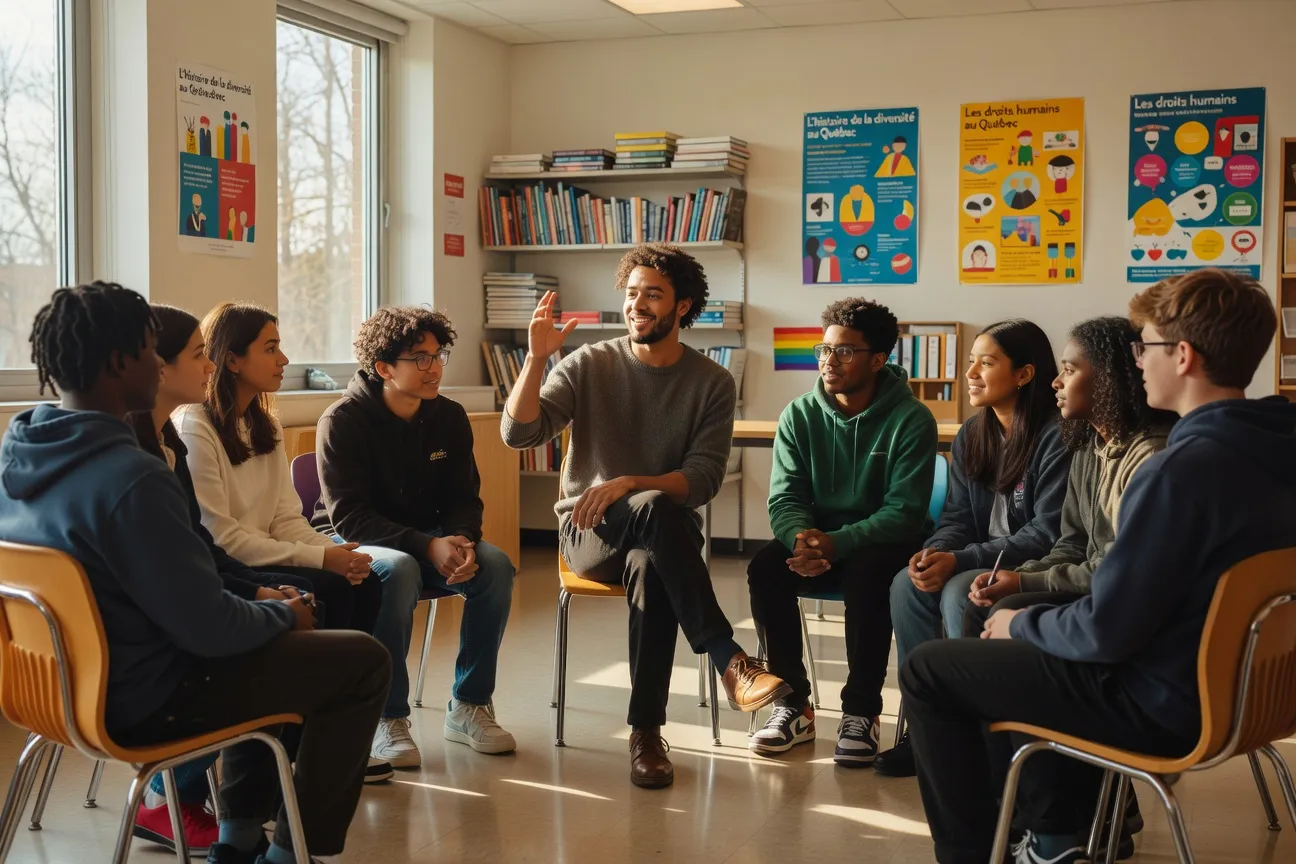
Aid for families, parents, siblings, and friends supporting a young LGBTQ+
When a young person comes out, their parents, siblings, and friends also face a journey to undertake. Worry, misunderstanding, fear of reacting poorly, and sometimes mourning initial projections: these emotions are normal. Several resources specifically support loved ones.
LGBT+ Families Coalition
The LGBT+ Families Coalition (familleslgbt.org) is the leading organization for homoparental families in Quebec and more broadly for families in which a LGBTQ+ person lives. The Coalition offers workshops for parents discovering their child's orientation or identity, peer support groups (parents who have already gone through this journey), a commented bibliography, and a support hotline.
PFLAG Canada (Parents, Families, and Friends of Sexual Minorities)
PFLAG (pflagcanada.ca) is the historic pan-Canadian organization for loved ones. The Quebec sections (Montreal, Quebec City, Sherbrooke, Saguenay) organize bilingual monthly meetings. The peer support model among parents is very strong there.
Transgender Kids Canada (parents)
Specifically for parents of transgender children or adolescents, Transgender Kids Canada (enfantstransgenres.ca) offers a dedicated component for families: in-person and virtual peer groups, information sessions on gender affirmation care, and support in school processes (changing social name, access to appropriate bathrooms, etc.).
Advice for parents discovering
Professionals identify five reflexes to cultivate: (1) listen above all — a child's coming out is not a request for debate, but a sharing of self; (2) thank the child for their trust — a coming out is statistically addressed primarily to those perceived as safe; (3) allow time to adapt without placing the burden on the child; (4) seek information from competent organizations and not from unverified forums; (5) seek support if necessary, without shame. The parental journey in facing this moment is legitimate and an integral part of the process.
Supporting a young person in silence when you are not their parent
Friends, siblings, uncles, aunts, grandparents, and teachers often play a pivotal role. Being the trusted person to whom a young person first confides is precious. Recommendations: never reveal their orientation or identity without their explicit consent (outing can have serious consequences), respect their pronouns and names, remind them that you are there if needed, and direct them to the resources mentioned in this article if they wish.
How to React in a Crisis: Suicidality, Self-Harm, Homelessness
This section is aimed at young people in crisis themselves and those around them. When distress becomes acute, concrete protocols exist to get through the moment and access immediate help.
If you are having suicidal thoughts
First, you are not alone. Suicidal thoughts are a symptom of suffering that can be treated and alleviated. Four immediate actions: (1) call Interligne (1 888 505-1010) or SOS Suicide (1 866 277-3553) — a trained responder will answer you within minutes; (2) if you have means at hand (medications, weapons, etc.), remove them or ask someone to take them away — this step saves lives; (3) contact a trusted person and simply ask them to be present, even by phone; (4) in case of immediate life-threatening emergency, dial 911 or go to the psychiatric emergency department of the nearest hospital.
To help a young person you think is in crisis
Three principles validated by suicide prevention professionals: (1) ask the question directly — asking "Are you thinking about suicide?" does not increase the risk; on the contrary, it is one of the most protective interventions; (2) do not stay alone with your concern — alert Interligne, 811 (Info-Social), a parent, a teacher, a worker. Confidentiality does not apply to life-threatening situations; (3) physically accompany them to the resource when possible — a referral alone, without accompaniment, is less effective.
Self-harm
Self-harm is a common behavior among distressed youth, often a mechanism to manage unbearable emotional pain rather than a direct suicidal signal. Nevertheless, it indicates suffering that deserves support. CLSCs offer psychosocial follow-ups, and school psychoeducators are trained in intervention. Dialectical behavior therapy (DBT), available in several CLSCs and hospitals, is the best-documented approach for treating these behaviors.
Homelessness following a coming out
If a young person is expelled from their family home, several emergency resources exist: Dans la rue (514 526-5222) and Le Bunker in Montreal, Squat Basse-Ville in Quebec City, En Marge 12-17 specifically for minors. The PRISM project in Montreal offers support tailored to LGBTQ+ realities. For minors, the Youth Protection Directorate (DPJ) must be notified in case of homelessness. Although delicate, this notification triggers emergency housing and psychosocial support.
Long-term support after the crisis
Once the immediate crisis is managed, long-term follow-up is crucial to prevent recurrences. Psychological consultation at the CLSC is free but often has delays; employee assistance programs (EAP) and some insurers cover private consultations; CEGEPs and universities offer free psychology services to students. Quebec actors specializing in inclusive psychosocial support like Soleica complement public offerings for those who can access them. On the associative level, the Conseil quebecois LGBT and CGLQ via membership contribute to advocacy for better LGBT-competent mental health services.
Frequently asked questions
What helpline should a young LGBTQ+ person in distress call in Quebec?
For specific LGBT support, call Interligne at 1 888 505-1010 (24/7, free, confidential) or chat at interligne.co. For general support with trained LGBT workers, Tel-jeunes (1 800 263-2266) welcomes those aged 5-20. In case of suicidal thoughts, SOS Suicide (1 866 277-3553) is available 24/7. For LGBTQ+ domestic violence, contact SAVIE-LGBTQ (1 855 410-0511).
AlterHéros, what age is it for and what can you find there?
AlterHéros (alterheros.com) is aimed at youth aged 13 to 30. The flagship service is a confidential question-and-answer system: a young person asks a question (sexual orientation, gender identity, coming out, health, rights) and receives a personalized response within 48 hours. The organization also offers workshops, a mentorship program (ages 16-25), and a freely accessible information sheet database.
My teenage child just told me that they are trans or LGBTQ+. Who should I turn to?
The Coalition of LGBT+ Families (familleslgbt.org) offers workshops and peer groups specifically for parents. For a trans child, Transgender Kids Canada (enfantstransgenres.ca) supports families in all dimensions (medical, educational, social). PFLAG Canada provides monthly meetings in several cities. The key reflex: listen, thank them for their trust, take your own time to adapt without putting pressure on the child.
My child is experiencing homophobic or transphobic bullying at school. What are the options?
All Quebec schools have a legal obligation (Bill 56 of 2012) to have an action plan against violence and bullying, including homophobic and transphobic violence. Steps: (1) document incidents in writing; (2) report to the administration and the psychoeducator; (3) in case of inaction, contact the Student Ombudsperson (Bill 9 of 2022); (4) as a last resort, file a complaint with the Human Rights Commission. GRIS can intervene in class to prevent.
Are there resources for LGBTQ+ youth in the regions, outside of Montreal and Quebec?
Yes, in almost all regions of Quebec: Diversité Estrie (Sherbrooke), GRIS-Mauricie (Trois-Rivières), LGBT Committee of Saguenay-Lac-Saint-Jean, Centre IRIS Outaouais (Gatineau), Arc-en-ciel Côte-Nord, Diversité Bas-Saint-Laurent, Diversité Abitibi-Témiscamingue. When no local resources exist, digital services (Interligne, AlterHéros, ATQ) cover all of Quebec. CLSCs and school psychoeducators are also accessible everywhere.
What is the AlterHéros mentoring program and how can I benefit from it?
The program pairs a young person aged 16-25 with a trained adult LGBTQ+ mentor for several months of support during major life transitions (leaving the family home, starting university, first job, gender transition). Registration is done at alterheros.com. An internal evaluation shows that the mentored youth report a significant reduction in their psychological distress.
My child is a minor and has been put out on the street following their coming out. What should I do?
It's an emergency situation. For Montreal: Dans la rue (514 526-5222), En Marge 12-17 (minors), PRISM project (LGBTQ+ specific). For Quebec: Squat Basse-Ville, Maison Dauphine. For a minor, the Youth Protection Directorate (DPJ) must be contacted — although delicate, reporting triggers emergency accommodation and support. According to data, 20 to 40% of homeless youth in Montreal identify as LGBTQ+, and the support network is familiar with these situations.