Same-sex-parent families in Quebec: rights, adoption and daily life
In brief: Quebec is one of the most advanced jurisdictions in the world when it comes to recognizing same-sex-parent families. The Civil Code of Québec has allowed adoption by same-sex couples since 2002, and assisted reproduction legislation guarantees equal access. Parentage is established equally for children of same-sex parents. However, everyday challenges remain: prejudice in certain settings, administrative complexities and international recognition issues.

The legal framework for same-sex-parent families in Quebec
Same-sex-parent families in Quebec benefit from one of the world's most comprehensive and protective legal frameworks. A series of legislative reforms have built a legal structure that fully recognizes these families and protects the rights of all their members, adults and children alike.
Quebec's legislative journey regarding same-sex-parent families unfolded through several key milestones. In 1999, Bill 32 recognized same-sex de facto spouses, granting them the same rights as heterosexual couples under 28 laws. In 2002, Bill 84 created civil unions and thoroughly reformed parentage rules to include same-sex couples.
The legalization of equal marriage in 2004-2005 completed the legal recognition of same-sex couples, giving them access to all the rights and obligations associated with marriage, including the presumption of parentage.
In 2015, Quebec adopted amendments to its assisted reproduction program, guaranteeing equal access for same-sex couples and single people. These reforms affirmed that the desire to start a family should not be conditional on the parents' sexual orientation.
Today, Quebec family law makes no distinction among families based on the parents' sexual orientation. Children in same-sex-parent families enjoy the same rights and protections as all other children, and their parents exercise the same parental authority as any other parent.
The Civil Code of Québec and parentage
The Civil Code of Québec is the cornerstone of the legal framework for same-sex-parent families. The 2002 reforms introduced innovative parentage provisions that placed Quebec at the forefront worldwide.
The Civil Code recognizes three ways of establishing parentage: parentage by blood (birth), parentage by adoption and parentage resulting from assisted reproduction. These three methods apply equally to same-sex and heterosexual couples.
Presumption of parentage. When two same-sex spouses are married or in a civil union, the mother's spouse benefits from a presumption of parentage similar to that of the father in a heterosexual couple. A child born during the marriage or civil union is presumed to have both spouses as parents.
Declaration of parentage. For same-sex de facto spouses, parentage may be established by a declaration to the Directeur de l'état civil within 30 days of the birth. Both parents are listed on the child's birth certificate, thereby establishing a full legal parent-child relationship.
These provisions ensure that children in same-sex-parent families have, from birth, two legally recognized parents, with all the resulting rights and obligations: parental authority, support obligations, inheritance rights and access to social programs.
Adoption by same-sex couples
Adoption is one of the main ways in which same-sex couples start or grow their families in Quebec. Since 2002, joint adoption by two people of the same sex has been legally possible in Quebec, a breakthrough that made the province one of the first jurisdictions in the world to offer this option.
Domestic adoption. Same-sex couples may adopt a child domiciled in Quebec through the same procedures as heterosexual couples. The process includes a psychosocial assessment conducted by a social worker, a waiting period and a court placement order. The assessment criteria are identical for all couples: stability, parenting abilities, family environment and motivation.
International adoption. International adoption by same-sex couples remains more complex. Although Quebec fully permits this process, many countries of origin do not accept applications from same-sex couples. Accredited international adoption organizations inform couples which countries accept or reject their applications and direct them toward the available options.
Adoption of a spouse's child. Adoption of a spouse's child (intrafamily adoption) is a common process in same-sex-parent families. It allows the non-biological parent to formalize their legal relationship with the child. Since the 2002 reforms, this procedure has been available to same-sex spouses under the same conditions as heterosexual spouses.
Mixed Bank. Quebec's Mixed Bank program, which enables the adoption of children placed in foster care, is also open to same-sex couples. This program provides a path to adoption that is often faster than regular adoption while meeting the needs of children awaiting a permanent family environment.
Quebec and Canadian studies confirm that children adopted by same-sex couples develop just as well as children adopted by heterosexual couples, cognitively, emotionally and socially.

To identify coalitions and associations that advocate for LGBT+ families in Quebec:
› 2026 directory of LGBT associations and coalitions in Quebec
Medically assisted reproduction (MAR)
Medically assisted reproduction (MAR) is a preferred path for many same-sex couples, particularly female couples, who wish to start a family. Quebec provides a structured legal and medical framework to support these processes.
Artificial insemination. Artificial insemination using donor sperm is the most common method for female couples. It may be performed at a fertility clinic or in a private medical setting. The sperm may come from a sperm bank (anonymous or known donor) or from a personal donor.
In vitro fertilization (IVF). IVF is also available to same-sex couples. Quebec's assisted reproduction program covers certain IVF cycles under certain conditions. Female couples may also consider reciprocal IVF (ROPA), in which one spouse's eggs are fertilized and transferred to the other spouse's uterus, allowing both mothers to participate biologically in the pregnancy.
Legal framework for MAR. Quebec law establishes clear rules for MAR. When a couple uses a gamete donor as part of a shared parental project, the donor has no rights or obligations toward the child. Parentage is established exclusively in favour of the intended parents, meaning the members of the couple who formed the parental project.
Access and funding. Quebec's assisted reproduction program provides financial support for certain MAR procedures. Access to this program is open to same-sex couples under the same conditions as heterosexual couples. However, waiting times at fertility clinics may be significant, and some costs (medication, sperm bank) are not fully covered.
CGLQ advocates for equitable and affordable access to MAR for all couples, regardless of their sexual orientation, and for full coverage of associated costs under the public health insurance plan.
Surrogacy
Surrogacy is an option considered by some same-sex couples, particularly male couples, to become parents. The legal status of surrogacy in Canada and Quebec is complex and deserves particular attention.
Canadian legal framework. In Canada, altruistic surrogacy (without compensation for the surrogate mother beyond reimbursement of reasonable expenses) is legal under the Assisted Human Reproduction Act. Commercial surrogacy (with compensation) is prohibited and constitutes a criminal offence.
Quebec-specific considerations. Quebec long maintained a restrictive position on surrogacy. The Civil Code provides that surrogacy agreements are absolutely null, meaning that they are not enforceable in court. The surrogate mother is considered the child's legal mother at birth. However, reforms are underway to clarify and modernize the legal framework.
Recognition of parentage. Despite the nullity of surrogacy agreements, Quebec courts have developed case law that allows, in certain circumstances, parentage to be established in favour of the intended parents. The best interests of the child are the determining criterion in these decisions.
Surrogacy abroad. Some Quebec couples turn to countries where surrogacy is legal and regulated. However, recognition of parentage established abroad may raise legal difficulties upon returning to Quebec. Specialized legal assistance is strongly recommended.
The CGLQ closely monitors legislative developments concerning surrogacy and advocates for a legal framework that protects the rights of intended parents, the rights of surrogate mothers, and the best interests of children.
Establishing parentage
Establishing parentage is a central issue for same-sex-parent families because it determines each parent's rights and responsibilities toward the child. Quebec offers a clear legal framework, but certain situations still require particular attention.
Married or civil union couples. Parentage is established automatically through the legal presumption: a child born during a marriage or civil union is deemed to have both spouses as parents. This presumption applies identically to same-sex and heterosexual couples.
Common-law partners. For same-sex common-law partners, the parentage of the non-biological parent must be established through a declaration to the Directeur de l'état civil or through voluntary recognition. It is essential to complete this process promptly after the birth to secure the parent-child relationship.
Parental project and assisted reproduction. When a birth results from a shared parental project involving assisted reproduction, parentage is established in favour of both intended parents, even if one of them has no biological connection to the child. Consent to the parental project, given before conception, forms the legal basis for parentage.
Birth certificate. A Quebec birth certificate may list two mothers or two fathers, depending on the child's family situation. This option has existed since the 2002 reforms and constitutes tangible recognition of the diversity of Quebec families.
Interprovincial and international recognition. Parentage established in Quebec is recognized in other Canadian provinces under private international law rules. However, recognition abroad may pose problems in countries that do not recognize same-sex-parent families. Families travelling or settling abroad should learn about the legal framework of the destination country.
Summary table: methods of establishing parentage
| Couple's situation | Method of establishment | Time frame / condition |
|---|---|---|
| Married or in a civil union | Automatic legal presumption | From birth, no action required |
| Common-law partners | Declaration to the Directeur de l'état civil | Within 30 days following the birth |
| Parental project involving assisted reproduction | Parentage in favour of the intended parents | Consent to the parental project before conception |
| Adoption (domestic or intrafamily) | Psychosocial assessment + court order | Process varies depending on the type of adoption |
| Surrogacy | Judicial recognition on a case-by-case basis | Unenforceable agreement, evolving case law |
To understand how to support a family member coming out in Quebec:
› Coming out in Quebec: interview with a clinical sexologist
Everyday challenges faced by same-sex-parent families
Despite a protective legal framework, Quebec's same-sex-parent families face everyday challenges that show how much remains to be done to achieve truly lived equality.
Persistent prejudice. Although the majority of Quebecers support the rights of same-sex-parent families, prejudice persists in some settings. Same-sex parents may face stares, comments, or intrusive questions in public places, during medical appointments, or in their children's schools.
School environment. The integration of children from same-sex-parent families into schools generally goes well in Quebec. However, some school forms still do not account for the reality of two same-sex parents (only “father” and “mother” boxes). Children may also face questions from their peers, requiring appropriate support.
Administrative complexities. Despite the reforms, some administrative procedures remain complex for same-sex-parent families. Government forms, insurance providers, and certain service providers have not always adapted their systems to these families' realities. Although unintentional, these administrative obstacles create daily difficulties.
Isolation in remote areas. Same-sex-parent families living in remote areas may feel more isolated than those residing in major urban centres. Access to communities of similar families, specialized resources, and diverse family role models may be limited.
International travel. Same-sex-parent families travelling abroad may sometimes face non-recognition of their family structure in certain countries. It is recommended that they carry translated and notarized legal documents to facilitate border crossings.
Testimonials and family stories
Quebec's same-sex-parent families share diverse experiences that reflect the richness and complexity of their journeys. Each family has its own unique story, shaped by its choices, challenges, and joys.
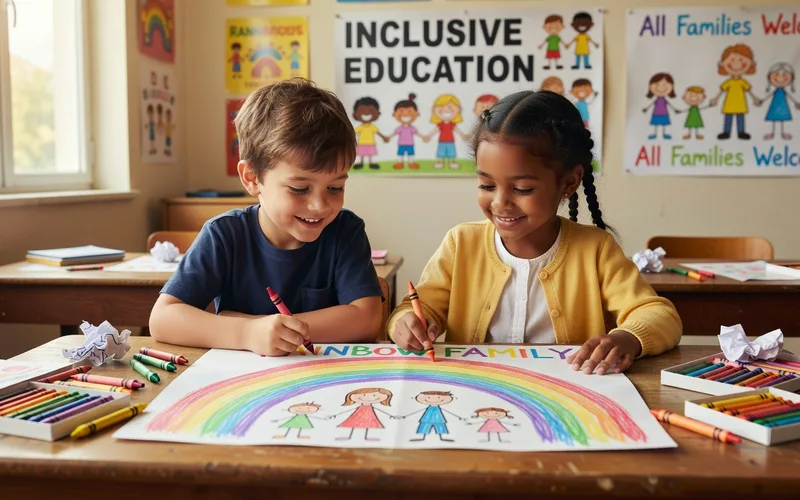
Many families emphasize the warm welcome they receive in Quebec society. Schools, childcare services, the healthcare system, and public services are generally perceived as respectful and inclusive. Children thrive in environments where family diversity is increasingly normalized.
Other families share the difficulties they have encountered along the way: the length of the adoption process, the cost of assisted reproduction, negative reactions from some extended family members, or moments of misunderstanding in contexts where same-sex-parent families remain unfamiliar.
Scientific research conducted in Quebec and Canada confirms what families have long expressed: children raised by same-sex parents develop in ways equivalent to those from different-sex-parent families across all measured indicators — cognitive development, social skills, emotional health, and academic achievement.
The growing visibility of same-sex-parent families in the media, children's literature, and Quebec popular culture helps normalize these realities and provides positive role models for children and parents. Preserving these family moments through wedding and family photography is now part of the journey of many same-sex-parent families. The CGLQ encourages this visibility and helps share stories that reflect the diversity of Quebec families.
Interview with Me Pascal Chartrand on adoption, parentage, and assisted reproduction in 2026:
Resources and Support Organizations
Several Quebec organizations offer specific support to same-sex-parent families, whether for legal procedures, parental guidance, or the creation of solidarity networks.
- Coalition des familles LGBT+ – An organization dedicated to supporting same-sex-parent families and LGBT+ parents. Family activities, training in schools, political advocacy
- CGLQ – Coalition gaie et lesbienne du Québec. Rights advocacy, lobbying, legal referrals. Become a member
- Interligne – Helpline and referral service: 1-888-505-1010
- Fondation Émergence – Awareness and education about LGBT+ realities, including same-sex-parent families
- Association des parents gays et lesbiens – Networking, family activities, and peer support
- Centres de la petite enfance (CPE) – Quebec CPEs implement policies promoting the inclusion of family diversity
- DPJ / Centres jeunesse – Support with adoption procedures through the Banque mixte program
For a complete resource directory, visit our page dedicated to LGBT+ organizations and associations in Quebec.
The Role of the CGLQ
The Coalition gaie et lesbienne du Québec (CGLQ) has actively defended the rights of same-sex-parent families since its founding in 1992. The organization contributed to legislative reforms that made adoption, assisted reproduction, and the recognition of parentage possible for same-sex couples.
The CGLQ works with policymakers to improve the legal framework, submits briefs to parliamentary committees, and raises awareness among professionals about the realities of same-sex-parent families. The organization also offers a referral service to direct families to appropriate legal and community resources.
Through its accreditation with the United Nations ECOSOC, the CGLQ shares Quebec's experience with same-sex-parent families internationally, helping to inspire other jurisdictions. To support this work, you can become a member of the CGLQ.
Key takeaways:
- Quebec has made no legal distinction between same-sex-parent and different-sex-parent families since the 2002 Civil Code reforms.
- Adoption, assisted reproduction, and parentage by presumption are available to same-sex couples under the same conditions as other couples.
- Surrogacy remains a complex legal area in Quebec: specialized legal guidance is strongly recommended.
- Everyday challenges persist (forms, prejudice, isolation in rural areas) despite a protective legal framework.
See Also on the CGLQ Website
Frequently Asked Questions About Same-Sex-Parent Families in Quebec
Can same-sex couples adopt in Quebec?
Yes. Since 2002, same-sex couples have been able to jointly adopt a child in Quebec under the same conditions as different-sex couples. Domestic adoption, international adoption (in countries that allow it), and stepchild adoption are all available.
How is parentage established for children of same-sex couples?
For married couples or couples in a civil union, parentage is established automatically by legal presumption. For common-law partners, a declaration to the Directeur de l'état civil is required. In the context of assisted reproduction, parentage is established in favour of both intended parents, regardless of biological connection.
Is assisted reproduction available to same-sex couples in Quebec?
Yes. Quebec's assisted reproduction program is open to same-sex couples under the same conditions as different-sex couples. Artificial insemination and IVF are covered by the public plan under certain conditions.
Is surrogacy legal in Quebec?
Altruistic surrogacy is legal in Canada, but Quebec provides that surrogacy agreements are absolutely null. Commercial surrogacy is prohibited and criminalized. Reforms are underway to clarify the legal framework. Specialized legal guidance is essential.
Do children from same-sex-parent families develop as well as other children?
Yes. Scientific research conducted in Canada and internationally confirms that children raised by same-sex parents develop just as well as those from different-sex-parent families across all indicators: cognitive development, social skills, emotional health, and academic achievement.
Frequently Asked Questions
Can a same-sex couple adopt in Quebec?
Yes, same-sex couples have been able to adopt jointly in Quebec since the Civil Code reform in 2002. They have the same adoption rights as different-sex couples, including domestic and international adoption (depending on the countries of origin). Applications are handled through the Centre jeunesse or an accredited organization.
How does parentage work for same-sex couples in Quebec?
Joint parentage is automatic for children born to a married couple or a couple in a civil union. For common-law couples, a declaration of joint parentage must be made at birth. The 2022 Civil Code reform simplified these procedures for same-sex-parent families.
Is assisted reproduction available to female couples in Quebec?
Yes, Quebec's public assisted reproduction program (PAQ) is available to female couples. This program covers artificial insemination and in vitro fertilization (IVF) under certain medical and age-related conditions. Private clinics also provide all these services without distinction.
What legal remedies are available in cases of discrimination against a same-sex-parent family?
Any discrimination based on sexual orientation or gender identity is prohibited by the Quebec Charter of Human Rights and Freedoms. In the event of discrimination, you can file a complaint with the Commission des droits de la personne et des droits de la jeunesse (CDPDJ) at 1-800-361-6477.
Are there support associations for same-sex-parent families in Quebec?
Coalition des familles LGBTQ+, Familles Québec, and Égale Canada offer support, legal resources, and peer groups for same-sex-parent families. Lawyers specializing in LGBTQ+ family law can also provide advice on adoption and parentage procedures.